While the World Watches Iran, the Real Powder Keg Is Somewhere Else
A cascade of crises is exposing which conflicts get attention and which ones fester. Here's what that tells us about global order in 2026.
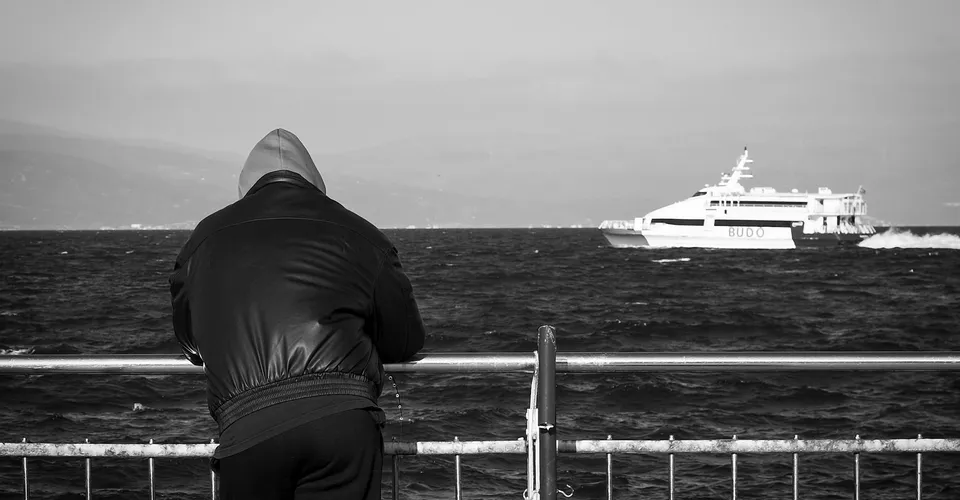
The U.S. Navy just shot down missiles and drones over the Strait of Hormuz. Iran’s fingerprints are all over it. The UAE is furious. Shipping lanes are getting nervous. This is the story everyone’s talking about, and for good reason—it’s the kind of thing that can spiral into something much worse.
But here’s what’s gnawing at me: while every foreign ministry, news desk, and think tank is laser-focused on the Persian Gulf, something uglier is accelerating in the West Bank, and almost nobody’s paying attention.
The headline says it plainly: Israeli settlers are launching a wave of attacks on Palestinians. Military officials in Israel are reportedly urging the government to actually intervene. Not “consider intervening.” Not “exploring options.” Urging intervention. That’s code for “this is getting away from us.”
When your own military is saying the civilian violence is out of control, you’ve got a credibility problem.
 Photo by Can Ceylan / Pexels
The Attention Economy of Conflict
Here’s a thought that’s been rattling around in my head after 30 years covering this stuff: we have a finite pool of diplomatic oxygen, and right now it’s all flowing toward Iran.
That’s not crazy. A military escalation in the Strait of Hormuz can affect global oil prices, shipping insurance, and economic stability in ways that ripple through every country. The calculus makes sense. But the West Bank situation isn’t some minor sideshow—it’s a pressure valve that’s been sealed shut, and pressure valves have a way of exploding when nobody’s looking.
The difference between these two crises is visibility. Iran versus the U.S. Navy is a clear bilateral standoff. It’s dramatic. It involves superpowers and has a defined escalation ladder. You can see it coming.
Settler violence is diffuse, bureaucratic, and depressing. It doesn’t have clean heroes or villains. It’s easier to ignore.
My read: that’s exactly why it’s more dangerous.
When conflicts operate in the shadows of global attention, they calcify. Norms erode. What started as fringe extremism becomes tolerated. Tolerated becomes normalized. Normalized becomes policy. I watched this happen in the Balkans in 1991—the international community was distracted by the Gulf War, and by the time attention swung back to Yugoslavia, it was too late to stop what had already metastasized.
 Photo by Markus Winkler / Pexels
The Taiwan-Ukraine Shadow Network
There’s something else happening that doesn’t make headlines but probably should: Taiwan and Ukraine are quietly building bridges without their governments’ permission.
The official story is straightforward—no diplomatic or military ties between Taipei and Kyiv. The government line is maintained. But underneath that, company executives and volunteers are creating what amounts to an informal alliance. Information sharing. Tactical lessons. Moral support. The kind of thing that happens when two countries facing existential threats realize they have more in common than their governments are willing to admit publicly.
This is either brilliant or catastrophically naive, and I genuinely can’t figure out which.
From Taiwan’s perspective, Ukraine is a live laboratory. What works against Russian hybrid warfare? What breaks down? How do you keep a society functioning when invasion is always possible? Those aren’t abstract questions for Taipei—they’re operational requirements.
From Ukraine’s perspective, Taiwan represents a country that’s managed to stay economically integrated with a much larger, much more powerful neighbor while maintaining autonomy. That’s not nothing.
The risk? If this network gets too visible, Beijing uses it as justification for cracking down harder. Taiwan’s government can’t openly acknowledge it without provoking exactly the kind of response they’re trying to avoid. So it stays informal, which means it’s also fragile.
What I’d bet on: this network survives and grows, but it stays in the shadows. The real payoff happens not through dramatic military coordination, but through unglamorous stuff like supply chain resilience and civilian defense preparedness.
The Pattern Nobody Wants to See
Let me connect some dots that probably shouldn’t be on the same map.
You’ve got a fireworks factory explosion in China that kills 26 people. You’ve got a car driven into a crowd in Germany. You’ve got hantavirus deaths on a cruise ship. You’ve got a yacht that sinks off Australia. You’ve got a Met Gala theme about fashion.
Most of these are disasters, one’s entertainment news, and none of them seem related.
Except here’s the thing: they’re all symptoms of the same underlying problem—we’ve built a global system that’s incredibly fragile at the operational level. Safety oversight gets cut. Emergency protocols aren’t funded. Industrial regulation becomes optional. A fireworks factory in Hunan operates under standards that would get shut down in Europe. A cruise ship carries disease vectors that should’ve been caught. A volunteer rescue boat goes out in treacherous conditions because professional rescue services aren’t adequately resourced.
These aren’t diplomatic problems, which is why I’m supposed to ignore them. But they’re political problems, because politics determines whether we invest in the unglamorous work of keeping things safe.
In 2024, when Turkey had the earthquake, the global response was swift and emotional. We mobilized. We cared. But the reason the death toll was in the tens of thousands instead of tens of hundreds was partly luck and partly because some earthquake-resistant building codes had been implemented years earlier by people nobody remembers.
My prediction: the next major crisis that destabilizes a region won’t come from missiles or politics. It’ll come from something we thought was handled—pandemic, environmental collapse, industrial accident—operating in a context where we’ve systematically defunded prevention and preparedness.
 Photo by Bhabin Tamang / Pexels
What Actually Matters Right Now
The Iran situation is urgent, but it’s manageable. Both sides have incentives to avoid total war. The U.S. has demonstrated it can defend shipping. Iran knows what the cost of escalation looks like. This will probably oscillate between crisis and standoff for the next six months until something changes the equation—election, internal politics, a miscalculation.
The West Bank is the slow-motion problem. It doesn’t have the same kill-switch potential as the Gulf, but it has something worse: it’s entrenched. When military officials are urging government intervention against settlers, you’re in territory that usually precedes either serious crackdowns or serious fragmentation. Israel’s government faces a choice between alienating its political base or losing control of the situation. Those are both terrible options, which means whatever happens next will be messy.
Taiwan-Ukraine is the story nobody’s covering but everyone should be watching. If that informal network gets sophisticated enough, it becomes a genuine counterbalance to Beijing’s coercive power. If it gets exposed, it could trigger exactly the crisis it’s trying to prevent.
Here’s what I genuinely don’t know: whether the world can hold three of these at maximum temperature simultaneously. In theory, yes. In practice, attention is limited. Capital is limited. Diplomatic bandwidth is limited.
What I’m Watching
-
Houthi/Iranian response timeline: If there’s another significant attack on shipping in the Strait within 30 days, we’re moving toward sustained escalation rather than sporadic incidents. Watch for U.S. carrier movement and whether other navies join escort operations. That’s the threshold between “managed crisis” and “potential conflict.”
-
Israeli government action on settler violence by mid-Q2: Military officials have publicly urged intervention. If the government announces actual enforcement operations (arrests, restrictions, consequences), it means civilian control is working. If nothing happens within 60 days, it means the government has decided the political cost is too high, and violence normalizes further.
-
Taiwan company participation in Ukraine reconstruction bids: If Taiwanese firms start winning contracts for infrastructure work in Ukraine, that’s evidence the informal network is becoming operational infrastructure. That’s not inherently a bad thing, but it’s a visibility marker that Beijing will definitely notice.
-
Regulatory action on industrial safety in China: The fireworks factory explosion should trigger inspections across similar facilities. If those inspections find systematic violations and fines are levied, it’s normal governance. If they happen quietly or not at all, it signals that safety oversight is deprioritized—which means the next accident is probably larger.
The Gulf gets the headlines. The West Bank gets the anguish. But the slow-motion crises are where the real fractures form.