Washington's Patience with Trump Just Hit a Breaking Point
The president is testing Congress, the civil service, and NATO all at once. Here's why the next 60 days matter more than you think.
Trump’s walking into rooms and asking how far he can push before someone stops him.
That’s the through-line I’m seeing across five separate firestorms erupting simultaneously in Washington. The president is testing guardrails—congressional war powers, federal employee protections, alliance commitments, party loyalty mechanisms. And the people who are supposed to maintain those guardrails are either capitulating or scrambling to figure out if they’re even supposed to be guardrails anymore.
Let’s start with the most audacious move: the Iran situation.
The War Powers Gambit
Trump sent letters to Congress claiming hostilities with Iran have “terminated.” That’s not a military update. That’s a legal assertion designed to sidestep the War Powers Act, the 1973 law that requires the president to notify Congress within 48 hours of committing armed forces and prohibits armed forces from remaining for more than 60 days without congressional authorization.
Here’s what’s actually happening: Trump’s announcing facts on the ground and daring Congress to contradict him. If he can get away with this—if the House and Senate don’t force a vote or sue him in court—he’s established that presidential war-making doesn’t need legislative consent anymore. That’s not a small thing. That’s the structure of American government shifting.
The kicker? I haven’t seen coordinated outrage from either chamber. There’s been criticism, sure, but nothing that looks like Congress actually plans to enforce its own constitutional power. They’re waiting to see if this becomes a precedent or a one-off. By the time they decide to act, Trump will have already moved the Overton window three more miles to the right.
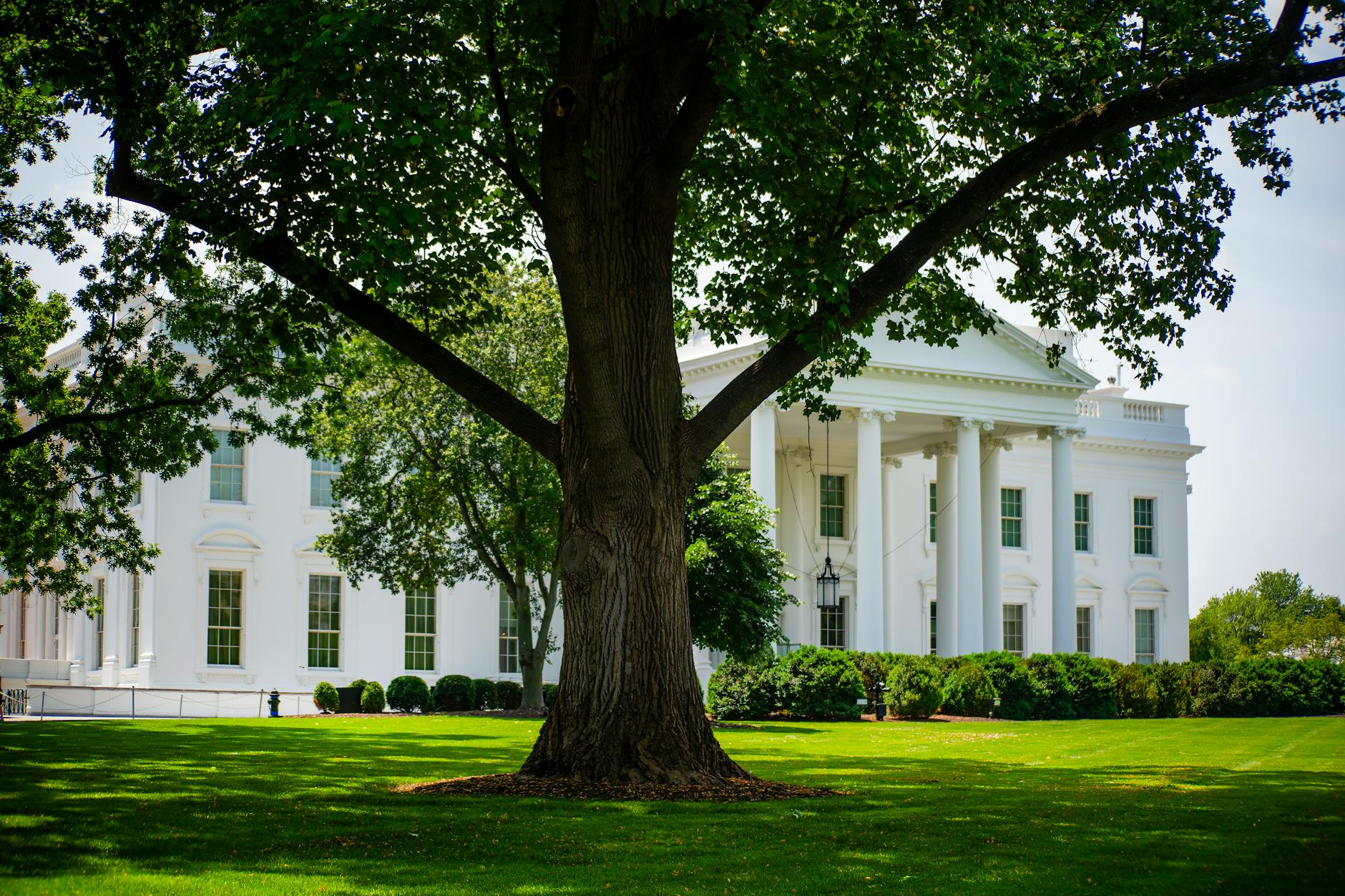 Photo by Ramaz Bluashvili / Pexels
The Staffing Wars
Meanwhile, the NIH’s decision to reinstate Jenna Norton after she filed a whistleblower complaint against agency leadership signals something darker: the civil service might actually be willing to fight back.
Norton criticized Trump’s research cuts. The agency retaliated by putting her on leave. She filed a complaint. The agency buckled and reinstated her.
This matters because Trump’s entire second-term strategy depends on a compliant federal workforce—people who’ll execute orders without asking whether those orders are legal. The fact that the NIH caved suggests either that whistleblower protections still have some teeth or that enough career staff are willing to weaponize those protections that leadership got nervous.
But here’s my honest uncertainty: I don’t know if Norton’s reinstatement is a genuine victory or a strategic retreat by an agency deciding it’s cheaper to keep one disgruntled scientist on payroll than to fight the optics. Either way, it’s a test case. If Trump tries this again and wins next time, we’ll know the federal government is fully colonized.
The Ally Problem
The U.S. is withdrawing 5,000 troops from Germany. Trump announced this because the German chancellor apparently annoyed him by making remarks about the Iran war.
Five thousand troops. Over a personality dispute.
This isn’t diplomacy. It’s not a measured response to burden-sharing concerns. (The U.S. has valid complaints about NATO spending—that’s been true since 2016 and was worth debating then.) This is punishment. It’s saying: disagree with me, and I’ll dismantle the military architecture that’s kept the European order stable for 80 years.
Germany didn’t invade Ukraine. Poland didn’t start a war. But they’re about to lose American military commitment because Trump’s in a mood. Every European defense minister is now doing the math on whether they can actually count on the U.S. This forces them toward either massive rearmament (good luck explaining that defense budget to voters) or realignment toward Russia (which is probably what Trump wants, given his obvious affection for Putin).
The scariest part? Congress can’t easily stop this. The president has broad authority over troop deployments. By the time Congress passes a bill prohibiting the withdrawal, the troops will already be leaving.
 Photo by Andrew Neel / Pexels
The Party Apparatus Unravels
In Kentucky, Trump endorsed Andy Barr for Senate. The Musk-backed candidate, Nate Morris, said he’d be joining the Trump administration after meeting with the president. So Morris folded his campaign, Trump picked the winner, and everyone moved on.
This is how Trump controls his party now: not through shared ideology or party infrastructure, but through direct patronage. Want a job in the administration? Drop out and back my guy. It’s feudal, and it works.
The thing that should worry Republicans: this model only survives as long as Trump has administration jobs to hand out. The moment his leverage changes—if he loses an election, faces serious legal trouble, or just gets bored—the whole coalition collapses because it’s held together by personal loyalty to one person, not shared principles.
Meanwhile, in Maine, Susan Collins is navigating an anti-establishment mood. The headline notes it’s palpable on the ground. She’s got some strengths, but the underlying dynamic is clear: traditional Republicans are swimming against the current. If she survives, it’ll be because she’s built genuine relationships in Maine, not because party loyalty means anything anymore.
London’s Labour Fracture
Across the Atlantic, Labour’s facing a fragmentation problem in London. The party has to choose which direction to go—and the capital’s results suggest they don’t have a unified answer. Meanwhile, the Greens are pledging a £15 minimum wage and accusing Labour of watering down workers’ rights.
This is the mirror image of what’s happening in American politics. Where Trump is consolidating power through personal loyalty, the UK’s left is fragmenting. Labour faces pressure from Greens on the left and what’s left of traditional Conservatism on the right. They’re getting squeezed toward a middle that’s disappearing.
And Keir Starmer doesn’t have Trump’s ability to dominate his own party through pure force of will.
John Major—who actually lived through multiple party leadership chaos events in the 1990s—is warning that constantly changing prime ministers lets young people down by failing to tackle long-term problems. He’s right, but also: he’s watching from the sidelines while his party imploded. His warning is sound. His credibility to deliver it is thinner than he might hope.
My Read
I think we’re watching the structural collapse of institutional restraint happening in real time, and I’m not sure anyone in Washington actually wants to stop it.
Congress could demand a vote on war powers. It won’t. The civil service could organize mass resistance to Trump’s orders. It won’t, because most federal employees have mortgages and families. Courts could block troop withdrawals. They could, but there’s serious legal ambiguity, and judges are increasingly unwilling to touch executive power during wartime (even a war nobody authorized).
Trump’s not committing any single act that’s clearly unconstitutional. He’s testing the system by doing a lot of slightly aggressive things simultaneously and seeing what sticks. It’s the political equivalent of slowly turning up the heat under a frog.
Here’s my prediction: by summer, Trump will have successfully normalized at least three of these power grabs. Congressional war powers will be a dead letter. Troop withdrawal authority will be complete. The federal workforce will be purged of enough skeptics that the rest fall in line.
The real question isn’t whether Trump can do these things. It’s whether anyone’s willing to pay the political price to stop him.
 Photo by Tara Winstead / Pexels
What I’m Watching
-
Congressional vote on Iran war authorization (next 30 days): If neither chamber forces Trump to formally seek authorization, war powers are officially dead. This is the test. Watch for whether Democrats even demand a vote, let alone whether they have the votes to pass one.
-
The next federal employee whistleblower complaint: Will the NIH’s reinstatement of Norton encourage other staffers to speak up, or will it scare them into silence? If we see a second whistleblower complaint by March, the civil service is thinking about resistance. If we don’t, it’s already colonized.
-
Germany’s rearmament announcements (Q2 2025): If Berlin announces major defense spending increases or closer ties to France/Poland, Trump’s troop withdrawal actually forced European strategic realignment. That’s a historical moment. Watch for any speech by a German defense minister about “strategic autonomy” or “European sovereignty.”
-
Maine Senate polling (through summer): Susan Collins is the canary in the coal mine for whether traditional Republicans can survive in a Trump-dominated GOP. Her approval ratings will tell you whether the anti-establishment mood is beatable through genuine constituent service or whether it’s terminal.