Trump's Iran Deal Just Became America's Credibility Problem
A two-week ceasefire with Iran looked like a win. Then Israel kept bombing Lebanon anyway—and nobody's sure what the US actually stands for anymore.
The ceasefire lasted about four hours.
That’s not quite fair—the US-Iran two-week truce technically held past that. But when Israeli forces killed more than 200 people across Lebanon within hours of the announcement, the real message became unavoidable: America just negotiated a deal it can’t enforce, with a partner it can’t control, while pretending the rest of the region doesn’t exist.
Welcome to what some diplomats are already calling America’s “Suez moment”—that inflection point in 1956 when the world realized the British Empire couldn’t actually back its plays anymore. Except this time, it’s happening in real-time on X, and everyone’s watching.
The Deal Nobody Really Understands
Let’s start with what we actually know. The US and Iran agreed to a two-week ceasefire more than a month after coordinated US-Israel attacks on Iran. That much is solid. But here’s where it gets murky: the truce already seems to be on shaky ground over two specific issues—control of the Strait of Hormuz and the status of Lebanon.
Lebanon is the problem that matters.
Hours after the ceasefire announcement, Israeli strikes hit the southern suburbs of Beirut, southern Lebanon, and the eastern Bekaa Valley. The body count climbed past 182, then kept climbing past 200. These weren’t accidents or rogue operations. They were coordinated strikes targeting Hezbollah, the Iranian-backed militia group that’s been firing from Lebanon into Israel.
Here’s the thing nobody wants to say out loud: Israel didn’t pause. The US negotiated an Iran ceasefire. Israel negotiated nothing. And now top European diplomats are calling for Lebanon to be included in the deal—which means the US has to go back to the table and explain why it negotiated on behalf of Israel without actually having authority over what Israel does.
 Photo by Beth Fitzpatrick / Pexels
The Credibility Collapse
Trump’s already been throwing grenades at NATO. He told the alliance chief their meeting was “very frank” and accused NATO of not being there when the US “needed them” during the Iran situation. This is a president who’s spoiling for a fight with his own allies while the ceasefire he just brokered is literally dissolving in real-time.
The strategic irony is almost too perfect. The Trump administration probably thought an Iran ceasefire would be a clean diplomatic win—proof that they could negotiate where Biden couldn’t. Instead, they’ve accidentally demonstrated something far worse: the US can negotiate a deal, but other players in the region don’t have to follow it.
When a major power broker cuts a deal that gets immediately undermined by its closest regional ally, it sends a signal. Not just to Iran or Lebanon. To everyone. It says American guarantees are conditional. They depend on whether Israel feels like honoring them. They might not survive contact with facts on the ground.
That’s not a small problem.
What This Looks Like From the Outside
I’ve watched this pattern before—though the contexts were different. When Russia guaranteed Ukraine’s borders in 1994 in exchange for nuclear weapons, then invaded twice anyway, everyone learned a lesson about the value of great-power promises. This feels similar, except America’s supposed to be the trustworthy one.
The ceasefire was supposed to be a way out. That’s the line from the headlines: “Iran ceasefire deal gives Trump a way out of war.” But here’s my read—it’s actually a way into something worse. Because now the US has publicly sided with Iran, done so visibly enough that the whole world saw it, and then been immediately contradicted by its closest Middle East ally without consequence.
My prediction: this doesn’t hold through the two weeks.
Either Iran uses the ongoing Israeli strikes as justification to restart their side of the conflict, or the ceasefire quietly expires and everyone pretends it was always provisional. The Strait of Hormuz issue will become the excuse—some technical dispute about shipping rules that gives both sides a face-saving exit.
What I’m genuinely uncertain about is whether Trump cares. He might actually be fine with this outcome. A failed ceasefire could justify harder action later, which might appeal to his strategic instincts. But if that’s the plan, you don’t advertise it. You don’t let it look like your deal collapsed because you have no control over events.
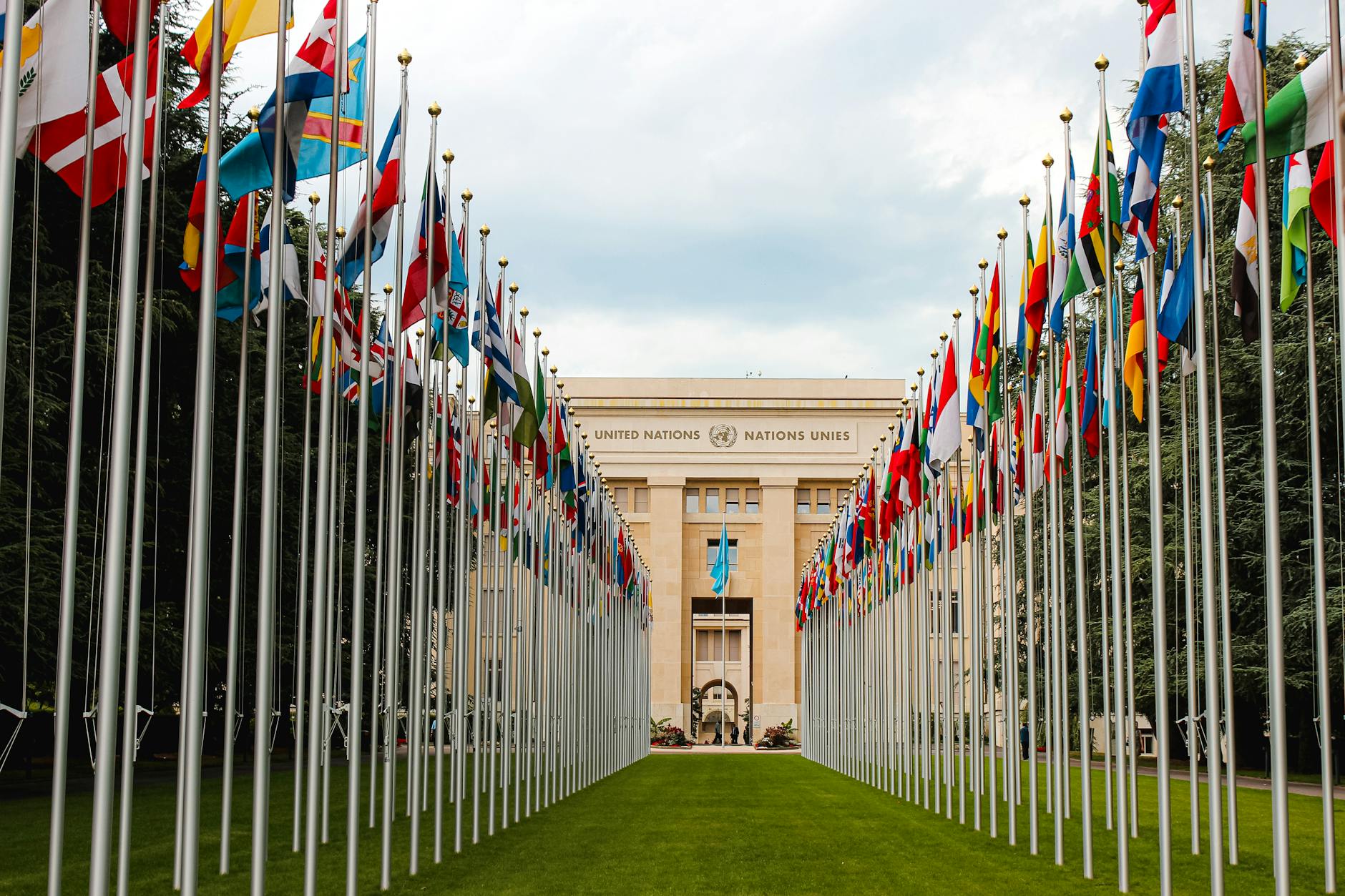 Photo by Mathias Reding / Pexels
The Honest Part
I don’t have perfect visibility here. The full details of what the US actually committed to Iran, and what commitments were made about Israel, aren’t public. There could be secret understandings that make this look less chaotic than it sounds from the outside. There probably are.
But that’s actually the point. When your credibility depends on secret deals, your credibility is already compromised. Everyone assumes the deals are either fake or compromised. The entire transaction becomes suspect.
Compare this to the Artemis crew returning from the Moon with photographs and specimens. That’s American power that doesn’t need negotiation or interpretation. You can see it. You can touch it. You can verify it yourself. The ceasefire? You have to take someone’s word for it. And that word is already being contradicted by visible military action.
The Real Damage
The damage here isn’t military. It’s structural. Countries make decisions about whether to trust the US partly based on whether America can control its own region and partly based on whether American commitments actually stick. On both counts, this ceasefire is a worst-case scenario.
European diplomats had to publicly demand that Lebanon be included in the truce—which is diplomatic code for “we can’t believe you negotiated this without thinking about anyone else.” That’s humiliation, even if nobody used that word. When your allies have to publicly walk back your deals, your influence has cracked.
Iran’s probably already calculating whether the next round of negotiations is worth the effort. If the US broker can’t enforce its own terms, what’s the point of the negotiation?
And Israel? Israel just proved something important. It proved it can act independently while the US conducts diplomacy in its name. That’s not alliance management. That’s a client state with veto power.
What I’m Watching
The Strait of Hormuz language. Watch specifically for whether Iran or the US invokes technical disputes about shipping restrictions or inspection protocols in the next seven to ten days. That’ll be the escape hatch. If it gets mentioned, the ceasefire’s already dead.
European solo initiatives. If France, Germany, or another major European power tries to negotiate directly with Iran or Lebanon without the US in the room, that’s the real tell. That means they’ve already decided American security guarantees are unreliable.
Israeli statements about future operations. If Netanyahu’s government says anything like “we retain the right to act independently” or “the ceasefire doesn’t constrain our operational decisions,” that’s the formal declaration that the truce was purely cosmetic. Watch for language that separates Israel’s commitments from the broader deal.
Trump’s next NATO comment. His relationship with the alliance will reveal whether he sees the failed ceasefire as a loss (which would make him aggressive toward allies) or irrelevant (which would make him oddly relaxed). Either way, watch how he frames it. That’ll tell you whether the US is treating this as a credibility problem or just moving on.
The ceasefire didn’t fail because Iran and Israel couldn’t coexist for two weeks. It failed because nobody was ever sure what the deal actually committed anyone to. When your security agreement needs that much interpretation, it’s already broken.