The US Just Pulled Off a Rescue in Iran. Here's Why It Matters Way More Than You Think.
A downed airman, Soleimani's arrested relatives, and what the US military's win in Iran tells us about the next phase of this conflict
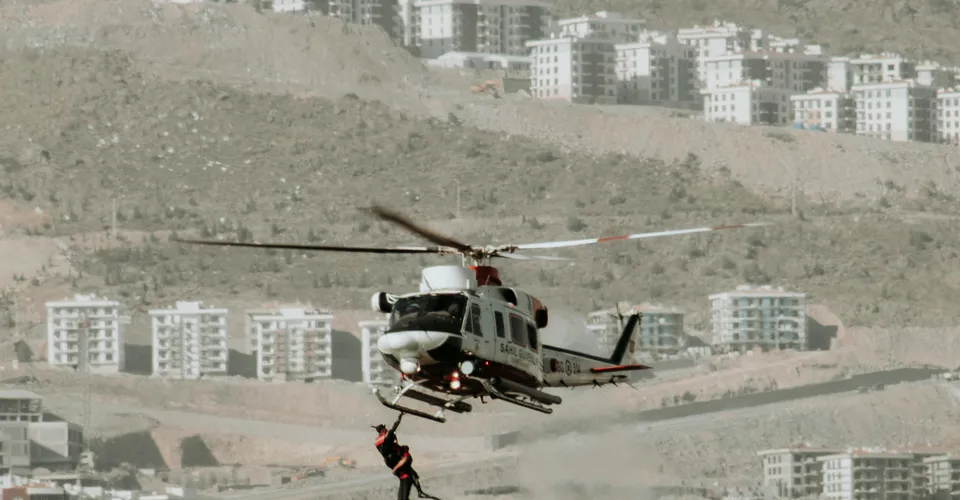
The US just rescued an airman from inside Iran. Let that sink for a second.
Not from a friendly airbase. Not from international waters. From inside Iranian territory, after a two-day race against Iranian forces trying to reach him first. This isn’t routine. This is the kind of operation that gets declassified fifteen years later in a memoir. It’s happening now, in real time, while tensions are actively climbing.
Here’s what we know: An F-15 was shot down over southern Iran. The crew got out. One airman was missing. Within 48 hours, the US executed a recovery operation and got him back. Trump announced it himself. That level of operational speed—and the fact it succeeded—tells you something crucial about where US-Iran tensions have shifted.
The Rescue Wasn’t The Only Message
But the airman story is only half the headline. The other half is buried in the legal filings: the US has arrested the niece and grand-niece of Qasem Soleimani.
Soleimani. Dead since 2020, when the US droned him at Baghdad airport. His assassination was one of the most deliberate escalations the US has made in the region in decades. The man orchestrated Iran’s proxy networks across Iraq, Syria, and Lebanon. Killing him was saying something. And now, three years later, the US is arresting his relatives on US soil.
This isn’t about counterterrorism in the traditional sense. This is messaging. It’s saying: we’re still here. We’re still willing to act inside Iran, and we’re reaching into American territory to touch your family networks. Whether or not those relatives were actually involved in anything, the arrest itself is a statement.
The timing is impossible to ignore. Fighter jet rescue + Soleimani family arrest happening in the same news cycle? That’s not coincidence. That’s a one-two punch.
 Photo by Foto Kesit / Pexels
What Changed in 48 Hours
Let me be honest: I don’t have perfect visibility into why the US suddenly had the capability to execute a successful recovery operation inside Iran during an active conflict situation. But I can read the calendar.
Israel attacked Iran’s largest petrochemical complex on Saturday. The F-15 was shot down as part of that broader escalation. We’re not in the “might get tense” phase anymore. We’re in the “kinetic operations are ongoing” phase. The kind where air defense systems are hot, where pilots are dying, where the US is willing to commit rescue assets deep into hostile territory because leaving people behind isn’t an option.
That’s different from the drone-strike-from-distance playbook we’ve seen for years.
Here’s what I think is happening: The US calculated that the window for a rescue was narrowing by the hour. Iranian ground forces were moving toward the airman. A choice had to be made—risk the operation or lose the pilot. The fact that it worked suggests either excellent intelligence, incredible luck, or (most likely) both. But what matters is that someone in the chain of command decided it was worth the risk.
That’s the opposite of escalation-averse. That’s commitment.
Germany’s Draft Law Is a Weird Tell
Now flip to something that seems totally unrelated: Germany is considering requiring military approval for men under 45 to take extended trips abroad.
This sounds bureaucratic and boring. It’s actually a red flag.
Germany’s military is weak by modern standards. It’s been underfunded for decades. The current proposal is murky—the government says approvals “must generally be granted,” which is legally meaningless. How do you enforce a rule that’s not really a rule? You don’t, unless you’re trying something else.
What Germany’s actually doing is preparing for the possibility of mobilization. You don’t start thinking about restricting military-age male travel unless you’re running scenarios where you might need them. You don’t float weak versions of the law to test public reaction unless you’re preparing to tighten it later.
Germany isn’t in any immediate conflict. But NATO’s entire eastern flank is watching Russia, and Germany is quietly thinking about what a real mobilization looks like. That’s not paranoia. That’s prudence. And it suggests European governments are doing the math on the likelihood of this staying contained.
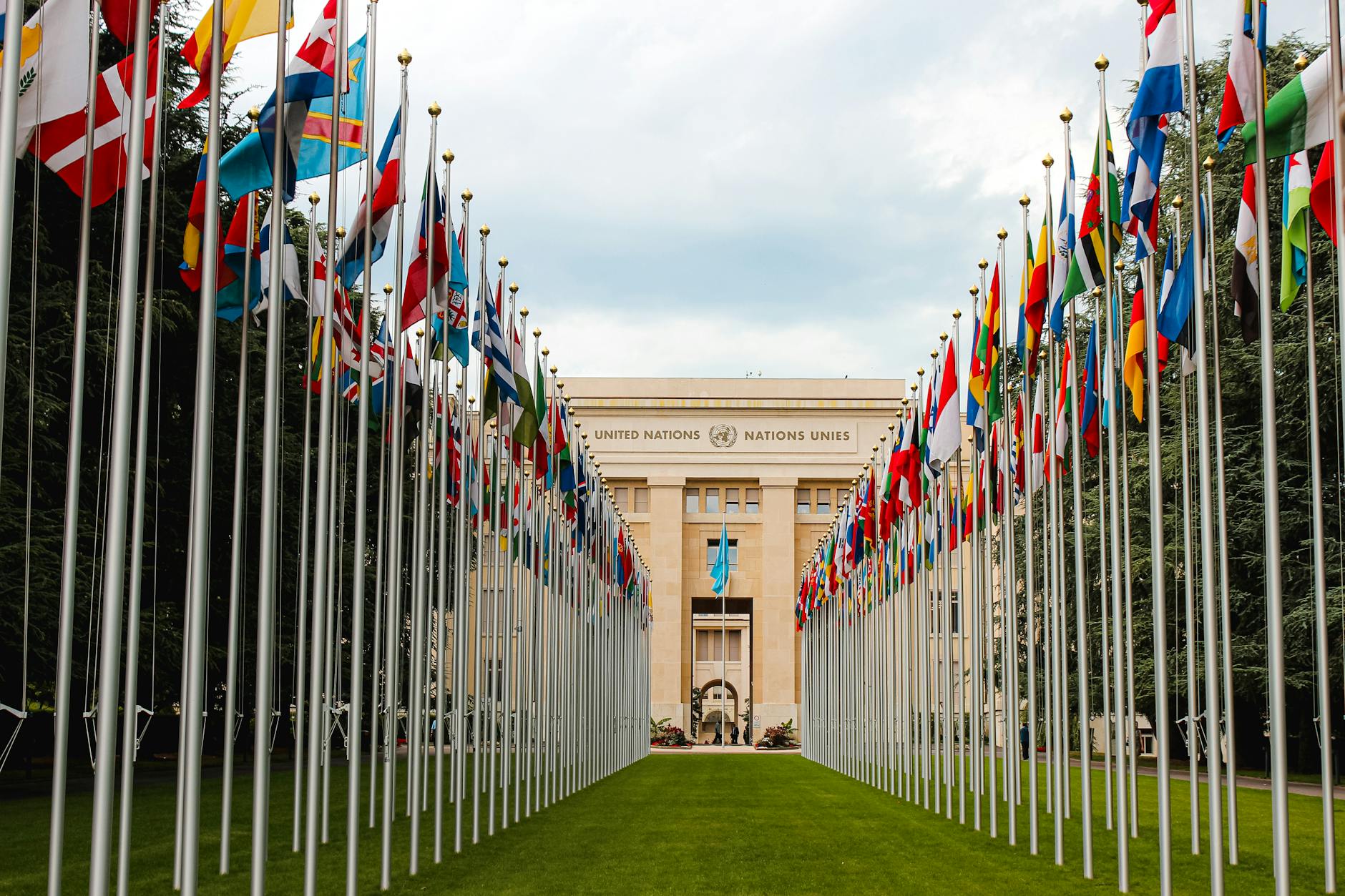 Photo by Mathias Reding / Pexels
The Missile Shortage Is The Unsexy Crisis
Most people don’t know this yet, but militaries worldwide are facing a critical shortage of interceptor missiles. These are the systems that shoot projectiles out of the sky—air defense. They’ve become the most important component of modern warfare.
Ukraine proved this. Hamas proved it. Now everyone’s watching their stockpiles and realizing they don’t have enough.
The US just executed a rescue operation inside Iran using whatever air assets it has. Israel is striking Iranian industrial targets. Ukraine’s been using air defense systems at an unprecedented rate. Globally, militaries are consuming these munitions faster than they can manufacture them.
This is a hidden constraint on how far any conflict can escalate. Not because politicians care about economics, but because at some point, you run out of ammunition. Then what?
I think this is actually the forcing function on whether things stay “tense but manageable” or spiral into something bigger. The US can probably sustain operations against Iran. But can it do that and support Ukraine and maintain Pacific readiness? Probably not. At some point, the inventory problem becomes the policy problem.
My Read
Here’s what I think is happening: The US is demonstrating capability and willingness in Iran because it wants to establish a new equilibrium. The airman rescue + Soleimani family arrests are showing Iran two things: (1) we can reach you, and (2) there are consequences for your people, even on American soil.
This is deterrence signaling, but it’s also a test. The US is seeing how far it can go before Iran responds with something the US can’t absorb. So far, Iran’s restrained its response. But that doesn’t mean it will forever.
I’d bet money that within the next 90 days, we either see a significant de-escalation move from Iran (probably through back-channel negotiations) or another Israeli strike that triggers an Iranian response the US has to counter directly. A third option: nothing happens, tensions stay elevated, and we’re all living with this as the new normal by summer.
What I’m genuinely uncertain about: whether the US has actually improved its intelligence networks inside Iran enough to sustain this tempo of operations, or whether the rescue was a one-off success. If it’s repeatable, Iran’s in real trouble. If it’s a fluke, the US is bluffing, and Iran knows it.
Photo by Mathias Reding / Pexels
What I’m Watching
The interceptor missile production rate. Congress is quietly increasing orders. Watch for contracts with Raytheon and Lockheed. If production accelerates beyond what’s needed for Ukraine, the US is hedging for a longer Iran conflict. That’s your tell that military planners think this doesn’t end quietly.
Whether Iran escalates through proxies vs. direct action. If the Soleimani family arrests provoke Iranian retaliation, it’ll probably come through Hezbollah or Houthis, not direct Iranian military action. Direct action means the US can respond directly. Proxy attacks create gray zones. Watch for attacks on US personnel in Iraq or shipping in the Gulf by mid-March.
Germany’s mobilization law in April. If the government tightens the enforcement language when it comes back for a second vote, that’s confirmation that European governments are planning for a real war scenario. That’s the moment risk pricing changes.
Drone rules in China. This seems random, but Beijing’s cracking down on civilian drone flights just as military drone use is expanding. If they’re locking down surveillance capabilities domestically, they’re probably locking down the airspace because they’re planning for something that needs clear skies. Watch for PLA air defense exercises off Taiwan in the next quarter.