The Unraveling: How America's Rivals Are Betting Against a Fractured West
From Gaza to Budapest to Tehran, adversaries are calling Washington's bluff—and winning.
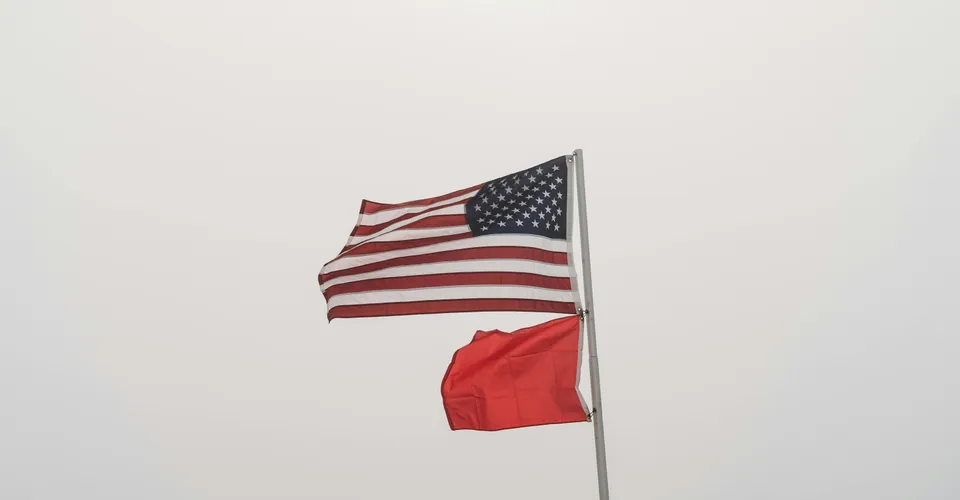
The moment I saw JD Vance defend Viktor Orbán hours after Hungary’s voters threw him out, I realized something had shifted in how America does diplomacy.
This isn’t about one vice-president’s awkward tweet. It’s about what that tweet signals to everyone watching from Tehran, Beijing, Moscow, and Gaza. When your own government can’t get its story straight about who its allies are, your adversaries stop negotiating. They start positioning.
The Gap Between What We Say and Who We Back
Let’s start with the obvious: Orbán lost. He got crushed in Hungarian elections. Hungary’s voters decided they’d had enough of his authoritarian drift, his coziness with Moscow, his blocking of EU aid to Ukraine. They picked Péter Magyar instead.
Then Vance, the sitting US vice-president, called Orbán a “great guy” who did a “very good job.” Said he was “sure” he could work with Magyar too, but—and here’s the tell—he led with the compliment for the guy who just lost.
I’m not here to litigate American domestic politics. But I’ve covered enough of these moments to know how they land abroad. In Gaza, Hamas sees this and thinks: The Americans don’t even agree on who they’re supporting. Why should we take their mediation seriously? In Beijing, analysts are circling the date when Vance takes office, wondering if Trump 2.0 will actually back democratic allies or just whoever runs the biggest economy.
That’s exactly what happened next.
 Photo by Steven Van Elk / Pexels
Hamas Walks Because Washington Looks Weak
Hamas rejected Gaza disarmament talks. Not because of the terms—because, according to the official who told the BBC, Israel hasn’t complied with its commitments. That’s the stated reason. But the real reason? They’re testing whether America can even deliver Israel anymore, let alone broker a deal.
When the US government’s own leadership is sending mixed signals about whether democracy or strongmen matter, why would any party to a conflict trust American guarantees? Hamas knows Biden’s team will be out in weeks. They’re betting Vance or whoever’s running Trump’s foreign policy will care less about Gaza than about other things entirely.
The disarmament plan goes nowhere. The ceasefire gets shakier. And meanwhile, Israel’s still launching new attacks in southern Lebanon while supposed Israeli-Lebanese talks happen in Washington. The fighting didn’t stop because diplomacy began. Diplomacy began because the fighting’s unsustainable. But if nobody believes America can hold the line, the fighting just restarts.
Iran Called America’s Bluff First
Here’s where China comes in. China just accused the US of running an “irresponsible and dangerous” blockade of Iranian ports. They’re the biggest buyer of Iranian oil. They’re not complaining because they care about maritime law.
They’re complaining because they know a blockade works best when your coalition stays quiet and the target believes you’re serious. When America’s vice-president is defending autocrats and America’s foreign policy looks like it’s being rewritten week-to-week, the blockade’s teeth fall out. China says something publicly—which they rarely do—because they’ve calculated that Washington’s already split and can’t enforce the pressure.
Iran’s not fully stabilized. The ceasefire with Israel and Hezbollah is, as the headlines say, “fragile.” The economics are brutal enough that migrants in Dubai are getting furloughed—the hospitality industry there’s been hammered by the war spillover. But Iran’s also not collapsing because the blockade only works if everyone believes you’ll maintain it. And right now, do they?
 Photo by Markus Winkler / Pexels
The Orbán Think Tank Problem
Here’s the detail that actually keeps me up at night: Orbán financed a Brussels think tank that pushes his populist vision. He lost. He’s probably leaving office soon. But the think tank stays.
This is how ideas outrun elections. Orbán’s been out of power for five minutes and his infrastructure for influence is still there, still functioning, still shaping how European policy gets discussed. It’s like he built a ship and got kicked off it, but the ship keeps sailing.
Why does this matter for US foreign policy? Because it means the ideological current that Vance and Trump represent isn’t just American. It’s networked across Atlantic partners. Orbán’s playbook—the defiance of institutional constraints, the flirtation with strongmen, the populist nationalism—doesn’t die with one election. It metastasizes through think tanks, foundations, and donor networks.
And America’s new leadership just called the guy who pioneered it a “great guy.”
The Carney Question Nobody’s Asking
Mark Carney just secured a majority government in Canada. He’s being called a “rising star in global centrist politics.” Critics say he’s doing something illegitimate.
But here’s what interests me: Canada’s moving toward someone more explicitly pro-business, more pro-market, more aligned with technocratic solutions than traditional politics. At the exact same moment America’s moving toward something noisier, more nationalist, more skeptical of institutions.
Two countries sharing a border. Two opposite directions. That’s not a coincidence—that’s what happens when confidence in the existing order fragments. Some countries lean harder into the system (Canada, maybe). Others blow it up (Trump, Orbán, the networks financing them). The ones trying to hold the middle ground get crushed.
I don’t have confidence that Carney solves this. I just know he’s swimming against a current that’s flowing the other way everywhere else.
The Maradona Trial and the Larger Rot
Argentina’s retrying Maradona’s death. The first trial collapsed because a judge let cameras into court—a procedural disaster that undermined the entire case against his medical team.
This seems disconnected from Gaza and Iran until you realize it’s not. It’s an example of institutions breaking down under pressure. Justice systems failing not because the law’s unjust but because the process itself becomes corrupted or theatrical. It’s what happens when you stop trusting the machinery of governance.
And right now, the machinery is making weird noises everywhere.
Ukraine Gets Money. Lebanon Gets Bullets.
Denmark’s invested $250 million in rebuilding Mykolaiv, Ukraine. That’s real. That’s sustained commitment. But it’s also the exception that proves the rule: most American allies aren’t sure what America’s committing to anymore.
The Trump administration wants a “more business-focused plan.” That’s not inherently wrong. But it signals that America’s asking which investments pay off, not which are strategically necessary. That’s a fundamentally different calculus than “we rebuild democracies that fight for themselves.”
And if you’re Lebanon—where you’re caught between Israel, Iran, Hezbollah, and diminishing international attention—you notice that Denmark rebuilds Ukraine while your ceasefire stays fragile and everyone’s arguing about who did what wrong.
The Swalwell Moment
There’s a congressman facing sexual assault accusations. He denies the assault, admits “mistakes,” says he’ll resign. A normal crisis in a normal system gets handled.
But we’re not in a normal system anymore. We’re in one where the vice-president defends autocrats and questions why America should care about election outcomes. Where the symbolic weight of who stays and who goes has gotten heavier because institutions already look compromised.
Swalwell resigning is the right call. But it happens as background noise now, not as news that restores faith in accountability.
My Read
This is what unraveling looks like. Not collapse—not yet. But the visible fraying of the assumptions that held the post-1990s order together.
America’s rivals aren’t attacking harder. They’re just not flinching when America speaks anymore. Hamas walks from talks because Washington can’t guarantee anything. Iran weathers the blockade because China’s signaling it doesn’t believe America can sustain it. Orbán loses but his infrastructure stays. And everyone’s watching to see if America can even agree on what matters.
I think we’re six months from a moment where one of these pressure points breaks. Not all of them. Just one. Could be Lebanon. Could be the Iranian blockade. Could be something nobody’s seeing yet.
And when it breaks, it’ll look like a surprise. It won’t be.
What I’m Watching
-
Gaza ceasefire next crisis point: Watch if the fighting restarts in the next 90 days. If it does, and America can’t negotiate a restart, that’s the moment everyone stops believing US mediation works. Specific trigger: Israeli military operations resume in northern Gaza.
-
China-Iran oil sanctions test: Monitor whether China increases Iranian oil purchases or signals loudly that it’s defying US pressure. If it does either in the next quarter, the blockade strategy collapses and Iran gets breathing room.
-
Orbán’s successor and Vance meetings: Track whether JD Vance actually meets with Péter Magyar as promised, and what that meeting signals about whether America cares about democratic outcomes in Europe. If Vance doesn’t meet him within six months, that’s a confirmation that his Orbán comments were sincere.
-
Denmark’s Ukraine commitment under Trump: Watch if the Trump administration either matches or publicly criticizes Denmark’s $250 million investment. That’ll tell you whether “business-focused” means picking winners (Ukraine) or walking away from expensive commitments.