The System Is Cracking Everywhere at Once
Mali implodes, NATO fractures over Iran, and Trump's chaos reaches the border. What happens when allies stop trusting each other?

Mali just got hit with what witnesses are calling the largest jihadist attack in years. Coordinated explosions and gunfire across the center and north. Ukraine’s Dnipro is counting bodies after a Russian strike on a residential building—four dead confirmed. And in Washington, someone leaked a Pentagon email suggesting the Trump administration is considering suspending Spain from NATO if the country won’t back a potential Iran war.
This is what fracture looks like when it happens everywhere at once.
 Photo by Henrik Pfitzenmaier / Pexels
The Cascade Effect Nobody Planned For
What’s wild is how disconnected these crises appear on the surface. Mali’s jihadist problem feels West African. Ukraine’s war is European. NATO’s internal drama is transatlantic. The immigration deportations are domestic U.S. policy. But they’re symptoms of the same disease: the institutions that held the global order together are losing their grip.
Start with Mali. The coordinated nature of these attacks—simultaneous strikes across multiple locations—suggests organization, resources, and most importantly, breathing room. That room exists because the regional order has collapsed. France pulled out. The military government kicked out West African peacekeepers. Russia’s Wagner (now whatever it’s calling itself) moved in. The U.S. had to leave too. Into that vacuum, jihadist groups that were supposedly on their heels regrouped, rearmed, and coordinated something massive.
This isn’t new instability. It’s the acceleration of existing instability. And it’s happening while the West is distracted.
Ukraine gets the headline attention—which it deserves, 30,000 casualties by some counts in 2024 alone—but the Russia-Ukraine war has essentially become a sideshow to the bigger story: who runs the international system? Russia’s invasion in 2022 was supposed to be a shock that unified the West. Instead, four years later, we’ve got a Pentagon email floating around suggesting the U.S. might punish its own allies for not supporting an Iran operation they were never consulted about.
Let me be blunt: that’s extraordinary. NATO doesn’t suspend members. It’s not in the treaty. The alliance’s entire reason for existing is that it doesn’t work that way. You get in, you stay in, and even when members drive each other crazy (looking at you, Turkey), you manage it inside the club. The idea that a U.S. administration would leak an option to change that rule—over a perceived lack of support for something that hasn’t happened yet—tells you everything about how fragile the alliance has become.
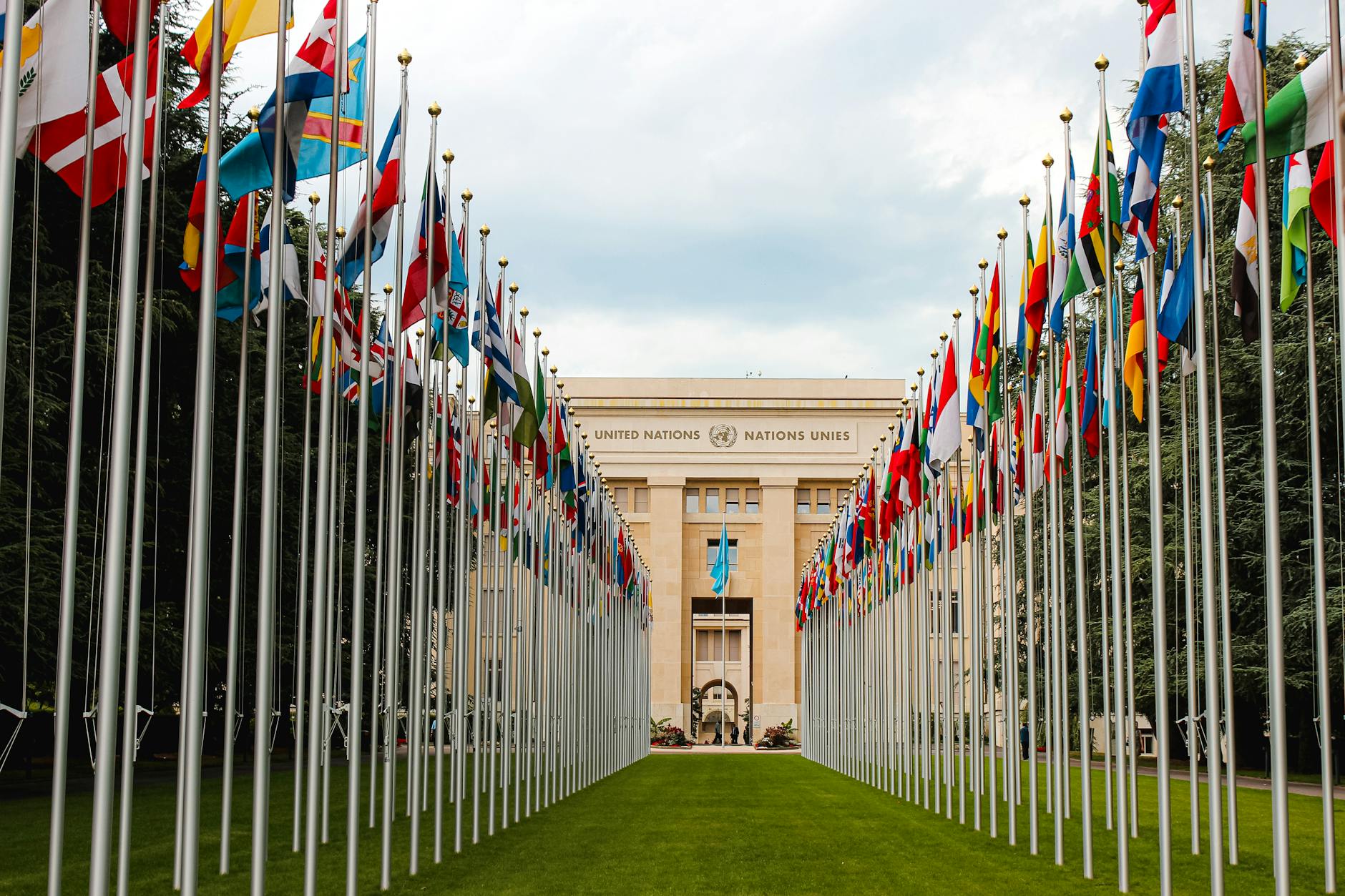 Photo by Mathias Reding / Pexels
The Trust Problem Is Structural Now
I’ve sat in enough rooms with European diplomats to know what they’re thinking right now. It’s not “we should support the Iran operation.” It’s “what else is Trump willing to threaten us over?”
Here’s my read: Trump’s people are testing whether they can use NATO membership as leverage. The fact that they leaked it instead of quietly negotiating with Spain suggests they wanted the threat to be public. They wanted all the other members to see it. That’s not diplomacy—that’s intimidation as policy. And intimidation works until it doesn’t.
Europe’s watching. They’re not stupid. If the U.S. is willing to suspend allies over policy disagreements, every European government now has to ask: what am I getting out of this alliance? The answer used to be: security against Russia. But if Russia’s tied down in Ukraine anyway, and America’s unreliable, maybe you invest in your own defense. Maybe you build your own industrial base. Maybe you find other partners.
That’s how alliances crack open. Not with a bang. With a calculation.
The immigration stuff adds another layer to this. An 85-year-old French widow—wife of a former G.I., presumably a Korean War veteran or earlier—got caught in the ICE dragnet. She’d been living in the U.S. legally for presumably decades. Now she’s deported and giving interviews about her detention. That’s a specific, human-scale story that resonates with actual French people. France is a NATO ally. The U.S. just deported one of their citizens. Message received.
The Competence Question
Here’s what I’m genuinely uncertain about: whether this is incompetence or strategy.
The leaked Pentagon email about suspending Spain could be a low-level staffer’s brainstorm that someone forwarded to a reporter to make Trump look bad. It could also be a deliberate test of whether the threat lands (it did). Either way, the message is out there. Either way, allies are freaked out.
The Mali attacks point to something different: a straightforward failure of Western policy to produce results. You can’t occupy a country militarily, leave when it gets unpopular at home, and then be shocked when it implodes. France learned that in Mali. The U.S. learned it in Afghanistan. Every Western power should’ve learned it by 2024. And yet.
What gets me is the Everest flood warning system that’s been rusting since 2016. That’s not geopolitics—that’s just negligence. But it matters because it’s emblematic. We built infrastructure to warn people about catastrophic risk. Then we stopped maintaining it. Now thousands are at risk. That’s the pattern everywhere: systems built in better times, neglected in worse ones, until they fail spectacularly.
Photo by Mathias Reding / Pexels
What Actually Matters Now
The real tell is what happens in the next 90 days. Trump hasn’t actually launched an Iran operation. The Mali jihadists haven’t overrun a capital city—yet. The NATO suspension thing could still blow over as a staffing mishap. But the trajectory is set.
My prediction: European NATO members will accelerate military spending, but not because America convinced them. Because they’re hedging. The U.S. will probably back down on the Spain thing because openly expelling allies serves no one. But the suspicion will linger. And in the next crisis—whether it’s Syria, the Middle East, or Eastern Europe—that suspicion will matter more than the official alliance structure.
I think the next 12 months will show us whether NATO can survive a U.S. administration that treats it as a negotiating tool rather than a security commitment. My bet: it survives, but it fragments. Some countries will stick close to America out of necessity. Others will build their own options. Europe will stop pretending it can rely on Washington. That’s not the end of NATO. It’s the end of NATO as we knew it.
The Mali situation is more immediately dangerous. A successful coordinated jihadist campaign suggests the groups there are better-organized and better-supplied than Western assessments thought. If they can sustain attacks at that scale, they’ll either take territory or provoke a regional response that destabilizes the entire Sahel. That spreads to West Africa. That means more migration pressure on Europe. Which feeds right back into Trump-era immigration politics. The dots connect.
What I’m Watching
-
Mali’s next 60 days: Can jihadist groups sustain offensive operations, or was this a one-off? If they can, what’s the source of their new capability? That tells us whether the regional collapse is just accelerating or entering a new phase.
-
Spain’s response to the NATO threat: Do they fold and publicly commit to Iran support? Or do they push back? Their move will tell every other ally whether Trump actually means it or just likes to threaten people.
-
Ukraine’s manpower crisis: Russia’s grinding down Ukrainian reserves while the West debates long-term support. If Ukraine can’t field troops by mid-2025, the war enters a new phase fast.
-
European defense spending: Watch whether the spending increases go to integration (real unified command, real interoperability) or national vanity projects. The difference determines whether Europe can actually defend itself without America.