The Real Election Test Nobody's Talking About
Potholes, postal votes, and the machinery of democracy are failing. Here's what that actually means for this week's elections.
The Unglamorous Crisis
Starmer’s preparing for an antisemitism summit. Trump’s claiming the economy is “roaring.” Reform is announcing detention centers in Green constituencies. Meanwhile, in Cardiff, people didn’t get their ballots.
That last detail matters more than any of the others. I don’t think that’s hyperbole.
There’s a theory in politics that elections are won or lost in the margins—the persuadable voters, the turnout differential, the late-breaking scandal. Fair enough. But there’s another margin nobody talks about until something breaks: the machinery itself. The actual, physical, unglamorous infrastructure that gets people to vote.
This week’s local elections in England are facing two simultaneous infrastructure crises, and if you’re not watching them carefully, you’ll miss what they reveal about British democracy right now.
 Photo by Mikhail Nilov / Pexels
The Pothole Problem Is the Pothole Problem
Look, I get it. A story about road conditions sounds like something your mum complains about while doing the washing up. But the headline is explicit: “Potholes fuel voter frustration before elections—so what can be done?”
This isn’t a cute data point. This is the physical manifestation of years of underfunded local government. Councils have been hollowed out since 2010. Some have cut budgets by 40 percent. The roads reflect that. So do the libraries. So do the leisure centers. So does everything.
When voters turn up on Thursday to vote in local elections, they’re voting in a landscape of visible decay. They’re not voting in the abstract. They’re voting in places where they’ve had to swerve around potholes for six months. Where the streetlight on their corner never got fixed. Where the youth center closed.
That shapes how people vote. And here’s what I think happens: if the roads look terrible, Labour loses ground to whoever’s promising to “clean things up.” Right now, that’s not Labour. Labour runs most of these councils. They’re the ones who inherited the underfunding and then couldn’t fix it quickly enough. So voters punish them.
The Lib Dems and Reform smell blood here. And Reform’s actually weaponizing local discontent in a specific, vicious way.
The Detention Center Announcement Is Strategic Cruelty
Let’s talk about what Reform just did. They pledged to open migrant detention centers specifically in areas that vote Green. The Green Party called it “abhorrent.” Accurate, but also sort of missing the point strategically.
Reform isn’t pitching a serious policy here. They’re doing something much colder: they’re using an announcement designed to provoke outrage from progressives as a distraction tool. The Green Party’s response—“attempts to distract voters”—shows they see it. But the damage is done. The headline’s out there. Culture war engagement is maximized.
I think this is the 2024 Reform playbook distilled: say the most inflammatory thing possible, watch the left respond with fury, and then use that fury as evidence that the system’s rigged against “real talk.” Rinse, repeat.
What’s darker is it might actually work. In local elections, especially, when turnout’s low and voters are angry anyway, a party willing to burn things down has an opening. Reform could genuinely pick up council seats Thursday by channeling that anger, even if their actual policies are (charitably) half-baked.
 Photo by Andrew Neel / Pexels
The Postal Vote Breakdown
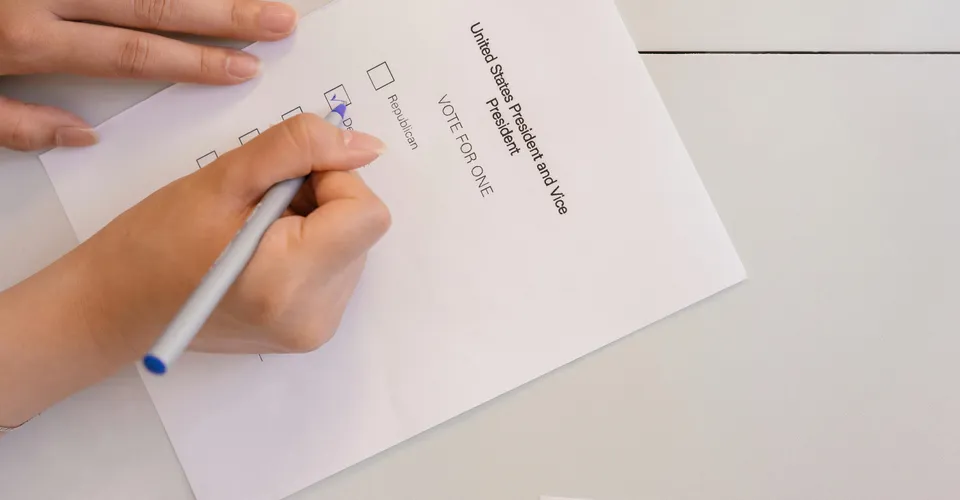
But here’s where I get genuinely worried. Cardiff Council is investigating undelivered postal ballots. Some voters literally didn’t receive their votes.
This is a bigger deal than it sounds. Postal voting in the UK has expanded massively over the past decade. For the 2024 general election, millions of people voted by post. The infrastructure barely holds. Royal Mail’s struggling. Councils’ administrative capacity is thin. And now, weeks before a set of elections, we’re finding out that some ballots just didn’t show up.
I’m not saying there’s a conspiracy. I’m saying the system’s under stress. And when systems under stress start dropping ballots—even a small number, even in one council area—that’s a warning flare.
What happens if this expands next week? What if Cardiff’s not the only place where postal votes went missing? We don’t know yet. But we’re about to find out in real time, on election night, when some voters realize they couldn’t vote because the ballot never arrived.
That’s not just bad for turnout. That’s delegitimizing.
The Bigger Picture
Step back. You’ve got Starmer hosting a summit on antisemitism on Tuesday. You’ve got elections Thursday. You’ve got roads falling apart. You’ve got postal ballots not arriving. You’ve got Reform saying genuinely unhinged stuff about immigration. You’ve got the Greens looking for somewhere to park their anger. You’ve got Labour managing local authorities that can’t afford to maintain basic services.
This isn’t a dramatic moment. It’s not a scandal with a smoking gun. It’s slow-motion institutional failure playing out on a Thursday evening when maybe 35 percent of eligible voters show up.
My read: Labour’s going to take losses Thursday. Real ones. Not catastrophic—they’ve got councils to spare—but significant enough to embolden critics on the left and right. Reform will pick up seats in places where people are fed up. The Lib Dems will resurge. And all of this will be partially explained by a simple fact that nobody will quite put in the headline: the machinery’s not working, and voters know it.
 Photo by Tara Winstead / Pexels
What I’m Watching
1. Postal vote delivery failure rates by Thursday evening. If undelivered ballots pop up in more than just Cardiff, we’re looking at a systemic problem that doesn’t get fixed before the next general election. Watch for official figures from the Electoral Commission by Friday morning. If they’re saying more than 0.5 percent of postal ballots were undelivered, that’s a red line.
2. Reform’s vote share in council seats where they made the detention center announcement. If Reform gains ground in places that became national headlines for their migration rhetoric, it proves the provocation-distraction model works. If they underperform expectations, it suggests voters are more sophisticated about culture war bait than we think. Results Tuesday night, analysis Wednesday.
3. Labour’s performance in councils with the worst pothole reviews. Cross-reference council areas that appear in pothole complaint stories with Labour’s vote share losses Thursday. If there’s a clear correlation between visible road degradation and Labour losses, it suggests the infrastructure neglect is genuinely swinging votes. We’ll have results by Friday.
4. Starmer’s antisemitism summit messaging on Tuesday. Watch if he uses it to reframe the narrative before Thursday’s elections or if it gets lost. A strong message here could shore up support among Jewish voters and progressive ones concerned about antisemitism. Weak messaging or a non-event suggests he’s already mentally moved past these elections.