The Pentagon's Hostage Notes: Why America's Alliances Are Suddenly Negotiable
Internal Pentagon emails show the US considering punishment of NATO allies over Iran war support. This isn't diplomacy—it's extortion dressed in camouflage.

The emails are reportedly sitting in a Pentagon inbox somewhere, and they’re nuclear.
Not literally. But in terms of what they signal about how the world’s oldest and most successful military alliance actually functions? They’re the kind of thing that makes career diplomats reach for antacids.
According to reporting, internal Pentagon communications outline options to punish NATO allies—specifically Spain—over their perceived unwillingness to join an Iran war. The threat: suspension from the alliance. Not expulsion (NATO says there’s “no provision” for that anyway), but suspension. The implication: your membership is conditional. Your security guarantees are transactional. Fight our war or we’ll leave you exposed.
This isn’t new rhetoric. But seeing it in internal military emails transforms it from political theater into policy infrastructure.
When Alliances Become Leverage
Here’s what makes this genuinely alarming: it reveals that someone inside the Pentagon was treating NATO membership as a negotiating chip, something to withhold in exchange for military participation in a conflict that most allied nations are deeply skeptical about.
Spain’s position is actually defensible. The Spanish government, like much of Western Europe, has been cautious about direct military involvement in an Iran conflict. This isn’t appeasement or weakness—it’s a reasonable assessment that escalation in the Persian Gulf carries catastrophic risks for economies dependent on trade through the Strait of Hormuz. Spain has actual skin in that game.
But the Pentagon email reportedly didn’t treat Spanish skepticism as a legitimate policy difference. It treated it as insubordination requiring punishment.
 Photo by Andi saiful Sidik / Pexels
The Falkland Islands wrinkle makes this even stranger. According to reporting, the same Pentagon document apparently considered shifting US policy on Falklands sovereignty—explicitly as retaliation for the UK not joining an Iran war. Let me parse that: the US was considering reversing decades of policy and undermining an ally’s territorial claim because that ally wouldn’t fight in a conflict it didn’t support.
That’s not statecraft. That’s blackmail with a briefing book.
The UK has been one of America’s most reliable military partners. Since 2001, Britain has fought alongside the US in Afghanistan, Iraq, and Syria. The idea that the Pentagon would hold Falklands sovereignty hostage to extract Iran war participation suggests a fundamental misunderstanding of how alliances work—or a deliberate decision to stop treating them as mutual commitments and start treating them as protection rackets.
The Iran Question Mark
Here’s what I genuinely don’t understand: who actually wants this war?
The reporting shows Iranian foreign minister Abbas Araghchi meeting with Jared Kushner and Steven Witkoff in Islamabad. These are negotiations, not confrontations. They suggest someone in the Trump administration is still trying to talk to Iran about… something. De-escalation? Sanctions relief? It’s not clear.
Meanwhile, inside the Pentagon, people are apparently drafting punishment frameworks for allies who won’t fight Iran.
These can’t both be true strategies unless the Pentagon is preparing for a scenario where diplomatic talks fail. But even that logic fails because you don’t threaten your alliance partners with suspension right when you’re trying to negotiate with the adversary. That tells Iran that you’re losing your coalition. It tells Spain and the UK that their security isn’t guaranteed. It tells everyone watching that American security guarantees are conditional on unrelated military participation.
The Iranian side remains genuinely opaque. The country’s new supreme leader has “final say” theoretically, but reporting suggests decision-making is actually murkier than that. Multiple power centers, unclear chains of command, competing factions with different views on negotiation versus confrontation. This is the entity the Pentagon apparently thinks it can pressure NATO into fighting.
What’s Actually Breaking
NATO as an institution isn’t dying. But something subtler is cracking: the assumption that membership means something unchangeable, that your security guarantee isn’t contingent on supporting every military adventure in the current administration’s priority list.
This is different from Cold War alliance politics. During the Cold War, NATO members disagreed constantly. France withdrew from the integrated command in 1966. Germany and the US clashed over détente with the Soviet Union. But nobody threatened to suspend countries from the alliance over disagreements. The whole point of the alliance was that your security guarantee was fixed—permanent—regardless of tactical disputes.
What the Pentagon emails apparently introduce is the idea that membership itself is conditional. That’s a category error. Once you make membership conditional on support for specific wars, you’ve transformed NATO from a security arrangement into a coalition of the willing, and coalitions of the willing are famous for falling apart.
My read: someone inside the military establishment has concluded that traditional alliance management is too constraining. That allies need to be pressured into supporting priority conflicts. And they’re apparently willing to overturn settled policy positions—like Falklands sovereignty—to extract compliance.
This will not work as intended.
Spain and the UK won’t suddenly support an Iran war because of threats. They’ll become less reliable on everything else. Germany will reconsider its military commitments. France will dust off its Gaullist playbook. And Iran will sit back watching the Western alliance fragment over whether to fight a war nobody actually wanted in the first place.
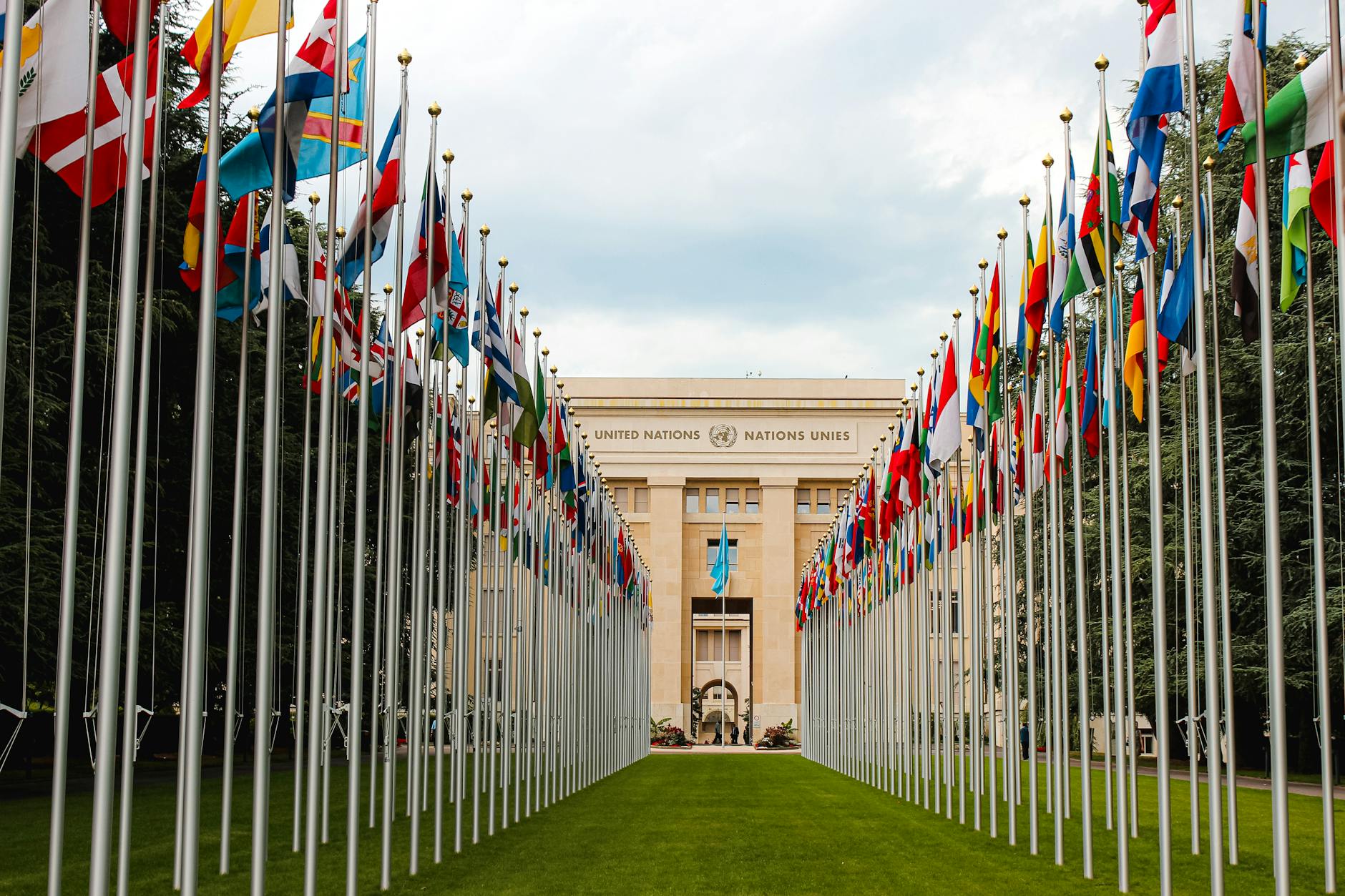 Photo by Mathias Reding / Pexels
The Actual Precedent Problem
There’s something historically instructive here. This kind of coercive alliance management usually precedes alliance collapse. Nixon’s shock opening to China (1971) didn’t threaten Japanese security guarantees—it reassured Japan that the US was strategically flexible. But if he’d instead threatened to withdraw the security guarantee unless Japan supported the opening, he’d have destroyed the alliance instead of reinforcing it.
The reason: allies need to believe their security guarantee is permanent. The moment they start calculating whether the US will actually defend them if defending them is inconvenient, the alliance is functionally over.
The Pentagon emails apparently skip past this entire historical lesson and move straight to “do what we want or lose your membership.”
What I’m Watching
The actual outcome of Kushner-Witkoff talks in Pakistan. If these produce any agreement—even a minor de-escalation framework—it suggests the Pentagon’s hardline is facing internal opposition. If talks collapse or produce nothing, it suggests the coercive approach has won internally and we’re heading toward a more confrontational Iran posture. Watch for any official statement from the Iranian foreign ministry within two weeks.
Spanish and British statements on NATO commitment. Will Spain or the UK make any public statements reaffirming NATO membership or distancing themselves from an Iran war? Even carefully worded diplomatic language will signal whether these countries are recalibrating their alliance assumptions. Listen for any language about “decisions made in Brussels” versus “decisions made in Washington.”
European Union discussions on Article 42.7. The EU has a mutual defense clause that’s supposed to trigger if one member is attacked. European officials are apparently asking whether they need to develop this into something serious—a NATO alternative. If EU countries start actually investing in this as a backup plan, it’s a sign they’ve stopped believing in permanent American security guarantees.
Any actual policy reversal on Falklands sovereignty. This is the most concrete trigger. If the US formally shifts its position on Falklands governance, even rhetorically, it means the Pentagon emails converted into actual policy and we’re entering a genuinely new era of transactional alliance politics. Watch for any change in State Department language on this specific issue.