The Open Source Time Bomb Nobody's Defusing
Linux is burning while GameStop plays billionaire, Nvidia claims everything's fine, and the industry's security theater falls apart in real time.
The infrastructure that runs the internet just caught fire, and we’re all standing around arguing about whether it smells like smoke.
In the past week, we’ve learned that Ubuntu infrastructure has been down for over a day. CISA—the US government’s cybersecurity agency—issued a severe warning about CopyFail, a Linux vulnerability being actively exploited in hacking campaigns against servers and data centers. Someone poisoned an open-source package with 1 million monthly downloads that stole user credentials. And supply-chain attackers specifically targeted security firms like Checkmarx and Bitwarden, which is like breaking into a bank by robbing the vault manufacturers.
This isn’t scattered bad luck. This is the moment where the entire house-of-cards architecture of modern software stops pretending to be secure.
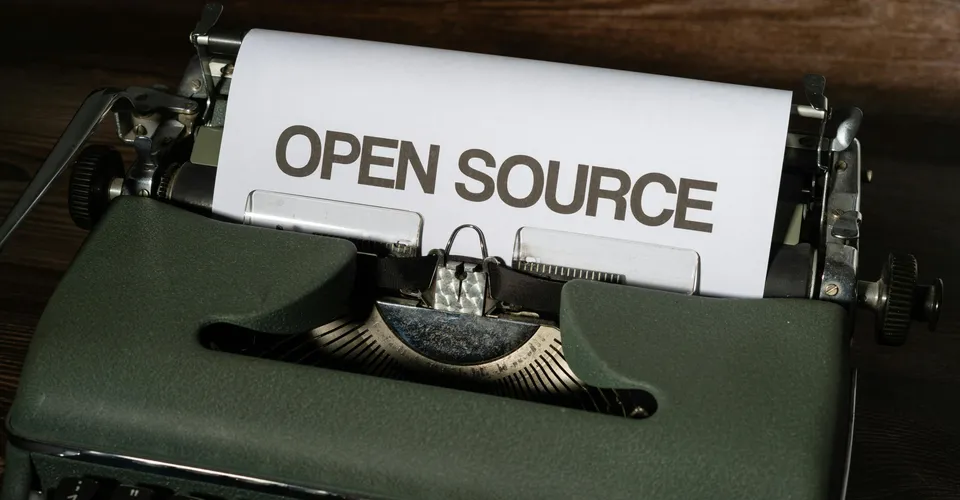
 Photo by Markus Winkler / Pexels
When Your Security Guard Gets Hacked
Let’s start with the most brazen move: targeting Checkmarx and Bitwarden directly. These aren’t random targets. Checkmarx makes software composition analysis tools—basically, code that checks if your code is safe. Bitwarden is a password manager. If you want to compromise thousands of companies at once, you don’t attack the thousand companies. You attack the three tools those thousand companies depend on.
This is like poisoning the poison tester.
The CopyFail bug is being actively weaponized right now, according to CISA. Not discovered and then potentially used later. Being used. Today. Against actual targets. And it’s affecting “major versions of Linux”—meaning this isn’t some edge-case vulnerability in a beta release. It’s in the distributions that power AWS servers, Google Cloud infrastructure, most financial institutions’ backend systems.
The open-source package that stole credentials? A million monthly downloads. That’s not a niche library that 47 companies use. That’s something every developer with a heartbeat probably has in their dependency tree without knowing it.
Here’s what gets me: we know this happens because someone actually caught it and reported it. How many times did this happen last year that nobody noticed?
 Photo by UMA media / Pexels
The Confidence Game
Meanwhile, Jensen Huang is on stage telling workers that AI is “creating an enormous number of jobs” and that people worrying about AI displacement are overblowing things.
I’m not going to quote him directly because those are secondhand reports, but the message is clear: relax, everything’s fine, AI is net-positive for employment.
And he might even be right. Long term. Maybe.
But right now, while we’re dealing with the fact that the foundational infrastructure of modern computing is compromised in ways we don’t fully understand, the guy selling AI chips is telling people not to worry about disruption. There’s something almost Shakespearean about the timing.
My take: Huang isn’t wrong that AI will create jobs. But those jobs won’t be for the people losing jobs to AI in 2025. The transition period—we’re living through it—is going to look like massive technological unemployment disguised as “retraining opportunities” and “upskilling programs.” The long-term outcome might be fine. The next three to five years will be rough for people who didn’t see it coming.
The IPO Carnival While Rome Burns
Cerebras—an AI chip maker with “deep and rich” ties to OpenAI—is heading for an IPO that could value it at $26.6 billion or more. Fervo Energy, an enhanced geothermal startup, is raising up to $1.3 billion, potentially hitting $6.5 billion valuation.
Venture capital is still behaving as though we’re in the phase where hype translates to revenue. Maybe it does. Geothermal energy is legitimately useful infrastructure, and if Fervo can actually deliver cheaper, more reliable geothermal power, the valuation’s not insane. Cerebras getting valued at $26 billion while OpenAI keeps printing money suggests the market thinks AI chips are the pick-and-shovel play of this era.
But here’s what’s wild: GameStop—the video game retailer that’s had approximately seventeen near-death experiences—offered $56 billion for eBay. And by offered, I mean announced they might offer, without apparently explaining how they’d finance it.
This is what financial delusion looks like in real time. GameStop has a market cap somewhere in the $2-4 billion range depending on which morning you check. They’re talking about a $56 billion acquisition of a company that’s been trying to figure out what it wants to be since 2012. It’s not a strategy. It’s a press release that happened to go public before anyone edited it for reality.
The fact that this is treated as news-weird rather than indictment-worthy tells you something about the current moment: we’ve got enough legitimately crazy things happening that even genuinely insane things barely register.
What Actually Happens Next
The supply-chain attacks are going to get worse before anyone gets serious about fixing them. Why? Because the incentive structure doesn’t work. If I’m a company, I can either:
- Spend millions on real security audits and software composition analysis
- Wait until I get breached, pay a settlement, and move on
Option 2 is cheaper in expected value terms. Until there’s serious criminal liability for negligence, this stays the playbook.
The Linux vulnerabilities will get patched. Maybe quickly, maybe not. Ubuntu’s infrastructure outage being over a day long suggests the people maintaining the systems that maintain everything else aren’t running with the operational excellence we’d want. That’s charitable. More likely: they’re understaffed, under-resourced, and held together with the digital equivalent of duct tape and prayers.
The AI jobs question will resolve itself the way it always does: some jobs disappear, new ones emerge, and the people whose jobs disappeared in 2025 don’t automatically become the people suited for the new jobs in 2027. We’ll call it progress.
What I’m Watching
-
CopyFail patch adoption rate by Q2 2025. If we’re still seeing active exploitation of this in six months, it means the security update velocity in the Linux ecosystem is slower than we thought. That’s genuinely scary for data center security.
-
Whether Cerebras’ IPO actually delivers on revenue or hits the profitability wall that most AI chip makers eventually hit. $26.6 billion valuation requires either massive market share or massive margins. Nvidia can do both. Cerebras? We’ll know by late 2025.
-
The next supply-chain attack target. If they’re hitting security tools now, what’s next? Payment processors? Authentication systems? Watch for attacks on companies that sit between you and the thing you’re actually trying to protect.
-
GameStop’s actual offer letter for eBay. If one materializes, we’ve entered a new era of financial theater. If it doesn’t, we can file this under “why VCs shouldn’t have Twitter accounts.”
The open-source security catastrophe we’re living through isn’t about to get solved by a single patch or policy change. It’ll get solved the way most infrastructure problems get solved: after it breaks something important enough that the bill for fixing it exceeds the bill for prevention. We’re still in the early innings of that lesson.