The Market's Whiplash Economy: What Earnings Season Actually Reveals About 2025
Netflix crashes, AMD soars, oil falls on Trump's Iran talk—and suddenly the whole 'stay invested' thesis gets a stress test. Here's what's actually happening.
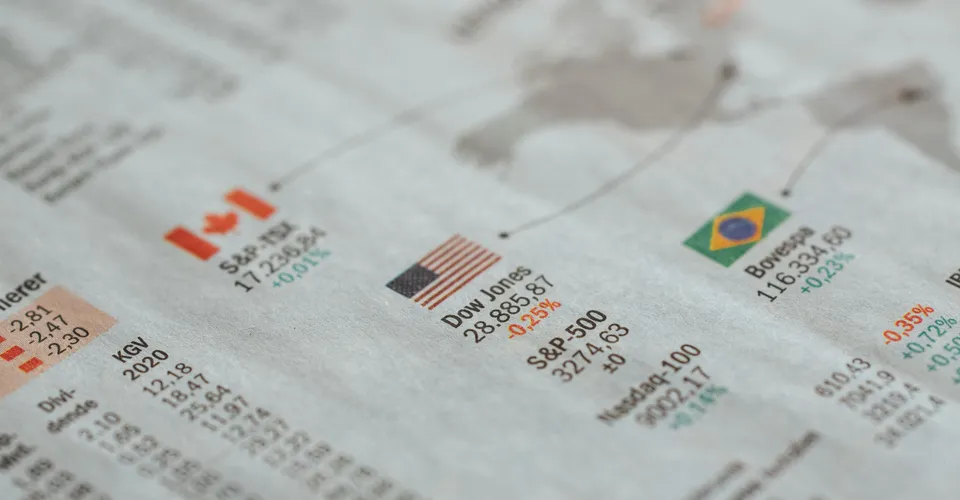
The market just gave us the financial equivalent of a stress test, and the results are… messier than the cheerleaders want you to believe.
Thursday’s action told you everything. Stocks rallied even as oil rebounded. AMD broke out. Netflix tanked. Oil fell because Trump said the Iran war “should be ending pretty soon”—a statement so vague it makes fortune cookies look like peer-reviewed research. Meanwhile, the Fed chair race is getting spicier, geopolitical risk is supposedly cooling, and earnings season is separating the wheat from the chaff in real time.
This is the moment when “stay invested through volatility” stops being motivational poster advice and becomes an actual strategic decision you have to make.
 Photo by Markus Spiske / Pexels
The Earnings Reckoning Nobody Predicted
Netflix’s late-day collapse is the headline grabber, but here’s what matters: the streamer beat revenue expectations and delivered a massive EPS jump. Yet it’s trading lower. Why? Because Reed Hastings is stepping off the board, and guidance didn’t convince people the gravy train continues. Investors priced in perpetual growth. Reality showed up and said: “Actually, we’re stabilizing.”
That’s the pattern repeating across the board right now.
OPENLANE’s up 16.8% over six months, beating the S&P by 11.7%. TFS Financial’s up 14.5%, outpacing the benchmark by 9.4%. Both stocks have had legitimate runs. Now comes the question: are these compounding, or are they mean-reverting candidates getting picked off by smart money?
The market sold off hard, then recovered fast. That cycle—which happened earlier this week—is basically the market stress-testing your conviction. And you know what? Most retail investors failed that test by panicking. But here’s the uncomfortable truth: some of them should have.
Photo by Markus Spiske / Pexels
Trump’s Geopolitical Roulette Wheel
Let’s talk about the elephant in the room: Trump’s prediction that the Iran war “should be ending pretty soon” sent oil prices lower. Israel announced a ceasefire with Lebanon. Suddenly, risk-off assets got a little less scary.
But here’s my honest read: this is confidence theater masquerading as policy.
Trump made a prediction. Not a guarantee. Not a treaty. A prediction. Oil reacted like it was gospel. That’s the market pricing in geopolitical clarity that doesn’t actually exist yet. When (not if) this doesn’t materialize on whatever timeline people imagine, oil’s going to rip higher again, and growth stocks—which benefited from the “peace premium”—will feel it.
I’m genuinely uncertain whether we get a real resolution in the next 60 days or if this is just Trump talking into the void. But the market’s already pricing in one version of the story.
The Fed Chair Circus and What It Means
Kevin Warsh wants to lead the Fed. Sen. Elizabeth Warren’s making noise about his financial disclosures. This matters more than most people think, and not for the reason they think.
Warsh represents a different Fed philosophy than what we’ve had for the last two years. That creates uncertainty. The market hates uncertainty. So even though we’re supposed to be in a “rate cut cycle” (allegedly), the actual leadership of the institution that controls monetary policy is still in flux.
And then there’s Robert F. Kennedy Jr. running HHS, overseeing the CDC, amid all kinds of turmoil around vaccine policy and leadership shakeups. You want to know what spooks markets more than anything? Institutional instability at agencies that touch healthcare and public health infrastructure. Vaccines, drug approvals, regulatory clarity—all of it’s now under management that makes traditional institutional players nervous.
This isn’t obviously bullish or bearish. It’s just… uncertain. And the market’s hatred of uncertainty is why we’re seeing this whipsaw behavior—big down days followed by recoveries that don’t quite stick.
Photo by Markus Spiske / Pexels
What “Stay Invested” Actually Means Right Now
The headline that started this whole mess says: “The Market Sold Off Hard. Then It Recovered Fast. Here’s What That Cycle Tells You About Staying Invested Through the Next Crisis.”
Here’s what it actually tells you: staying invested works… until it doesn’t.
I’ve been trading long enough to remember 2008, 2020, and the 1987 crash. The people who stayed invested through those came out fine because equities eventually went higher. That’s not a law of physics. That’s what happened to happen.
What the current cycle is telling you is that conviction matters. If you own OPENLANE because you think it’s a legitimate business compounding at scale, Thursday’s action is noise. If you own it because it beat the S&P by 12%, you’re about to get schooled.
Netflix beating expectations and then crashing is the market saying: “We don’t care about your quarter. We care about whether you’re going to keep growing.”
That’s a fair question. Answering it requires actual judgment, not “stay the course” platitudes.
My Take: The Earnings Season Divide
Here’s what I think’s actually happening: we’re getting a bifurcation between (a) companies that are genuinely growing and extracting value, and (b) stocks that got bid up on rotation and momentum and are now facing the earnings test.
AMD breaking out while Netflix breaks down isn’t random. AMD’s in a sector (AI infrastructure, chips) that’s got real tailwinds. Netflix is mature, facing growth questions, and suddenly investors want proof of concept that the business still deserves a premium multiple.
The Trump administration brings tail risk (Fed uncertainty, geopolitical unpredictability), but also some opportunities (deregulation, potential growth tailwinds). Oil falling on Iran peace talk suggestions is the market pricing in a scenario. That scenario might not happen.
My prediction: by Q3 2025, we’re going to see which of these earnings winners and losers have real momentum and which were just riding waves. The stocks with actual earnings growth acceleration will keep going up. The ones that beat expectations but guided flat are going to be value traps.
What I’m Watching
1. Netflix subscriber growth and guidance revision timing. If Reed Hastings’ exit from the board signals a strategy shift, we’ll see it in the next earnings call. Watch for any guidance revision upward that would justify why the stock’s trading lower. If it doesn’t come within two quarters, Netflix is a hold-and-hope story.
2. Oil price action vs. Trump’s Iran narrative. If oil stays below $70/barrel through March, that’s proof the market believes the geopolitical de-risking story. If it spikes back above $80, investors will know the “peace is coming” talk was just noise. That moves everything from inflation expectations to growth stock multiples.
3. Kevin Warsh’s Fed confirmation process and actual policy direction. Watch his first testimony. If he signals inflation concerns or a less dovish stance than the market expects, growth stocks have another down day. This is your early warning system for whether the “lower rates forever” thesis is still alive.
4. OPENLANE and TFS Financial’s next earnings and whether they sustain their relative outperformance. These are the test cases for whether small-cap beats actually mean something or whether they’re just mean-reverting. If both beat again and keep rising, the rotation into beaten-down stocks is real. If one or both stumbles, we’re just seeing normal volatility.
The market recovered fast after the selloff. That’s great. But recovery isn’t conviction. Watch what happens when the next actual catalyst hits. That’s when you’ll know if “stay invested” was wisdom or luck.