The Market's Refusing to Crash and Nobody Knows Why
While recession warnings pile up and geopolitical risk spikes, equities keep hitting records. Here's what's actually going on—and why it terrifies me.
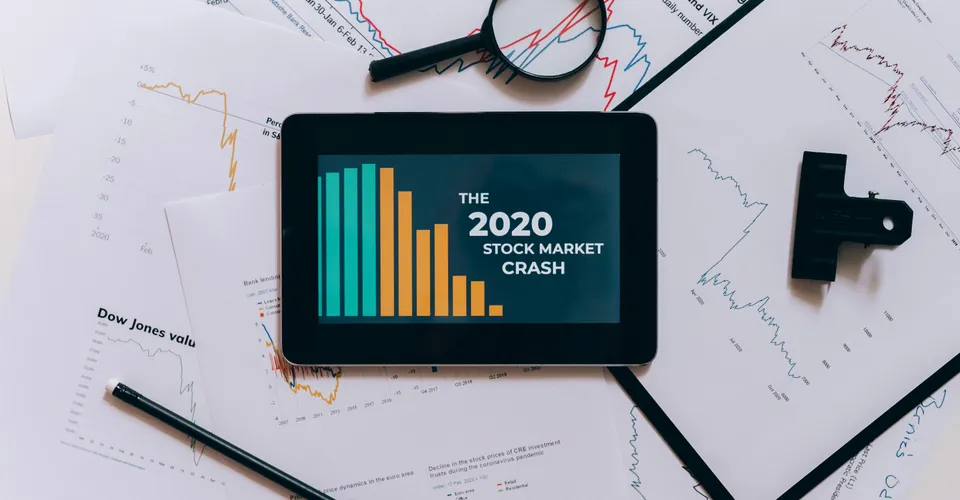
The stock market is doing something genuinely weird right now.
Every major index—the S&P 500, Nasdaq, Russell 2000, even the Dow Transports—is hitting fresh records. Not bouncing. Not recovering. Records. Meanwhile, recession risks are climbing. Middle East tensions are escalating. Central bankers from over 30 countries are apparently losing sleep over stagflation and energy security. Policymakers are on record worrying about a U.S.-Iran war. And yet the market keeps grinding higher like it didn’t get the memo.
This isn’t a bull market built on confidence. It’s something weirder: a market that’s scared and buying anyway.
 Photo by Leeloo The First / Pexels
When Fear and Greed Don’t Take Turns
Here’s what’s telling me this is genuinely unusual. Dividend stocks are beating growth for the first time in years. Let me parse that: investors are rotating hard into lower-volatility, cash-producing assets while simultaneously throwing money at the indexes. That’s not what you do when you’re confident about tomorrow. That’s what you do when you’re hedging your bets while still afraid of missing out.
The dividend rotation makes textbook sense. When you’re worried about the economy—when you’re genuinely watching Middle East tensions and thinking about oil supplies and energy costs—you don’t want to own unprofitable AI companies trading at 80x revenue. You want AT&T. You want stuff that pays you while you wait for the other shoe to drop.
But here’s where it gets contradictory: investors are also buying the broader market at all-time highs. That’s not hedging. That’s saying two different things at once.
My read? The market is pricing in a “soft landing” scenario that I’m increasingly skeptical about. And when markets do that—when they hold contradictory views—they usually resolve explosively in one direction.
 Photo by Markus Spiske / Pexels
The Geopolitical Elephant Everyone’s Ignoring
Let’s talk about what actually prompted those central banker conversations. Iran has allegedly closed the Strait of Hormuz. That’s not a minor thing. About a third of all seaborne oil trades through there. If that actually sticks—if it’s not just posturing—you’re looking at an energy crisis that would make the 1973 oil embargo look like a price hiccup.
The headlines say “tensions in the Middle East could spell trouble for the economy.” That’s a masterclass in understatement. We’re not talking about a 2% drag on GDP. We’re talking about the energy infrastructure that literally powers global manufacturing.
And the market is shrugging. Why?
Either the market doesn’t actually believe Iran will hold that strait closed, or it’s already priced in a scenario where it happens but demand falls hard enough that prices don’t spike catastrophically. I’m not sure which assumption is scarier.
The Nvidia Problem Nobody’s Talking About
Here’s something that’s been nagging at me: Nvidia’s relationship with gamers is fracturing. The company that gamers saved during the 2000s GPU crisis is now ignoring them. AI chips. Data center focus. DLSS 5 is disrupting game design. The gaming community feels abandoned.
This matters more than Wall Street thinks because it signals where the actual demand is. Nvidia isn’t leaving gamers behind because of some philosophical shift. They’re doing it because the money is in enterprise AI, not consumer graphics. That’s fine—it’s a rational business decision. But it means the AI narrative everyone’s been riding on is becoming increasingly dependent on enterprise spending.
If enterprise AI capex slows, if that energy crisis hits and data center operations become more expensive to run, if we hit a recession where companies pause AI projects… where’s the demand coming from? Not gamers. They’ve already been told they’re yesterday’s news.
What’s Actually Holding This Market Up
Tax refunds.
I know that sounds insane, but follow me. The average tax refund is up 11.2% this season. That’s money hitting American wallets right now. Retail investors aren’t sophisticated—they see a check from the IRS and they buy stocks or invest it in their 401(k). That’s real bid support.
But it’s also fleeting. Tax refunds happen once a year. You can’t build a bull market on seasonal cash flow from the IRS.
The real support has to be institutional. And institutional money right now seems to be split between “we’re terrified of recession but can’t afford to miss the rally” and “dividend stocks are the only thing that makes sense.”
That’s not a stable foundation. That’s a tightrope.
My Honest Take
I think we’re in a market that’s fundamentally repricing risk, but it’s doing it in slow motion because everyone’s afraid to go first. The moment one major institution decides the recession risks are real enough to warrant actual portfolio rotation, you’ll see selling that accelerates fast. Not because of the initial catalyst, but because everyone else will suddenly realize they’ve been holding the wrong mix of assets.
The dividend rotation is the market’s way of admitting recession risk is real. The index strength is the market’s way of refusing to act on that admission. Those two things can’t coexist forever.
My prediction: We get more records through Q1, maybe into early Q2. But by mid-year, if those central bankers’ concerns about stagflation start showing up in actual economic data—if the Strait of Hormuz closure persists, if energy costs actually spike—we’ll see a sharp rotation out of the Magnificent 7 and into actual value plays. That rotation will feel like a crash because it’ll be so sudden.
The thing that keeps me up at night isn’t whether recession hits. It’s that the market knows it’s coming and is still buying records anyway. That’s usually what happens right before markets realize they’ve been pricing in a scenario that was never actually realistic.
Photo by Markus Spiske / Pexels
What I’m Watching
-
Strait of Hormuz status by end of February. If Iran actually sustains this closure and oil breaches $100/barrel, we get an immediate shock to energy-intensive sectors. Watch the Dow Transports—if those records don’t hold while energy spikes, that’s your signal the market’s finally repricing.
-
Corporate earnings guidance for Q1 2026 (reports come through April-May). Specifically looking for any mention of capex delays or slowdowns in AI spending. If major tech companies start talking about “prudent allocation of capital,” it means the enterprise AI spending narrative is cracking.
-
The dividend spread versus the Nasdaq Composite. Right now dividend stocks are outperforming growth. If that spread widens significantly over the next 60 days, it means institutional money is genuinely rotating toward safety. That’s a signal the smart money thinks the rally has legs up but wants protection.
-
Tax refund absorption by April. That 11.2% increase in refunds will be mostly deployed by mid-April. Watch market volatility after that money stops flowing in. If the market needs tax refunds to keep climbing, we’ll see it.