The Great Unraveling: What Hungary's Election Means for Trump's Europe
Orbán's fall reshapes the EU's internal balance just as Trump threatens to upend the entire trans-Atlantic order. Three weeks of chaos are about to tell us everything.
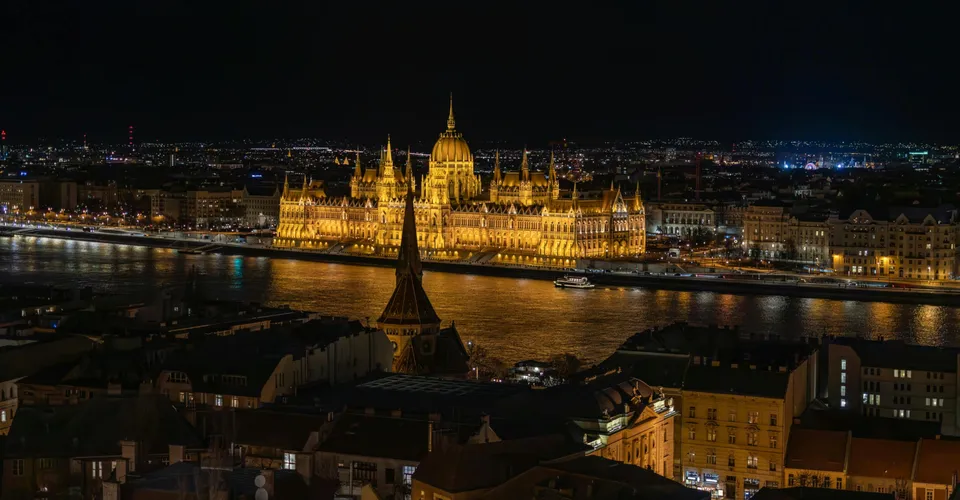
Viktor Orbán is done.
After 16 years running Hungary like a personal fiefdom, a 45-year-old former insider named Péter Magyar walked into the voting booths last week and walked out with a landslide that sent shockwaves through Brussels. More importantly, it sent them to Moscow, where Putin’s favorite European leader just became his ex-favorite.
This matters far more than it looks at first glance. Not because Hungary’s election was some miraculous democratic awakening—Magyar’s coalition isn’t a bunch of angels. It matters because Orbán’s eviction happens at the exact moment when Europe’s entire architecture is in question, when Trump is threatening to reshape the continent on his terms, and when the EU’s internal fault lines are about to get tested like never before.
Let me explain what just happened and why it’s about to matter a lot more.
The Orbán Spell Breaks
Here’s what’s wild about this: Orbán didn’t lose because he was unpopular. He lost because he was too successful at what he was doing. After years of siphoning EU funds, attacking the judiciary, crushing the press, and cozying up to Putin, Hungarians got tired of being the guy everyone was angry at. The EU was angry. Washington was angry. And eventually, enough Hungarians got angry that they voted the whole operation out.
Magyar’s coalition won. The European Union is jubilant. And Moscow is silent—which, in diplomat-speak, is deafening.
The BBC’s Katya Adler nailed it: jubilation in Budapest will ripple through every European capital that’s been frustrated by Orbán’s obstruction. But in Moscow, it registers as a problem. Orbán was useful. He blocked EU unity on Russia, he vetoed sanctions, he was the thorn in Brussels’ side that Putin could rely on. Now that thorn’s been removed by voters, not by EU pressure. That’s worse for Moscow than any official action would’ve been.
 Photo by Istvan Gerenyi / Pexels
The Timing is Everything (And Terrible)
Here’s where it gets complicated. Magyar’s victory arrives precisely when Europe faces its biggest test since 2016. Trump’s returning to office and has already signaled he’s not interested in the post-1945 consensus that held the West together. The Netherlands’ king and queen showing up at the White House “for a sleepover” (yes, that’s how the Dutch press described it) feels less like diplomatic nicety and more like nervous flattery. You don’t send your royals to stay with someone you’re confident about.
Meanwhile, Trump’s threatening Iran. The oil price just climbed back above $100. And the U.S. is apparently planning to blockade Iranian ports starting Monday—which makes you wonder whether anyone’s actually thought through what happens to global energy markets if that escalates.
The Pope, who just got accused by Trump of being “weak on crime and terrible for foreign policy,” responded with a dignified “I have no fear.” (That’s the diplomatic way of saying “this guy’s unhinged, and I’m not taking the bait.”) But the fact that Trump felt compelled to attack the Pope—the Pope—tells you something about the temperature of the room right now.
So here we are: Hungary’s internal politics just shifted, which should’ve been routine EU news. Instead, it lands in the middle of Trump’s second term, when Europe’s trying to figure out if the trans-Atlantic relationship even survives the next four years.
What Magyar’s Win Actually Changes
Orban Loss May Ease Hungary’s Tensions with European Union—that’s the polite framing. What it really means is that Hungary’s no longer going to be the block on EU unity. No more Orbán vetoing sanctions. No more Hungary serving as Putin’s pressure release valve inside the European Council.
That sounds good until you realize what it actually creates: a more unified EU. And a more unified EU that Trump has already signaled he sees as a competitor rather than a partner.
I think this is the moment where Europe finally stops pretending it can be passive and actually has to make choices. Hungary’s election didn’t cause that—Trump did. But now Europe has one fewer excuse for not acting.
My read: Magyar’s going to pursue closer EU integration because that’s the political signal he was elected on. He’s not Orbán. He’s going to want to align with Brussels, not fight it. That means Hungary becomes a normal EU state again, which sounds boring, but it shifts the bloc’s weight slightly toward integration at the exact moment when Trump’s making the case that the EU is a threat to American interests.
This could trigger a vicious cycle. More EU unity makes Trump more hostile. More Trump hostility forces deeper EU integration. And every step of that dance moves Europe and America further apart, not closer together.
 Photo by Markus Winkler / Pexels
The Predicament Nobody’s Solved
Here’s what’s getting lost in the Budapest celebration: none of the actual problems got solved. Trump’s still threatening to cut NATO funding. The Middle East is still on fire—Iran’s still running calculations about whether to escalate. And Europe’s still fundamentally dependent on American security guarantees while Trump’s explicitly questioning whether that commitment is worth it.
Hungary’s election didn’t touch any of that. It just changed one variable in an equation nobody’s figured out yet.
My honest read? I’m not certain where this lands. Orbán’s exit is genuinely significant for EU coherence. But it might come exactly when coherence makes the continent more vulnerable to Trump’s pressure, not more resilient. The smartest move for Europe would be to use the next 18 months to build genuine strategic autonomy—real defense spending, real tech independence, real alternatives to American security guarantees. But I don’t think that’s what’s going to happen. I think what’ll happen is everyone’s going to keep pretending this isn’t a fundamental restructuring of the post-1945 order until it becomes undeniable.
The Hungary election is like watching one piece of a broken vase get swept up while the rest of the structure’s still collapsing. It’s good news in isolation. In context, it might just be a preview of how messy the breakup’s going to be.
What I’m Watching
-
Hungarian EU alignment votes in the next 90 days: Watch specifically for Hungary lifting its vetoes on Russia sanctions and on the EU’s defense spending framework. If Magyar’s government moves quickly on these, it confirms Hungary’s rejoining the European mainstream and weakens Trump’s ability to divide the bloc. If there’s hesitation, it means Brussels is already negotiating around deeper resistance.
-
Trump’s Iran blockade implementation (starting Monday, according to the reporting): The real test is whether this actually disrupts global oil markets significantly. If Brent crude settles above $110 sustained, European economies start feeling real pain, which could trigger either faster EU-Russia reconciliation or accelerated European rearmament. Either way, it tells us whether Trump’s willing to weaponize energy markets. That answer shapes everything else.
-
Dutch-American relations post-royal visit: Pay attention to whether the Netherlands agrees to host new US military infrastructure or increases NATO spending in the weeks after the palace sleepover. If the royal visit was transactional (hospitality for policy concessions), watch for announcements. If it was just nervous diplomacy, you’ll see public distancing within six weeks.