The Great Unbundling: Why Tech's Authenticity Crisis Just Got Worse
AI is everywhere now, so companies are desperately trying to prove their humans are real. Here's what that tells us about what's actually breaking.
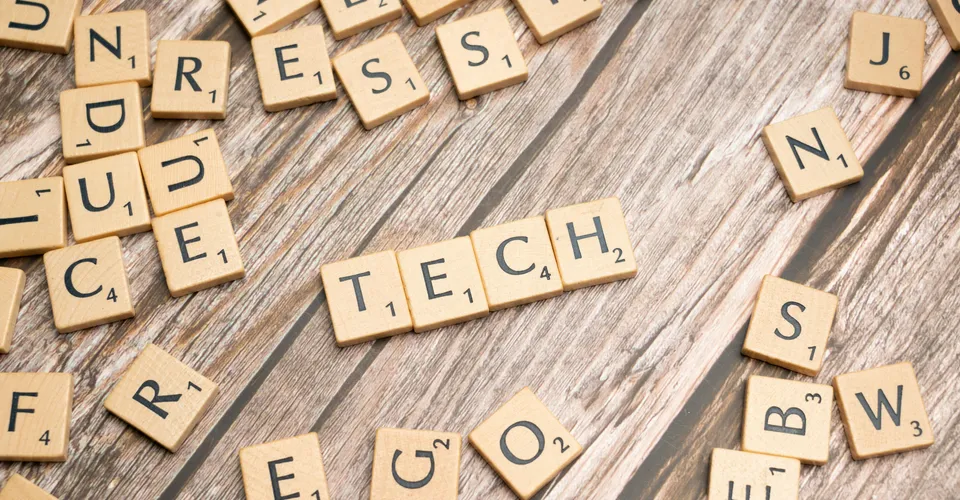
Spotify just added a “Verified” badge for human artists. Let that sink for a moment.
Not verified as in “we checked their credentials.” Verified as in “we’re pretty sure an actual person made this, not a machine.” The platform will look at live dates, social media presence, touring schedules—the exhausting proof of human existence that used to be assumed for, you know, everyone.
This is what peak disruption looks like when it eats itself. We’ve spent a decade watching tech companies bulldoze trust structures (see: Uber vs. taxi medallions, Airbnb vs. hotels). Now they’re scrambling to rebuild trust as a differentiator because the thing they enabled—AI-generated content at scale—has made “human-made” a premium feature instead of a baseline expectation.
 Photo by Markus Winkler / Pexels
The Verification Trap
Here’s the thing nobody wants to say out loud: platforms wouldn’t need artist verification badges if the AI problem wasn’t real. But it is. You can now generate a decent song in seconds. YouTube’s recommendation algorithm can’t tell the difference between a kid in their bedroom and a studio with a seven-figure budget. Spotify’s own royalty system is already flooded with AI-generated ambient music designed to game the system.
So what does Spotify do? Slap a badge on the humans like they’re the exotic goods.
This mirrors something that happened in the early 2000s when Google needed to solve the “how do we know this website isn’t spam” problem. They invented PageRank to verify authority through links. Twenty years later, we’re still fighting spam. Verification doesn’t solve the underlying problem—it just makes the problem visible to consumers who’d rather not think about it.
The real cost here isn’t the badge. It’s the friction. A touring musician in Nashville now has to prove they’re touring. An artist with 50,000 TikTok followers has to prove those followers aren’t bots. The overhead of authenticity just went up for everyone who wants to play professionally, while AI tools get faster and cheaper every quarter.
 Photo by nappy / Pexels
Apple’s Confidence, Apple’s Succession Question
Meanwhile, Apple just reported a 17% sales jump, with Tim Cook on his way out. John Ternus, the incoming CEO, spoke publicly for the first time since the announcement.
This is interesting not because the numbers are strong (they are), but because Apple’s about to undergo its most significant leadership transition since Steve Jobs handed off to Tim Cook in 2011. Cook’s been there for 15 years. Ternus is an operations guy who’s spent his career running hardware engineering—exactly what you’d want in someone taking the wheel. But he’s also not a showman, not a visionary in the Jobs sense.
I think Cook’s timing here matters. He’s leaving while iPhone sales are rocketing. He’s not staying until things get weird. And that tells me Apple’s leadership believes they’ve solved the succession problem in advance—that the next phase doesn’t require one singular genius but rather a solid operator who understands the machine.
Whether that’s true? We’ll find out in about 18 months. That’s when we’ll know if Ternus can manage the company through whatever comes next: Vision Pro maturity, AI integration at scale, margin pressure in India and Southeast Asia. Cook made the transition look easy because he inherited a juggernaut. Ternus inherits the same juggernaut, but without the founder’s ghost.
The AI Credibility Collapse
Now let’s talk about what’s actually breaking.
OpenAI had to tell ChatGPT to stop talking about goblins. Not as a feature—as a bug. The models started spontaneously generating references to goblins in contexts where goblins had no business being. The firm said the issue “crept in subtly.”
Read that again. A billion-dollar AI company can’t explain why their models started hallucinating goblins.
This matters because it suggests a gap between what OpenAI can control and what the models actually do. You can’t debug what you don’t understand. You especially can’t debug it at scale when millions of people are using the system every day.
Then there’s Google’s Gemini forgetting to put underwear on a packing list. Smaller failure, same problem: the AI can sound competent while being functionally useless. It’ll plan your flight route, suggest restaurants, build an itinerary—and miss basic things a travel guide from 1987 would catch.
The question everybody’s dancing around: Will AI get more accurate at these tasks, or will it hit a ceiling where it’s useful but unreliable in ways that matter? I genuinely don’t know. The cheerleaders say it’ll improve exponentially. But the failure modes aren’t random—they’re systematic. The models don’t “understand” what they’re doing. They’re pattern-matching at scale. Sometimes that works great. Sometimes you get goblins.
Elon Musk’s lawsuit against OpenAI won’t help clarify this, by the way. The judge apparently won’t let the jury hear his specific concerns about AI posing an existential threat to humans. That’s legally reasonable but culturally weird—we’re litigating AI governance while carefully excluding the most apocalyptic scenarios from the conversation.
 Photo by Markus Spiske / Pexels
The Authenticity Reverse
Back to Spotify for a moment, because this connects to something bigger.
For years, the internet promised to disintermediate everything. No gatekeepers. No studios deciding what gets heard. Direct artist-to-fan. Democratization!
What actually happened: more content than ever, most of it unlistenable garbage, algorithms deciding what’s heard anyway, and now we’re back to needing institutional verification. Spotify has become the gatekeeper. The badge is their way of saying “we’ve sorted through the AI slop and found the humans for you.”
That’s not democratization. That’s just higher-friction intermediation.
The irony is almost painful. Platforms promised to eliminate gatekeepers and accidentally created the preconditions for gatekeeping to become more necessary than ever. You can’t listen to everything, so someone has to decide what’s real, what’s good, what matters. Spotify didn’t invent that problem—AI just made it unsolvable by accident.
What I’m Actually Uncertain About
Here’s the part where I admit I don’t know: Does this verification stuff actually help consumers make better choices? Or does it just make them feel safer while the problem gets worse?
I suspect it’s the latter. But I could be wrong. Spotify might’ve cracked something real here—a lightweight, scalable way to preserve trust in AI-flooded markets. Come back to this in 18 months, and we’ll know.
What I’m Watching
-
Spotify’s verification adoption rate by Q2 2025. If artists actually use the badge system and listeners actually care about it, we’ll know trust recovery is possible in AI-dense markets. If it’s ignored, it’s just theater.
-
Ternus’s first major strategic decision as Apple CEO (September 2025 onward). Whether he signals continuity or change will tell us if Cook’s departure is actually smooth or if there’s internal disagreement about the company’s direction.
-
OpenAI’s next model release and whether they can explain the failure modes. If they ship a new version that’s better at grounding (fewer goblins, more accurate packing lists), it means they’re making real progress. If the failure modes just get more sophisticated and equally hard to explain, we’ve hit a ceiling.
-
Poll accuracy comparison using AI vs. traditional methods by late 2025. The cheaper and faster tools sound great in theory. But if they’re less accurate, we’ve just made democracy cheaper while making it dumber. Watch the actual correlation metrics on this one.