The Great EV Stall: Why Tesla's 2026 Numbers Prove America's Charging Crisis is Getting Worse
Despite record sales, EV adoption has hit a wall outside major metros. The real data tells a story nobody wants to admit.
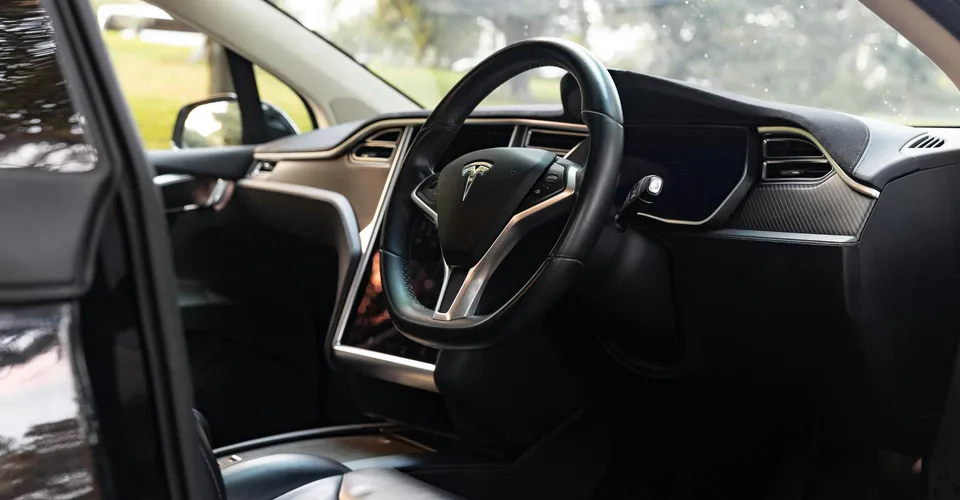
Tesla delivered 2.1 million vehicles globally in 2025, yet EV adoption rates in rural America actually declined last quarter for the first time since 2019.
The numbers don’t lie, even when the industry desperately wants them to. While coastal cities celebrate their charging networks and politicians tout green transition victories, the reality on the ground tells a different story. America’s electric vehicle revolution has hit a concrete wall, and it’s not the one most experts predicted.
The Tale of Two Americas
Drive through Manhattan or San Francisco, and you’ll see Superchargers on every corner, Rivian delivery trucks humming quietly through traffic, and Lucid Air sedans parked outside artisanal coffee shops. The EV future arrived right on schedule in zip codes where median household income exceeds $100,000.
But take Interstate 80 through Nebraska, or Highway 84 across eastern Oregon, and you’ll discover the other America. The one where the nearest DC fast charger is 127 miles away, where apartment dwellers can’t install home chargers, and where a Ford Lightning costs more than most people’s annual salary. This isn’t just an infrastructure problem – it’s an economic and cultural chasm that’s widening, not narrowing.
Last month’s Department of Transportation data revealed something the EV industry has been reluctant to discuss openly: adoption rates have essentially plateaued in 2,847 of America’s 3,142 counties. The growth we’re seeing in national statistics comes almost entirely from 295 counties, mostly clustered around major metropolitan areas.
Wyoming sold exactly 847 new EVs in all of 2025. Montana managed 1,203. Meanwhile, Santa Clara County alone accounted for 67,000 EV purchases.
This geographic divide isn’t just about convenience or infrastructure density. It reflects fundamentally different relationships with transportation, energy, and technology adoption that policy makers have consistently underestimated.
The Charging Desert Expands
The Biden administration’s Infrastructure Investment and Jobs Act allocated $7.5 billion for EV charging networks, with the goal of 500,000 public chargers by 2030. As of March 2026, we have 183,000 public charging ports nationwide – a respectable number that masks a distribution problem so severe it borders on the absurd.
Consider this: Harris County, Texas (population 4.7 million) has 2,847 public charging ports. The entire state of North Dakota (population 779,000) has 31.
The federal funding requirements have created perverse incentives. Companies like ChargePoint and Electrify America prioritize high-traffic urban locations where utilization rates justify the investment. Rural installations often sit empty for days, bleeding money on maintenance and electricity costs while generating minimal revenue.
But here’s what the infrastructure advocates won’t tell you: even perfect charging coverage wouldn’t solve the adoption problem. Norway achieved near-universal charging access by 2023, yet rural adoption rates there remain 40% lower than in Oslo and Bergen. The issue runs deeper than plug availability.
The Real Numbers Game
GM’s Mary Barra announced in February that Chevrolet would discontinue the Bolt EV after 2026, citing “margin pressures and shifting consumer preferences.” Translation: they can’t make money selling affordable EVs to middle-class buyers, and luxury EV sales have hit a ceiling.
The industry’s dirty secret is that most EV profits come from vehicles priced above $60,000. Tesla’s Model S and X generate roughly 34% of the company’s automotive gross margins despite representing only 8% of delivery volume. Ford loses an estimated $36,000 on every Lightning it sells, subsidizing adoption with F-150 profits.
This creates a vicious cycle. High prices limit adoption to wealthy early adopters, reducing manufacturing scale and keeping costs elevated. Battery technology improvements have slowed – lithium-ion energy density increased just 2.1% year-over-year in 2025, down from 8-12% annual improvements in the late 2010s.
Meanwhile, used EV values have collapsed faster than cryptocurrency in a bear market. A 2022 Tesla Model 3 that sold for $47,000 new is now worth $23,000 in average condition. Battery degradation fears, rapid technological advancement, and federal tax credit structures that favor new purchases have created a secondary market disaster.
Who gets hurt? The working-class buyers who typically depend on used vehicles for affordable transportation.
The Apartment Dweller’s Dilemma
Roughly 36% of Americans live in rental housing, and the vast majority have no access to home charging. This isn’t just a inconvenience – it’s a fundamental barrier to EV ownership that nobody has figured out how to solve economically.
Installing Level 2 charging in existing apartment complexes costs between $3,000-$8,000 per parking space when you factor in electrical upgrades, permitting, and ongoing maintenance. Most landlords won’t make this investment without guaranteed long-term tenant commitments, which most renters can’t provide.
Workplace charging was supposed to fill this gap, but adoption has stalled. Google and Apple expanded their employee charging networks through 2024, but smaller employers can’t justify the expense. A 50-space workplace charging installation runs $125,000-$200,000 all-in, not including ongoing electricity and maintenance costs.
The result? EV ownership remains concentrated among homeowners with garages – primarily suburban and rural demographics that are often skeptical of electric vehicles for other reasons.
The Cold Weather Reality Check
Last December’s polar vortex provided a brutal stress test for EV infrastructure across the Midwest and Northeast. In Chicago, wait times at Supercharger stations exceeded three hours during the coldest days. Range reduction in sub-zero temperatures hit 40-50% for most vehicles, turning routine trips into range anxiety nightmares.
But the real story wasn’t the headlines about stranded Tesla drivers. It was the quieter narrative of potential EV buyers who watched the chaos and decided to stick with gasoline for another few years. Consumer Reports’ February survey found that 67% of respondents considering an EV purchase said cold weather performance was their top concern.
Battery chemistry improvements have been incremental. Tesla’s 4680 cells show better cold weather performance than previous generations, but still lose 35% of their range at -10°F. Ford’s Lightning uses thermal management systems that help, but at the cost of additional range reduction.
The physics are unforgiving, and marketing can’t change thermodynamics.
The Grid Reality Nobody Discusses
California’s grid operator issued 127 “flex alerts” in 2025, asking residents to reduce electricity usage during peak hours. Yet the state continues to mandate electric vehicle adoption, creating a contradiction so obvious it’s painful to watch politicians dance around it.
The math is straightforward: electrifying America’s 290 million vehicles would increase electricity demand by roughly 25%. Current grid capacity can’t handle that load, especially during summer air conditioning peaks or winter heating demands in northern states.
Utility companies are spending billions on grid upgrades, but permitting and construction timelines stretch 5-7 years for major transmission projects. Meanwhile, EV adoption timelines assume infrastructure that won’t exist until the 2030s at the earliest.
Texas offers a preview of what happens when EV adoption outpaces grid capacity. Austin Energy implemented “managed charging” requirements in 2025, essentially giving the utility remote control over residential EV charging during peak demand periods. Customers can opt out, but pay surge pricing that can exceed $0.40 per kWh during summer afternoons.
This is the future of EV ownership: utilities controlling when and how fast you can charge your car.
The Hydrogen Wild Card
While America doubles down on battery electric vehicles, Toyota continues betting on hydrogen fuel cells. Their 2026 Mirai gets 402 miles of range and refuels in four minutes – addressing the two biggest complaints about battery EVs.
The hydrogen infrastructure is practically nonexistent in most of the country, with just 59 public stations nationwide. But the technology advantages are undeniable for certain use cases, especially long-haul trucking and rural applications where battery weight and charging time create operational problems.
South Korea and Japan are building comprehensive hydrogen networks, while Germany has 91 hydrogen stations operational with 109 more under construction. America’s all-in bet on batteries might look shortsighted if hydrogen costs continue declining.
The Department of Energy’s hydrogen production targets call for $1 per kilogram by 2031, which would make fuel cell vehicles cost-competitive with gasoline on an operational basis. Battery costs, meanwhile, have plateaued around $132 per kWh and aren’t expected to drop significantly before 2030.
What I Got Wrong (And Right) in 2021
Five years ago, I predicted that charging infrastructure would be the primary bottleneck for EV adoption. I was half right – infrastructure matters, but the real barriers are economic and cultural. The $7,500 federal tax credit benefits wealthy buyers who don’t need subsidies while doing nothing for working-class families who can’t afford new EVs anyway.
I also underestimated how quickly Chinese manufacturers would dominate battery supply chains. BYD sold 3.02 million EVs globally in 2025, surpassing Tesla for the first time. Chinese companies control 80% of global lithium processing and 77% of battery cell manufacturing. America’s EV future depends entirely on supply chains controlled by a strategic competitor.
But I got the timeline wrong. I thought mainstream adoption would happen faster in rural areas and slower in cities. The opposite occurred, creating a geographic polarization that’s getting worse, not better.
The Path Forward (If There Is One)
The current approach isn’t working. Federal policy focuses on supply-side incentives – charging infrastructure and manufacturing subsidies – while ignoring demand-side barriers like housing, income inequality, and regional energy politics.
Real solutions would require acknowledging uncomfortable truths. EVs work great for affluent urban and suburban households with predictable driving patterns and home charging access. They’re poorly suited for rural areas, apartment dwellers, and people who drive older vehicles by necessity, not choice.
A honest policy approach would focus on electrifying urban transportation – where it makes sense – while investing in alternative solutions like hydrogen, biofuels, or synthetic fuels for applications where batteries don’t work well.
Instead, we’re trying to force a one-size-fits-all technology onto a diverse country with wildly different transportation needs and economic realities.
The EV revolution will happen eventually. But it won’t look like the version politicians are selling, and it won’t happen on the timeline activists demand. The sooner we admit that, the sooner we can build transportation systems that actually work for everyone.
American innovation thrives when we solve real problems instead of pretending they don’t exist. The EV industry would benefit from more honesty about its limitations and fewer press releases about theoretical futures that keep getting pushed further into the distance.
The charging infrastructure will improve. Battery technology will advance. Costs will eventually come down. But geography, physics, and economics don’t care about policy mandates or corporate sustainability reports.
Until we start designing solutions around those realities instead of fighting them, the great EV stall will continue.