The Ceasefire Nobody Believes In
Trump brokered a Lebanon-Israel truce that shocked everyone—including the Israelis who have to live with it. Here's why it might collapse in weeks.
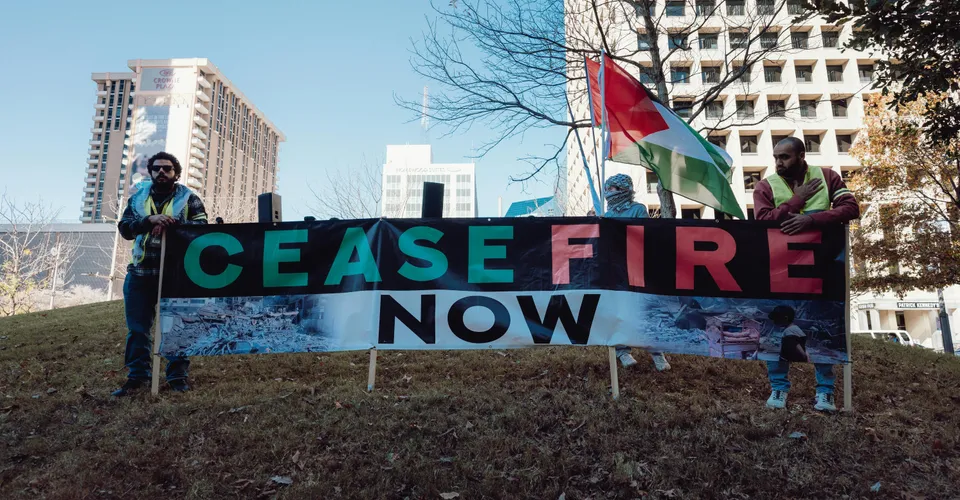
The Lebanon-Israel ceasefire went into effect, and almost nobody in Israel thinks it’ll hold.
That’s the real story buried in the diplomatic win the Trump administration is trying to sell. Yes, a truce happened. Yes, Prime Minister Netanyahu signed off. But the BBC’s Lucy Williamson spoke to Israelis directly, and the verdict is bleak: they don’t see this as a solution to the Hezbollah problem—they see it as a pause before the next round.
When your own side doesn’t believe in your agreement, you’ve got a structural problem.
 Photo by Alfo Medeiros / Pexels
The Ceasefire That Shocked Its Own Signatories
Here’s what’s wild about this deal: it caught Israel off guard. Trump brokered it, Netanyahu accepted it, but Israeli public opinion never came along for the ride. That’s different from most truces, which at least have rhetorical support from the signing nation’s population, even if skeptics lurk underneath.
The Lebanese government is technically party to this agreement. Hezbollah, the Iranian-backed militia that’s actually been fighting Israel, acknowledged the temporary truce but—and this is the kicker—didn’t commit to honoring it. Read that again. The armed group that would need to stop shooting for the ceasefire to work said something like “yeah, we see this truce” without promising to follow it.
That’s not ambiguity. That’s a warning flare.
The mechanics here matter. Netanyahu didn’t negotiate with Hezbollah directly. He negotiated with the Lebanese government, which doesn’t fully control Hezbollah. It’s like making a peace deal with a country’s Interior Ministry while the military answers to a different boss entirely. Technically you have an agreement. Practically, you’ve papered over a canyon.
 Photo by Mathias Reding / Pexels
Why China Won’t Save This Either
Here’s something most commentators are missing: Iran’s patron saint isn’t interested in helping. China, despite facing economic risks from regional instability, is taking a hands-off approach to the whole Iran-Israel axis. Beijing opposed the broader conflict but doesn’t think it has sway over Tehran anyway, so why get tangled up?
This matters because it means there’s no great power willing to pressure all sides toward actually sticking with the ceasefire. The U.S. brokered it. Russia’s distracted. Europe can’t enforce anything. China’s sitting it out. So you’ve got an agreement with no enforcement mechanism, no regional guarantor, and an armed group that hasn’t committed to it.
That’s not a ceasefire. That’s a scheduling agreement that three parties made and two of them are already hedging.
My read is this falls apart within eight weeks. Not because of some dramatic Hezbollah attack, but because the informal understanding about what “pause” means will fracture. Someone tests the boundary. Then someone else responds. Then you’re back to where you started, except now the world just watched a high-profile diplomatic effort collapse.
The Bigger Pattern Nobody’s Talking About
Step back for a second. Look at what’s actually happening across these different crises.
Ukraine is trying to sell a fertilizer plant to private buyers. Ukraine. During an active war with an enemy that attacks infrastructure. The BBC notes this is a test case for whether Kyiv can overcome Russian attack risks and corruption concerns to attract foreign investment.
That’s not just economic news. That’s a government betting that normal capitalism can function while your country’s being invaded. It’s either visionary or delusional, and I honestly can’t tell which yet.
Meanwhile, families deported by the Trump administration are finding refuge in a Costa Rican mountain town where pacifist Quakers and a network of locals are offering sanctuary. Not symbolically—actually. These are American citizens’ relatives being sheltered in Central America because U.S. policy made home untenable.
And the Pope—Pope Leo XIV—is catching heat from Trump and allies for refusing to back the war in Iran and calling for peace instead. He doubled down this week with a statement about the danger of manipulating religion for political ends.
What ties these together? States and non-state actors are operating in increasingly parallel universes. The official diplomatic channels (ceasefire with Lebanon) don’t align with ground reality (Hezbollah’s noncommittal stance). Governments make decisions (sell the fertilizer plant) that assume stability that doesn’t exist. Religious leaders take stands (the Pope) that put them in direct conflict with sitting heads of state. Sanctuary networks do the work that national governments claim to do.
Photo by Mathias Reding / Pexels
The Weirdness of Expertise Under Pressure
There’s one more angle that’s nagging at me. Finance ministers and top bankers flagged serious concerns about an AI model called Mythos—specifically its unprecedented ability to identify and exploit cybersecurity weaknesses.
Why does this matter to a ceasefire analysis? Because it signals something about the world we’re actually living in. We’re trying to broker deals between nation-states and non-state actors (Hezbollah), across interests that don’t align (China’s staying out), using diplomatic tools that assume the other guy will play by the rules (he won’t), while simultaneously developing technology that could unravel any agreement’s communications infrastructure in seconds.
We’re building wooden ships and then wondering why they’re sinking faster.
I don’t think the ceasefire collapses because of military escalation. I think it collapses because someone’s encrypted communications get compromised, or intelligence gets leaked, or misunderstandings spiral because the trust infrastructure was never there to begin with.
What Actually Happened Here
Trump’s administration scored a diplomatic headline. Israel got a pause—maybe three months, maybe six, probably not a year. Hezbollah got breathing room and kept its options open. Lebanon’s government got to say it brokered peace without actually controlling whether peace holds.
Everyone got something except, you know, actual peace.
The Israelis saw through it immediately. That matters. Public opinion in a democracy is a constraint, even on a prime minister who seems allergic to constraints. Netanyahu can keep the ceasefire alive if Israeli public support holds, but if Hezbollah tests it and Israelis feel duped, the pressure to resume operations becomes enormous. Right now, Williamson reports Israelis don’t see this as a way out. That’s a ticking clock.
My prediction: We get to mid-March and some kind of incident happens—could be small, could be significant—that forces everyone to decide whether to hold or fold. By April, we’ll know if this was a real ceasefire or just a scheduled intermission.
The honest answer? I’m genuinely uncertain whether this holds or crumbles. But I’m confident about the mechanism: Israel’s public won’t sustain a truce with an enemy they don’t trust, and Hezbollah isn’t giving them a reason to trust.
What I’m Watching
-
The first 60 days of Israeli public statements. If you start seeing Israeli security analysts on TV saying “we should resume operations,” that’s your warning. The ceasefire dies in the court of public opinion before it dies on the battlefield.
-
Whether Hezbollah clarifies its position by January 15th. A clear commitment changes the math. Continued ambiguity means they’re keeping their powder dry intentionally.
-
China’s posture on Iran sanctions. If Beijing starts signaling it might rejoin pressure on Tehran, that’s evidence the ceasefire is holding enough that great powers are recalibrating. Conversely, if China doubles down on Iran trade, assume they think this collapses soon.
-
The Pope’s next public statement about Trump. Not for theology. For whether this becomes a sustained political conflict or a one-off exchange. If it escalates, it signals the Trump administration doesn’t have bandwidth to manage multiple fronts—which means less focus on enforcing Lebanon compliance.