The Art World Just Became a Proxy War
When a jury walks, when tariffs shift, when mothers run for office—the old rules of diplomacy are collapsing in real time.
The Venice Biennale jury resigned days before the opening. Not because the art was bad. Not because of internal squabbles over aesthetics. They quit because Russia was coming back.
This is what happens when you can’t separate culture from power anymore. The Venice Biennale—one of the world’s most prestigious art exhibitions, running since 1895—suddenly couldn’t hold itself together over a single geopolitical question. That’s not a story about art. That’s a story about what’s broken.
 Photo by Rashed Paykary / Pexels
When Institutions Stop Functioning
Let’s be clear about what just happened. A jury of respected curators and cultural figures looked at the inclusion of Russian artists in a major international exhibition and collectively said: no. We’re out. We won’t legitimize this.
That’s not a polite disagreement. That’s institutional collapse dressed up as principle.
The Venice Biennale has hosted contested nations before. During the Cold War, Soviet artists exhibited. After sanctions and wars, countries have still participated. But something’s different now. The jury didn’t try to negotiate. Didn’t propose solutions. Didn’t stay and argue for exclusion from within. They walked. It’s the institutional equivalent of flipping the table.
My read: we’re watching the end of the fiction that culture and politics are separate domains. They never were, obviously. But the pretense lasted because institutions enforced it. Now they’re too fractured to hold the line.
 Photo by Markus Winkler / Pexels
The Soft Power Game Just Got Harder
Meanwhile, China scrapped tariffs for nearly every African nation. All but one get zero-tariff access to Chinese markets. This is textbook soft power—the kind that doesn’t require military posturing or UN speeches. Just: we’ll make your goods cheaper.
Analysts immediately noted the catch. The gains won’t be even. Some African nations will benefit massively. Others will get crumbs. It’s soft power with teeth, because it creates winners and losers, and winners tend to become compliant.
Compare that to what’s happening in Iran. Ayatollah Mojtaba Khamenei just signaled Iran’s going to establish “new legal frameworks” for the Strait of Hormuz and keep its nuclear capabilities. He’s not trading tariffs. He’s making threats wrapped in bureaucratic language.
China’s playing checkers. Iran’s playing chess but announcing every move beforehand.
The difference matters. China’s approach—quiet, economic, creating dependency through trade—actually works. Iran’s approach—loud, militaristic, signaling intentions—might feel powerful domestically but telegraphs desperation to the rest of the world. They’re both trying to project power. Only one will actually have it in five years.
When Political Survival Becomes Personal
Ratna Debnath is running for Prime Minister Narendra Modi’s party in an Indian state election. Her daughter was raped and killed. She’s now a political candidate on a platform of women’s safety.
Stop there.
This is what desperation looks like at the individual level. A mother loses her child to violence. The state’s response isn’t justice. It’s recruitment. “Run for office. Help us prove we care about women’s safety.” It’s cynical, obvious, and—this is the part that matters—it might work.
Modi’s party is campaigning hard on women’s safety in this election. They need credibility. Debnath needs a platform. The transaction is perfectly logical and completely hollow. She’ll probably win some votes. The party gets moral authority it hasn’t earned. Her daughter remains dead.
I think this tells us that traditional political messaging has collapsed so thoroughly that parties now need to literally put grieving parents on the ballot to seem legitimate. That’s not a sign of strength. That’s a sign of desperate moral bankruptcy.
The Chaos Beneath the Surface
Here’s the thing I’m genuinely unsure about: how much of what we’re seeing is new, versus how much is just finally visible?
Iranians are living with “pain and powerlessness beneath a smooth veneer,” according to reporting from inside the country. After months of upheaval—the protests, the crackdowns—people are trying to get on with their lives. But underneath, there’s grief. Economic stress. Loss of hope. They’re functioning. But they’re not okay.
That’s the state of most countries right now, honestly. The surface works. The airports open. The elections happen. The biennales schedule themselves. But underneath, something’s cracked that institutions can’t quite articulate or fix. The Venice jury felt it. The Iranian people are living it.
Then you’ve got attacks on Jewish targets across Europe. A shadowy Islamist group using low-cost, unsophisticated methods. This is what officials are calling “hybrid warfare”—not quite terrorism in the traditional sense, not quite state action, just… persistent, coordinated low-grade violence designed to sow fear.
That’s a new tactical innovation. It’s cheap. It’s deniable. It’s scalable. And it works because institutions are too fractured to respond coherently. One country arrests someone for a crime, and the town explodes in unrest outside the hospital. Basic rule of law starts to feel fragile.
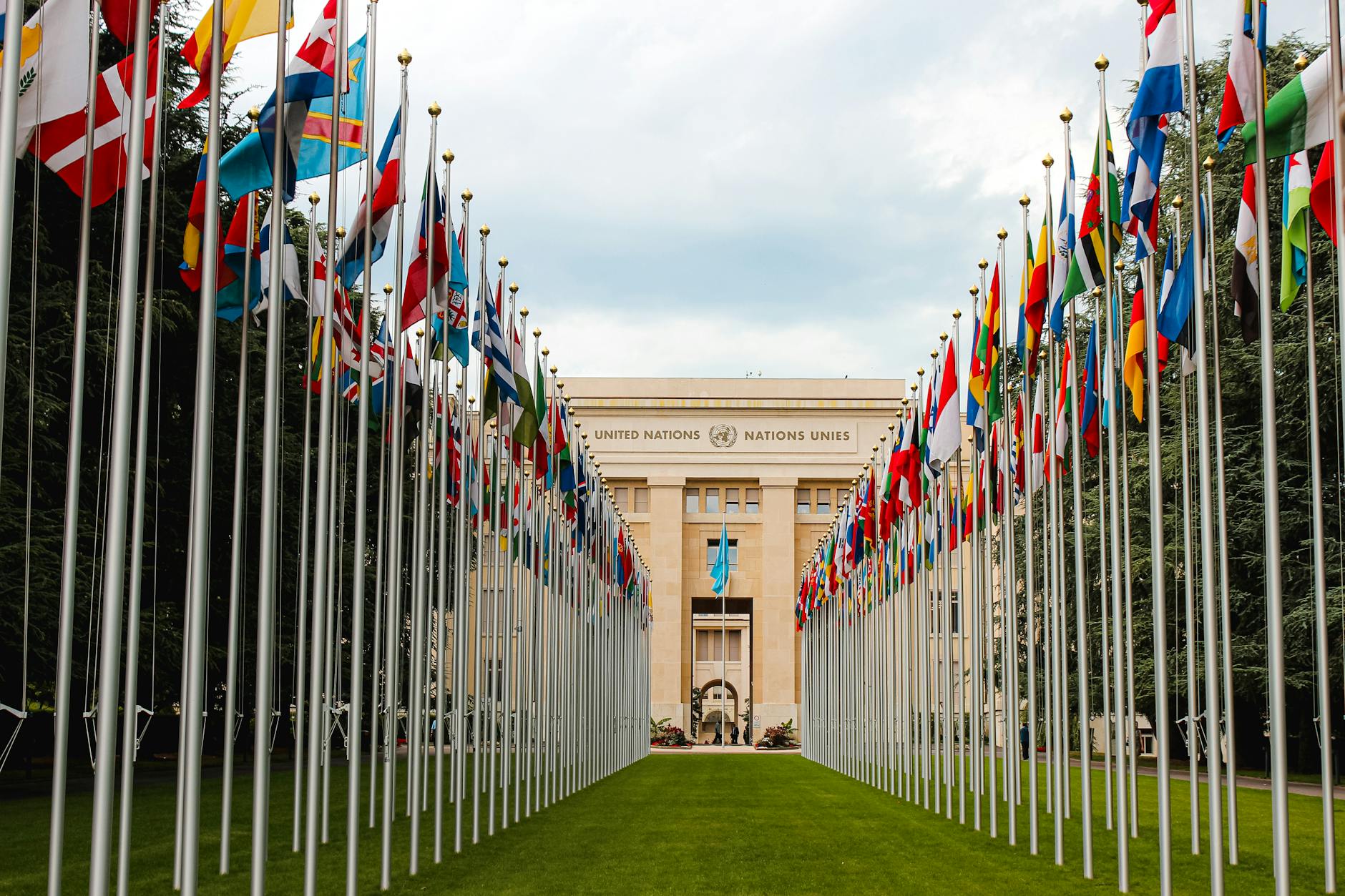 Photo by Mathias Reding / Pexels
What’s Actually at Stake
The old diplomatic order worked because institutions held. Countries had rules. Art was separate from politics. Economies were somewhat predictable. Institutions enforced norms even when they wanted to break them.
That’s over. The Venice jury didn’t break the rules. They abandoned the assumption that rules mattered.
China knows this. That’s why the tariff move works—it’s not breaking any rule, it’s just writing new ones faster than anyone else can respond. Iran’s doing the opposite: loudly rejecting the rule-based system while being entirely dependent on it for legitimacy. It’s a losing strategy.
I think the next eighteen months will show us whether the institutions can rebuild, or whether we’re in a genuine transition to something else. Not necessarily worse. Just different. More fragmented. More honest about the fact that culture is always political, economics is always power, and mothers grieve differently when the state is watching.
The question isn’t whether the Venice Biennale will recover. The question is whether anyone still believes that international exhibitions should be apolitical. If nobody does, then we’re not in crisis. We’re in transition.
What I’m Watching
-
Iran’s Strait of Hormuz moves (next 90 days): Watch whether Khamenei actually implements these “new legal frameworks” or whether it stays rhetorical. If Iran starts boarding commercial vessels or imposing new tariffs on passage, that’s escalation. If it’s just talk, it’s desperation.
-
African trade imbalances emerging (6-12 months): Which nations benefit most from China’s tariff deal? If one or two nations get massive windfall gains while others see minimal benefit, watch for donor dependency to shift rapidly toward Beijing.
-
Whether other major art institutions follow Venice’s lead (before next major international show): Are the Guggenheim, Louvre, Uffizi, etc., going to start politicizing their exhibition choices? If even two do, the decoupling of culture from “neutrality” is complete.
-
Iranian hardliner response to the pain narrative (ongoing): That reporting about Iranians living with powerlessness beneath a smooth veneer—watch whether that becomes a rallying point for opposition, or whether the system successfully keeps it invisible. This determines whether Iran’s internal cohesion holds through 2025.