The American Dealmakers Forgot About Europe's War
While Trump's team negotiates Iran with Pakistan, Europe realizes it's on its own in Ukraine—and NATO's fracturing over who pays the price
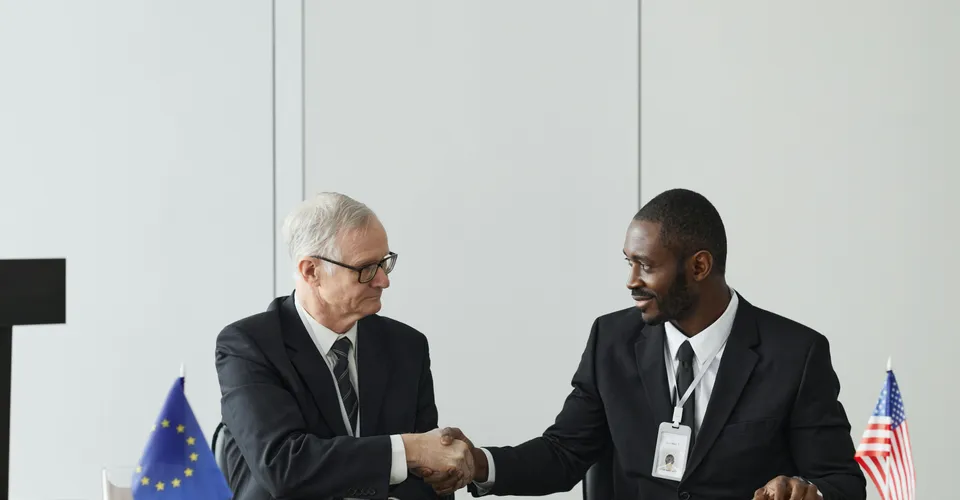
There’s a specific moment when an alliance realizes it’s expendable. It usually doesn’t announce itself loudly. There’s no formal ceremony. Instead, you get an internal Pentagon email floating around about suspending Spain, souring US-Europe relations described by the BBC’s Europe editor as “Medusa-like,” and American dealmakers boarding planes to Pakistan while Ukraine fights without a clear endgame.
That moment is now.
The Pendulum Swings Away
Let me lay out what’s actually happening beneath the noise. Witkoff and Kushner—Trump’s dealmakers—are heading to Pakistan for talks on Iran. Not Ukraine. Not Europe’s security. Iran. Meanwhile, Europe’s waking up to a reported Pentagon proposal that would punish Spain (and implicitly other NATO allies) over perceived lack of support for an Iran operation. NATO’s officially saying there’s “no provision” to expel members, which is a formal way of saying “we’re watching this thing eat itself from the inside.”
This isn’t about Spain being insufficiently hawkish on Iran. This is about a fundamental recalibration of American priorities that leaves Europe—specifically Ukraine—orphaned.
 Photo by Werner Pfennig / Pexels
The timing is almost cruel. Europe’s preparing for a longer war in Ukraine with no strategy to end it, according to reporting that cuts to the bone. Neither Russia nor Ukraine has a clear path to victory. Neither has a realistic route to negotiated peace. And the one actor with enough diplomatic weight and military power to actually shape the outcome? Busy in Islamabad.
I’ve covered enough conflict zones to know what this looks like. In 2015, when the US pivot-to-Asia meant Europe would handle its own Russia problem, we saw the same dynamic: allies left holding the bag while Washington pursued different geopolitical prizes. The difference then was that Europe actually believed in the partnership. Now they’re realizing it was transactional all along.
The Ukraine Problem Nobody’s Solving
Here’s what gets me: nobody’s actually denying the facts anymore. Russia’s grinding away in eastern Ukraine. Ukrainian forces are exhausted. The winter line is holding for now, but “holding” isn’t winning. And without American diplomatic heft—which is currently elsewhere—there’s no off-ramp that doesn’t look like Ukrainian territorial loss or frozen conflict.
The European response? Prepare for a longer war.
That’s not strategy. That’s resignation wearing a tactical uniform.
The problem is structural. Ukraine needs either (a) enough military support to genuinely threaten Russia’s position, (b) American-brokered negotiations, or (c) a path to NATO membership that deters further Russian aggression. Europe can deliver on (a), sort of, if they commit serious money. But (b)? That requires Washington. And (c)? That’s NATO’s call, but it means nothing without American guarantee—which was the entire point of NATO to begin with.
What Europe’s getting instead is a question mark and a recommendation to dig in for the long haul.
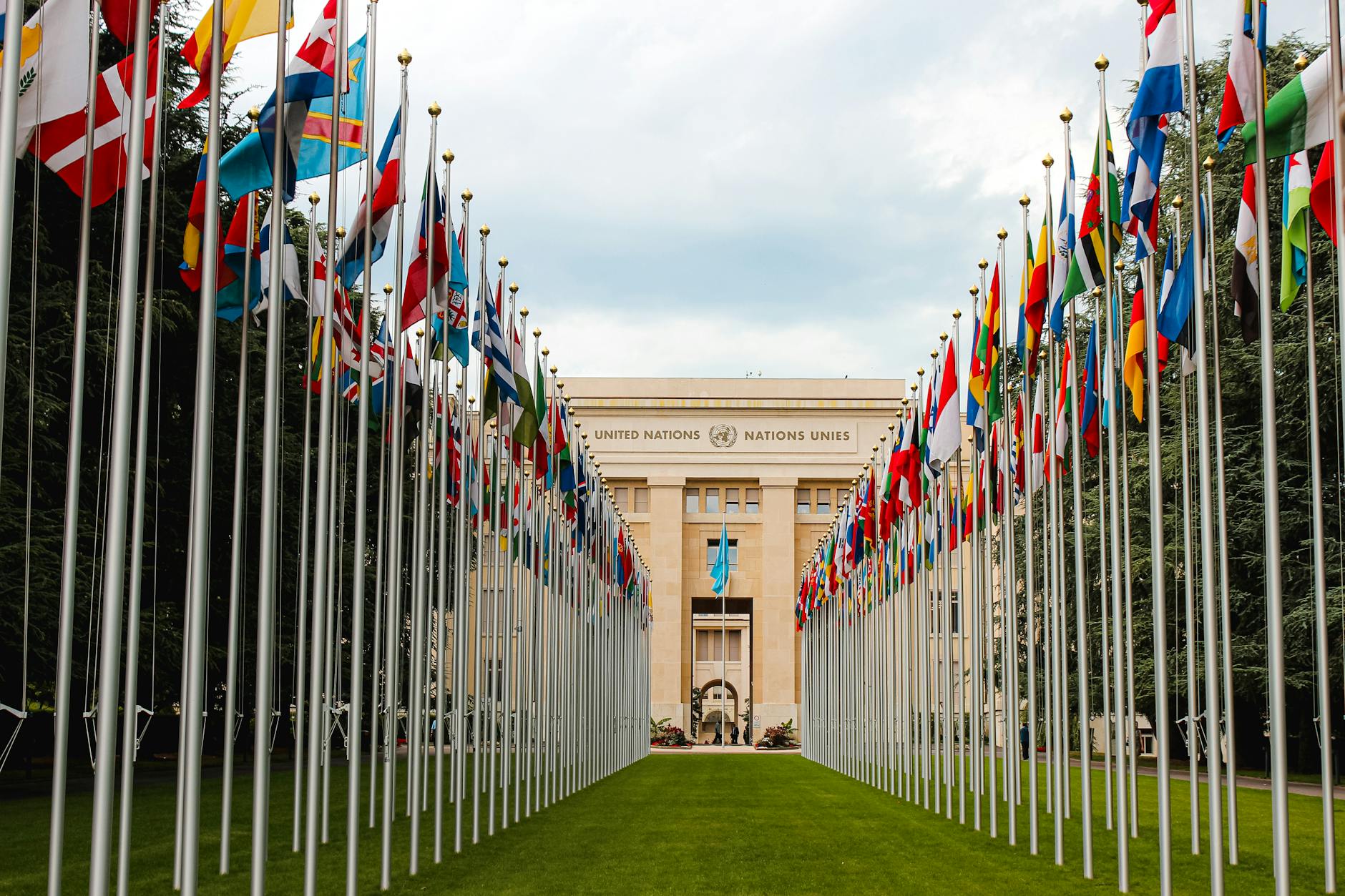 Photo by Mathias Reding / Pexels
The Mali and Middle East Bookends
I’m not going to pretend these aren’t connected. Armed groups launched coordinated attacks across Mali—explosions and sustained gunfire near a military base outside the capital, clashes in multiple regions. That’s not some isolated incident. That’s a collapsing state in Africa’s Sahel, a region where Russian influence (via Wagner, now its successors) has been actively displacing Western presence since around 2019.
Meanwhile, a Russian attack on the Ukrainian city of Dnipro killed at least seven people, including four in a residential building strike.
These aren’t separate problems. They’re symptoms of a world where American attention is finite, European unity is fragile, and spaces that used to be tacitly off-limits are now being contested openly. Mali’s been deteriorating for years, but it accelerated precisely when America’s commitment to Europe via NATO looked less guaranteed.
The Pentagon’s reported email about Spain isn’t actually about Spain. It’s about an administration that believes Europe should foot more of its own security bill—fair point, arguably—while America pursues bigger-picture Iranian negotiations. The problem is that Europe doesn’t actually believe it has the capacity to handle both Ukraine and its own neighborhood simultaneously without American diplomatic support.
They’re probably right.
The Question Nobody’s Asking
Here’s what I genuinely don’t know: Is this a bluff? Is the Trump administration actually threatening NATO expulsion, or is this an internal debate that leaked to pressure allies into better behavior? The NATO statement saying “no provision” to expel members is oddly specific—it reads like someone saying “this isn’t legally possible” rather than “we wouldn’t do this.” That distinction matters.
If it’s a negotiating tactic, it’s working (and working badly—Europe’s pushing back, which suggests it’s backfiring). If it’s actual policy, then NATO’s architecture is shakier than anyone’s publicly admitting, and we’re heading toward a fundamental reconfiguration of European security that probably doesn’t end well for Ukraine.
My read: It’s both. It’s a negotiating position that’s revealing underlying truths about how transactional this partnership has become. And that’s corrosive.
What Actually Changes
This isn’t abstract. Real things are shifting. Seven people died in Dnipro. Coordinated attacks are spreading across Mali. A French widow got deported by US immigration enforcement. Palestinians are voting in local elections that Hamas won’t participate in—a sign of fracturing Palestinian political structure that nobody’s paying attention to because everyone’s focused on bigger fires.
The Raqqa piece about Syria showcasing its tumultuous past is telling. Syria’s in a state of limbo too—no clear governance, no clear international strategy, just hoping for change. It’s becoming a pattern: spaces where clear American or NATO involvement might prevent chaos are instead becoming spaces of managed decay.
I think this means the post-Cold War era—which really lasted until 2022, when Russia invaded Ukraine—is actually over now. We’re in something new. Not quite a multipolar world, but definitely one where American capacity to simultaneously guarantee Europe’s security, manage Middle East diplomacy, and contain Chinese expansion is running into hard limits.
Europe’s starting to understand this. Hence the pushback on the Spain suspension report. Hence the resigned admission that they’re preparing for a longer Ukraine war. They’re not happy about it. But they’re adapting.
My prediction: By Q3 2025, we’ll see a major European defense initiative that’s explicitly independent of American security guarantees. Germany will lead it. Poland will push for more aggressive spending. France will claim they invented it. And it’ll be genuinely significant—not because it’ll replace NATO, but because it’ll be the first time Europe’s collectively admitted that the American umbrella is unreliable.
What I’m Watching
-
Witkoff and Kushner’s Pakistan meetings (January-February 2025): What comes out? Do they emerge with a framework for Iran talks that includes US commitment to those talks through the election cycle? If they do, it confirms Ukraine gets sidelined. If they don’t, it suggests the administration’s juggling more than it can hold.
-
European defense spending announcements in Q1: Watch whether any major NATO member (Germany, Poland, France) announces military spending explicitly framed as independent of American guarantees. That’s the signal that Europe’s given up on the partnership being reliable.
-
Ukraine’s spring offensive capacity: Can Ukraine actually hold territory without sustained American military support flowing through the year? If they’re losing ground by March despite European weapons, that’s when you’ll see serious pressure for negotiations—and Europe will have to negotiate without American leverage.
-
Spain’s actual response: Does Spain formally challenge the Pentagon’s reported threat, or does it quietly comply by increasing Iran-related military cooperation? That tells you whether European unity on this is real or performative.
The war in Ukraine was always about whether the post-1945 American security order could survive a real peer challenge. Turns out the answer is: maybe not. And Europe’s just now figuring out what that means for them.