Silicon Valley's Violence Problem Is Here Now
A Molotov cocktail at Sam Altman's gate. Documents calling for murder. This isn't hypothetical anymore—and tech's response has been dangerously quiet.
A 20-year-old threw a homemade bomb at Sam Altman’s house. Then police found documents where he’d written extensively about why AI executives deserve violence.
That’s not a dystopian film pitch. That happened in San Francisco in the last few weeks. A Texas man allegedly traveled across the country with attempted murder on his mind, specific targets in view, and ideological justification in his pocket. He’s facing federal felony charges now. The gate burned. Nobody died.
But here’s what should terrify you: this is the first real-world collision between online AI-anxiety discourse and kinetic action. And nobody in tech is treating it like the alarm bell it is.
 Photo by Anete Lusina / Pexels
The Accelerant
Let me connect some dots that feel disconnected until you realize they’re not.
We’ve got a global AI arms race that’s been explicitly compared to the dawn of the nuclear age. China, the U.S., Russia—all ramping up military AI systems, all competing for dominance, all aware that falling behind means existential disadvantage. That’s not hype. That’s how governments are actually thinking about this.
Simultaneously, the threat surface has expanded. OpenAI’s been hacked. Rockstar Games—a studio with 144 million daily players—has been hacked twice by young English-speaking attackers. The second breach, they downplayed. That pattern matters: when breaches become routine, we stop treating them as emergencies.
Then you’ve got the cultural moment. Meta just lost a landmark social media addiction trial in California and got caught pulling Facebook ads that were recruiting people for lawsuits against social media companies. The contradiction is almost funny—except it reveals how much damage these companies know they’re causing and how hard they’re fighting to hide it.
Into this context walks a 20-year-old who decided Sam Altman needed to die.
Why Now
I’m genuinely uncertain whether this attack was inevitable or anomalous. But I think the conditions are aligning toward more incidents.
Online, there’s a genuine anxiety—sometimes justified, sometimes paranoid—about AI risk. Effective altruists, AI safety researchers, and doomsday prognosticators have spent years arguing that AI poses an existential threat. Some of that argument is rigorous. Some of it bleeds into “we’re all doomed” apocalypticism that primes people psychologically for radicalization.
That’s met an undercurrent of anti-corporate sentiment that’s been building since at least 2016. Tech executives are no longer seen as visionaries. They’re seen as dangerous. Sam Altman specifically has been portrayed in certain online spaces as a reckless billionaire racing toward AGI without adequate safeguards—someone whose ambition could literally end humanity.
Now, 99.99% of people who hold that view will never commit violence. They’ll post on Reddit. They’ll write manifestos. They’ll argue in Discord servers. But if even one person per million converts those beliefs into action, and those beliefs are spreading across millions of people globally, you’re starting to get a probability problem.
The suspect had documents. Plural. He didn’t wake up one morning and decide to attack. He radicalized over time, built a justification architecture, traveled across the country to execute it.
This is what radicalization to violence actually looks like. It rarely emerges from nowhere.
 Photo by nappy / Pexels
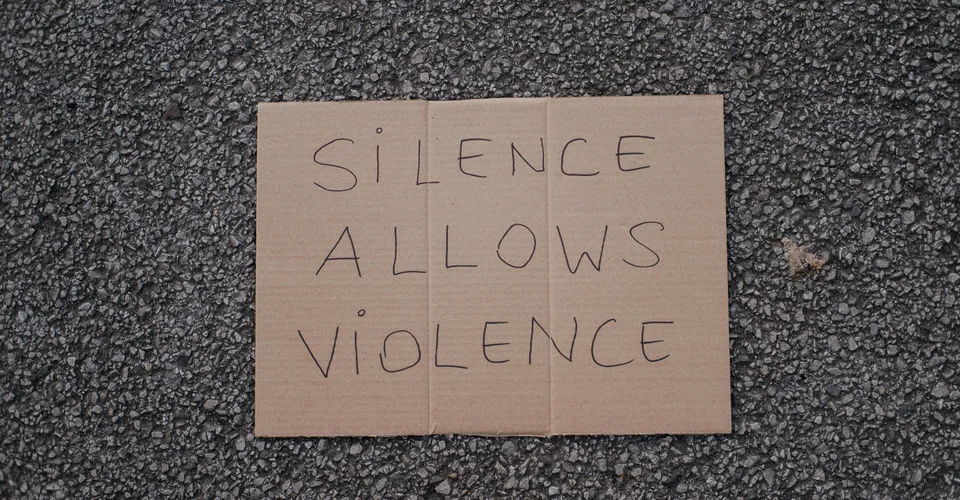
The Silence
What’s genuinely alarming is how little the AI industry has publicly reckoned with this.
OpenAI released a statement. Sam Altman is presumably secure now. But there’s been no industry-wide conversation about what this means. No summit. No acknowledgment that maybe—just maybe—when you’re building technology that some people genuinely believe will end civilization, and you’re racing forward without those people’s input, you’re creating conditions for extremism.
Compare this to how other industries handle threats. After school shootings, there’s (eventually) policy discussion. After 9/11, entire infrastructure changed. After the Capitol riot, tech platforms actually removed content and accounts, claiming responsibility.
But an attempted murder of an AI CEO? Crickets from the broader ecosystem.
My read is that tech leadership knows acknowledging this threat seriously would require slowing down. It would require engaging with critics. It might require accepting that maybe some safeguards actually matter before we train the next generation of models. And slowing down is the one thing this industry genuinely cannot do—there’s too much capital at stake, too much competitive pressure, too much hubris.
So instead, everyone’s proceeding as if this was an isolated incident from a disturbed individual. Not a data point. Not a warning. Just background noise.
The Parallel Problem
Here’s where it gets darker. While we’re focused on AI safety discourse potentially radicalizing someone to violence, the actual hacking is accelerating.
Rockstar Games got breached twice. The second time, they downplayed it. This is a studio that generates billions in revenue, that has sophisticated security infrastructure, and they’re still getting compromised by what are apparently young, independent actors. If Rockstar can get hacked twice, anyone can. Your startup can. Your data can.
And in a world where gaming companies are being compromised routinely, add in the fact that AI companies are genuinely juicy targets—they contain training data, model weights, proprietary architecture. Someone who hacks OpenAI doesn’t just get code; they potentially get leverage on the entire AI arms race.
The geopolitical implication is terrifying. A nation-state that compromises Anthropic or DeepMind doesn’t need to build their own AGI. They just steal it.
But we’re not treating hacking as the national security emergency it is either.
What This Means
Tech moved fast and broke things. Turns out one of the things it broke is the public’s sense of safety around its own institutions.
When Meta knows Facebook is addictive, when it knows it harms teenagers, when it’s pulling ads that acknowledge this—people notice. When AI companies race toward increasingly powerful systems with band-aid safety measures—people notice. When billionaires promise transparency and then operate in opacity—people notice.
And some percentage of people don’t just notice. They radicalize. They conclude the system is irredeemable, that violence is justified, that the risk justifies any means.
I think we’re entering a period where tech executives will become higher-profile targets for extremist violence. Not because of anything they’ve done that’s directly provocative, but because they’re highly visible symbols of a system that many people believe is actively dangerous.
The irony is that the violence this discourse produces will probably entrench the industry further. Sam Altman’s probably got better security now. OpenAI probably feels more justified in operating secretively. The arms race probably accelerates.
It’s like watching someone pour gasoline on a fire while complaining about the heat.
 Photo by Markus Spiske / Pexels
What I’m Watching
-
The next AI security incident: If there’s another hack or attack in the next 6 months, we’re in a new era. Watch specifically for whether it’s reported as a security story or a political one. That framing choice will tell you how seriously the industry is taking this.
-
Congressional response: Has any senator called for AI safety hearings in the context of the Altman attack? Not general AI regulation—specific connection between ideology and violence? If Congress stays silent by Q2 2024, we know this wasn’t treated as urgent.
-
Whether Sam Altman changes his public approach: Does he engage more with safety critics, or does he double down on speed? His next three public statements about AI safety will tell you whether this changed anything internally at OpenAI.
-
Copycat indicators: Monitor if there are more arrests, more manifestos, more concerning individuals with target lists. The FBI has probably already identified people in this space. If there’s another incident within 12 months, this wasn’t anomalous.