Google Just Moved Quantum Doomsday to 2029 While Hackers Perfect Their Goodbye Notes
While everyone's distracted by AI video drama, the real digital apocalypse timeline just got compressed by half a decade
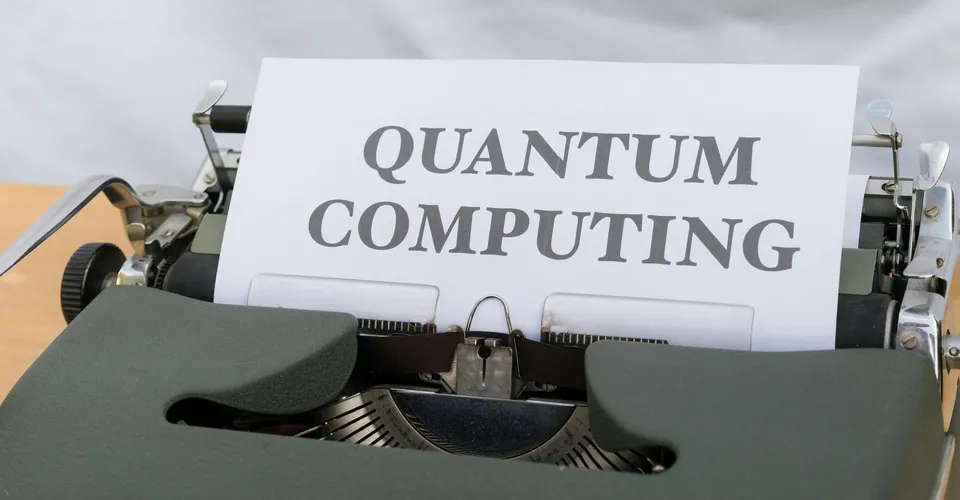
Google just shortened humanity’s cryptographic life expectancy by roughly half a decade.
The search giant bumped up their Q Day deadline to 2029 — that’s the moment when quantum computers become powerful enough to crack the encryption protecting everything from your bank account to state secrets. Previously, most experts figured we had until the mid-2030s to get our post-quantum crypto house in order.
This isn’t some abstract academic timeline anymore. We’re talking five years to rebuild the digital security infrastructure that underpins modern civilization. Five years to replace every SSL certificate, every VPN connection, every encrypted database that currently relies on the mathematical hard problems that quantum computers will solve like sudoku puzzles.
And while Google’s quantum team is busy compressing our deadline, the traditional hacking world is having quite the week. Self-propagating malware just poisoned open source software repositories and wiped Iran-based machines. The widely used Trivy scanner got compromised in an ongoing supply-chain attack. Even federal cyber experts called Microsoft’s cloud “a pile of shit” before approving it anyway.
 Photo by Markus Winkler / Pexels
The Quantum Clock Just Sped Up
Here’s what makes Google’s 2029 timeline particularly unnerving: they’re not known for overly optimistic hardware predictions. This is the company that spent years underselling Google Fiber rollouts and took a famously conservative approach to autonomous vehicle timelines through Waymo.
When Google says 2029, they’ve probably already hit intermediate milestones that make them confident. They’ve likely demonstrated quantum error correction at scales that weren’t supposed to be achievable until 2026 or 2027. Their Willow chip announcement in December showed 105 qubits with below-threshold error rates — exactly the kind of progress that would inform a compressed timeline.
The math here is straightforward but terrifying. Current RSA-2048 encryption requires roughly 4,000 stable logical qubits to break. Google’s timeline suggests they believe that threshold is five years away, not ten.
I think they’re probably right.
Meanwhile, Classical Hackers Are Writing Poetry
While we obsess over quantum’s eventual cryptographic apocalypse, traditional attackers are having a field day with today’s infrastructure. The self-propagating malware that hit Iran-based machines represents something we haven’t seen much of since Stuxnet — geographically targeted, self-spreading code that appears designed for maximum psychological impact rather than stealth.
The detail that really catches my attention: it specifically targets Iran-based machines. That’s not accidental geographic filtering. Someone built location awareness into malware designed to spread through open source repositories. That’s sophisticated attribution avoidance combined with clear political messaging.
The Trivy scanner compromise hits even closer to home for anyone running modern DevOps pipelines. Trivy scans container images and infrastructure for vulnerabilities — it’s baked into CI/CD workflows at thousands of companies. Compromising security scanners is like poisoning the canaries in coal mines. Companies lose their early warning systems right when they need them most.
 Photo by UMA media / Pexels
Federal Experts vs. Microsoft: Truth in Procurement
The revelation that federal cyber experts called Microsoft’s cloud “a pile of shit” while approving it anyway perfectly captures the dysfunction in government tech procurement. This isn’t surprising to anyone who’s watched federal agencies deploy obviously flawed systems because they check the right compliance boxes.
What’s remarkable is that someone said it out loud and it leaked. Federal cybersecurity folks usually maintain diplomatic language even in private communications. The fact that this assessment made it into discoverable documents suggests frustration levels have reached a breaking point.
Microsoft’s Azure has suffered a cascade of security incidents over the past two years. Chinese hackers accessed U.S. government emails through Exchange Online in summer 2023. The Midnight Blizzard breach in January 2024 exposed Microsoft’s own internal systems. Azure’s authentication systems have failed repeatedly under pressure.
Yet agencies keep buying because Microsoft offers the path of least bureaucratic resistance. They have the certifications, the compliance frameworks, the existing enterprise agreements. Even when experts know the technology is fundamentally compromised.
My read: this represents a broader crisis in how institutions evaluate security trade-offs. We optimize for process compliance over actual security outcomes, then act surprised when sophisticated attackers exploit the resulting gaps.
Space Data Centers and the Unicorn Speed Run
Starcloud just raised $170 million to build data centers in space, becoming the fastest Y Combinator startup to reach unicorn status at 17 months post-demo day. This timeline is genuinely unprecedented — even by Silicon Valley’s accelerated standards.
The previous record holder was Stripe, which took about 30 months to hit $1 billion valuation after launching. OpenAI took roughly 24 months from founding to their first major valuation milestone. Starcloud compressed that timeline by nearly 40%.
Space-based data centers solve real problems: infinite cooling, abundant solar power, zero real estate costs, and natural isolation from terrestrial threats. The physics make sense. The economics are starting to pencil out with SpaceX’s cost reductions and the increasing expense of terrestrial data center real estate.
But 17 months from YC demo day to unicorn status suggests investors are betting on potential rather than proven technology. Starcloud has likely demonstrated key components in terrestrial labs, but they haven’t deployed a functioning space-based data center yet. The funding timeline implies they’ll need to prove their concept works in orbit very quickly.
I’d bet they launch their first demonstration satellite by Q4 2025. If they hit that milestone, the concept becomes real. If they don’t, this becomes another case study in premature scaling.
OpenAI’s Sora Shutdown: Data Grab or Technical Reality?
OpenAI shutting down Sora after just six months raises immediate red flags, especially given that the app encouraged users to upload their own faces. The official explanation focuses on technical limitations and safety concerns. The timing suggests something more urgent.
Six months isn’t long enough to solve fundamental technical problems with AI video generation. But it’s exactly the right timeframe to realize that your data collection practices might not survive regulatory scrutiny. European data protection authorities have been increasingly aggressive about AI training data, especially when it involves biometric information like faces.
My theory: OpenAI collected enough facial data to train their next-generation models, then discovered that keeping Sora running would create ongoing compliance headaches without sufficient technical advancement to justify the risk. They got what they needed and shut it down before regulators could impose meaningful constraints.
This fits OpenAI’s pattern of aggressive data collection followed by strategic retreats when regulatory pressure mounts. They did something similar with their GPT-4 training data sources — collect everything possible, then lawyer up when people start asking questions.
YouTube CEO’s Home-Bound Creator Vision
YouTube CEO Neal Mohan’s prediction that the best YouTubers will “never leave their home” reveals something important about where content creation is headed. This isn’t just about remote work — it’s about AI-assisted production pipelines that make individual creators competitive with traditional media companies.
Mohan isn’t worried about Netflix luring away YouTube’s top talent because he believes technology will make individual creators more productive than ever. AI video editing, synthetic backgrounds, automated thumbnail generation, algorithmic content optimization — the tools are converging to make bedroom studios competitive with network television production values.
The economics support this vision. Traditional media requires massive fixed costs: studios, equipment, staff, distribution deals. YouTube’s top creators already generate comparable viewership with fraction of the overhead. As AI tools eliminate more production bottlenecks, that efficiency gap will widen.
But there’s a darker implication here. If creators never leave their homes, they lose connection to the physical world that gives their content authentic texture. We might end up with hyper-optimized content that feels increasingly artificial, even when produced by humans.
 Photo by Monstera Production / Pexels
Google’s Pixel Strategy: The Anti-Camera Bump
The Pixel 10a ditching the camera bump represents Google making a bet on computational photography over hardware specifications. While every other manufacturer keeps adding camera sensors and creating larger bumps, Google is going the opposite direction.
This makes sense given Google’s advantages in machine learning and image processing. They’ve consistently produced better photos than competitors with inferior camera hardware by applying better algorithms. The Pixel 10a suggests they believe computational photography has reached the point where hardware differences become irrelevant.
It’s also a manufacturing cost play. Camera bumps require complex assembly processes and premium materials. A flat design simplifies production and reduces per-unit costs, allowing Google to compete more aggressively in budget segments.
But I think there’s a deeper strategy here. Google is betting that AI image generation will eventually make traditional cameras obsolete for most consumer use cases. Why carry around complex optical hardware when you can describe the photo you want and have AI generate it instantly?
The Pixel 10a might be Google testing consumer acceptance of AI-first photography. If users accept synthetic image enhancement over optical excellence, it opens up entirely new product categories.
Amazon’s “Project Hail Mary” Success: Content Strategy Validation
Amazon MGM’s biggest box office hit validates their bet on science fiction properties with built-in fan bases. “Project Hail Mary” had everything Amazon’s algorithm would have predicted: bestselling source material, hard science fiction elements that appeal to Amazon’s core demographic, and a story structure that translates well to film.
This success demonstrates something important about how streaming platforms are approaching theatrical releases. Amazon isn’t trying to compete with traditional studios on their terms. They’re identifying properties that resonate with their existing subscriber base and using theatrical releases as marketing for their streaming platform.
The strategy works because Amazon has better data on what their audience actually watches compared to traditional studios guessing based on focus groups and past performance. They can green-light projects based on actual consumption patterns rather than industry conventional wisdom.
Connecting the Dots: Infrastructure Under Pressure
These stories connect in uncomfortable ways. Google’s compressed quantum timeline puts pressure on every other cybersecurity assumption. Traditional attackers are exploiting supply chain vulnerabilities while organizations are still struggling with basic cloud security. Government agencies approve systems they know are compromised because the procurement process rewards compliance over security.
Meanwhile, companies are racing to space and shutting down AI projects after suspicious data collection periods. Content creation is becoming increasingly artificial, and traditional media strategies are getting disrupted by algorithmic content optimization.
The common thread: our digital infrastructure is under more pressure than most people realize. Quantum computing will break current encryption. Supply chain attacks are becoming more sophisticated. Cloud providers are accumulating massive security debt. AI companies are collecting data faster than regulators can respond.
We’re in a transitional moment where old security assumptions no longer hold, but new solutions aren’t fully deployed. The next five years will determine whether we manage this transition successfully or watch critical systems fail under pressure.
My prediction: we’ll see at least one major cryptographic failure before quantum computers become widely available. Some organization will get breached by attackers who figured out how to break current encryption using classical computers in ways we didn’t anticipate. The quantum deadline is 2029, but the real deadline is probably sooner.
What I’m Watching
- Google’s quantum error correction announcements through 2025 — If they demonstrate 1,000+ stable logical qubits before Q4 2025, the 2029 timeline becomes a conservative estimate
- Post-quantum cryptography deployment rates in major cloud providers — AWS, Azure, and GCP need to complete migrations by 2027 to stay ahead of the curve
- Supply chain attack sophistication levels — The Iran-targeted malware and Trivy compromise suggest attackers are getting better at targeting specific geographic regions and critical infrastructure tools
- Starcloud’s first orbital deployment — They need to prove space-based data centers work in practice by late 2025, or their unicorn valuation becomes unsustainable
The quantum clock is ticking faster than we thought.