Democracy's Fever Dream: What Happens When Government Stops Pretending
Climate denial at the White House, immigration judges under the gun, and ballot boxes vanishing—the guardrails are coming off faster than anyone predicted.
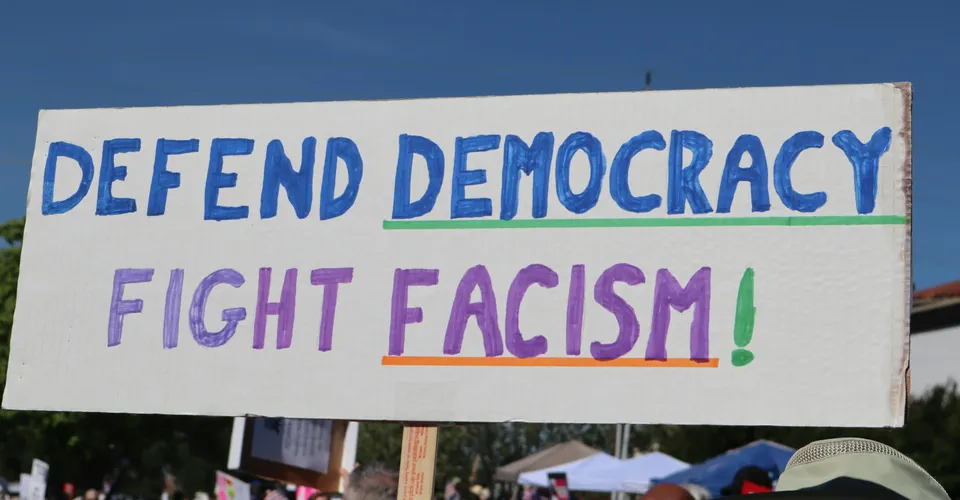
A conference near the White House drew hundreds of people who reject climate science. The mood was triumphant. Meanwhile, immigration judges are ordering people deported at unprecedented rates after coming under pressure from the administration to hit targets or lose their jobs. A Wisconsin mayor removed a ballot drop box during the 2024 election and faced no charges. And Democratic politicians are swearing on social media like they’ve given up on decorum entirely.
This isn’t three separate stories. It’s the same story told four different ways.
The Speed of the Unraveling
Here’s what strikes me after fifteen years watching this town: we’re witnessing the functional collapse of the assumption that institutions will police themselves. Not the collapse itself—that takes longer. But the moment when everyone stops pretending.
The climate denial conference was the tell. These weren’t fringe voices meeting in a basement. Hundreds showed up. The mood was described as triumphant. That’s what happens when you realize the White House won’t challenge you, won’t marginalize you, won’t even pretend to care about scientific consensus. The guardrail was never the truth. It was the social cost of being publicly wrong. Remove the enforcement, and people flood through the gap.
Immigration judges are now operating under what amounts to a quota system. Come under pressure to deport more people or risk losing your job. That’s not judicial review. That’s a production line with consequences for judges who apply the law as written rather than as speed-optimized. In 2017, we watched this happen in slow motion. Now it’s immediate. The infrastructure of coercion is already built.
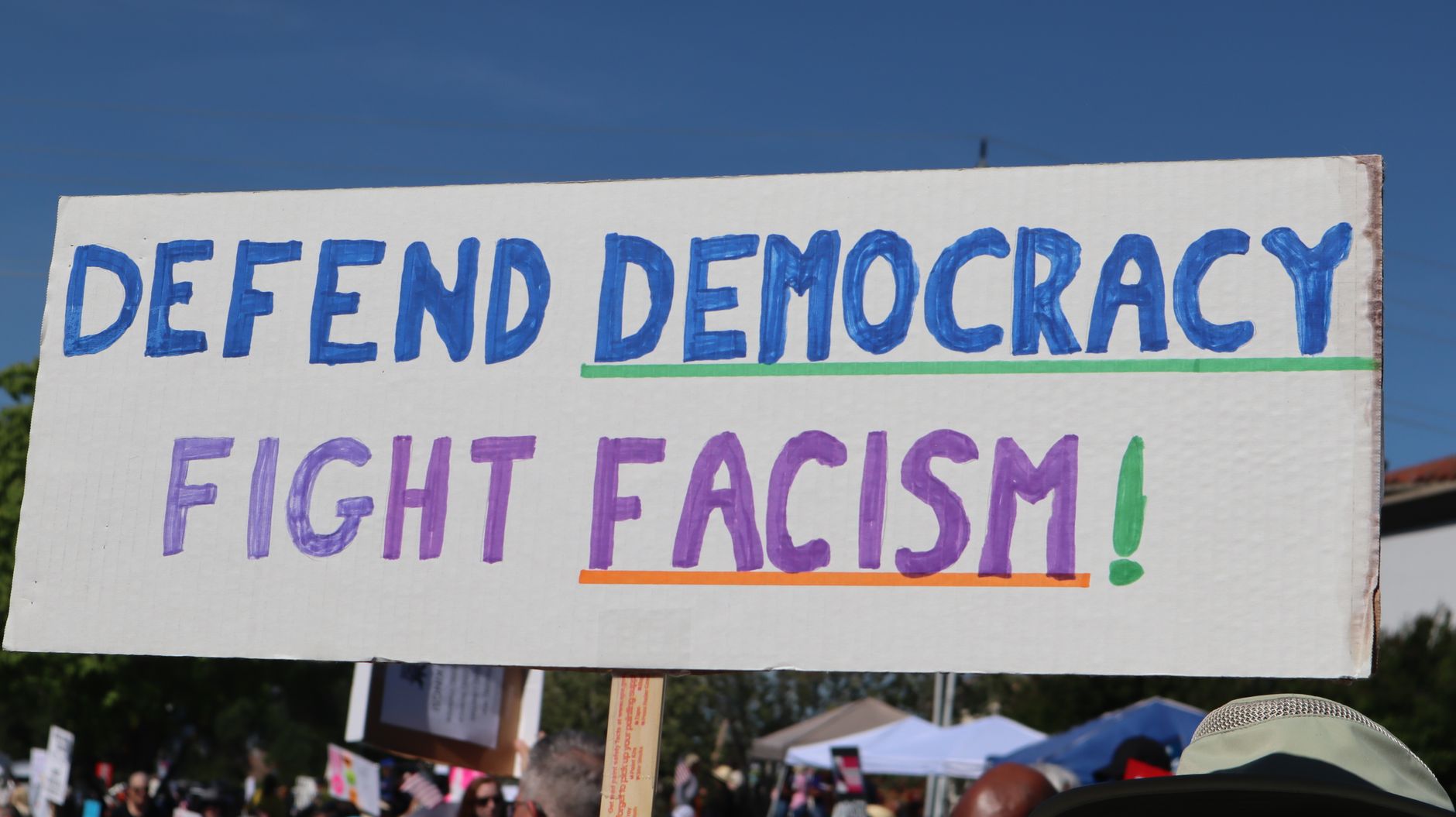 Photo by D Goug / Pexels
The Wisconsin ballot box incident is the one that should keep you awake at night, though, because it went unpunished. A mayor removes a drop box—one of the mechanical arteries of American voting. The special prosecutor finds insufficient evidence to charge him. Not “insufficient evidence of intent.” Not “a gray area of municipal authority.” Just: no charges. That’s not a legal conclusion. That’s a permission structure. The next mayor in the next state now knows something important about what’s actually enforceable.
What Democrats Got Right, Accidentally
The swearing. I genuinely didn’t expect this.
Democratic politicians are “letting the F-word fly” on social media, usually aimed at Trump. This reads to some people as unprofessional, a loss of composure. I think it’s something else entirely: the sound of people realizing that the old playbook—careful rhetoric, measured response, appeals to shared values—wasn’t a strategy. It was a handicap they thought was sportsmanship.
You can’t negotiate with someone who’s rewriting the rules. You can’t appeal to democratic norms when the other side has stopped believing in them. So what do you do? You stop performing the pretense that the conversation is rational. You curse, you get angry, you name what’s actually happening.
Is this healthy? No. Is it democracy working as designed? Absolutely not. But it’s honest in a way the previous decade of carefully worded statements wasn’t. Sometimes honesty about dysfunction is the only thing left that isn’t a lie.
The Real Question Underneath
What we’re actually watching is whether American institutions can function without voluntary compliance from those in power.
For most of the post-Watergate era, the answer was yes—barely. A president could be pressured to resign. Judges would resist politicization. Prosecutors would charge people based on evidence, not loyalty. Congress would occasionally remember it had a spine. These systems worked not because they were foolproof, but because enough people in power believed they were supposed to work. They self-regulated. The guardrails held because people treated them as legitimate.
We’re testing whether any of that survives when one side stops accepting the premise. Immigration judges can be pressured because they’re not independent. They’re part of the executive branch. So when the executive branch decides deportations need to accelerate, judges who resist can be replaced. That’s technically legal. But it’s the death of impartial adjudication. And it works until someone contests it in court. Which takes years.
A ballot box can be removed. No charges follow. That works until someone sues in state court, which takes months. Then potentially an appeal, which takes more months. The election cycle moves faster than accountability.
A conference denying climate science draws a crowd emboldened by White House approval. That works until Congress passes legislation contradicting it, which won’t happen. Or the market responds, which is slower than policy.
The system is being tested at its most vulnerable points: where enforcement depends on either vertical hierarchy (judges obeying norms) or horizontal accountability (peers checking peers). When both break simultaneously, you get this.
 Photo by Anna Keibalo / Pexels
My Read, For What It’s Worth
I think we’re six to twelve months away from a much sharper test. Here’s why: the immigration situation will hit a natural limit when there aren’t enough judges or ICE capacity to deport at the accelerated pace. At that point, either the administration doubles down with more coercive measures against the judiciary, or it admits the program was a bluff. Neither outcome is good. The first is explicitly authoritarian. The second reveals that the threat itself was the point—not effective governance, but the performance of strength.
The climate denial conference is a signpost pointing toward deregulation cascades. Every regulation challenged, every agency staffer who realizes that saying “no” gets you fired. That creates momentum toward a darker version of what happened under Trump 1.0—not just policy reversals, but the active destruction of the institutional capacity to monitor compliance with future rules.
And the ballot box incident—the real danger there is copycat behavior. One mayor gets away with it, three others try it in the next election cycle. That’s how norms erode. Not through one dramatic violation, but through a thousand small violations that each seem too minor to prosecute until suddenly they’re everywhere.
The thing I’m genuinely uncertain about: whether any of this triggers a response from institutions I’m assuming are broken. I think courts will eventually block some of this. I think Congress might eventually care. But the timing matters enormously. If courts move at normal speed while the administration moves at wartime speed, the institutions lose by default.
What I’m Watching
Immigration judge pressure and judicial challenges (next 90 days). Watch for the first federal court decision blocking the deportation acceleration. The specific threshold: if a judge’s order to deport is vacated on appeal, that signals courts are actively resisting. If judges start resigning rather than hitting targets, we know the pressure is real enough to break the institution.
Deregulation and agency staff departures (through Q2 2025). Count the number of career EPA or NOAA scientists who resign or request reassignment. Three to five resignations is normal churn. Fifteen to twenty is institutional collapse. The number itself tells us whether smart people think this is recoverable.
State-level ballot security lawsuits (October 2025 forward). Watch whether any state official files suit against a mayor or election official for ballot box removal. No suit means states are signaling they won’t enforce their own election rules. A suit and a loss means enforcement is broken. A suit and a win is the only outcome that suggests institutions are still functional.
Climate legislation or major regulatory rollback court fights (through 2025). The real test isn’t the conference. It’s whether courts eventually block sweeping deregulation. If they do, we know one institutional check still works. If they don’t, we know the judiciary has surrendered.