America's Violence Crisis Is Now a Foreign Policy Problem
An assassination attempt, a fractured political culture, and authoritarian regimes watching it all unfold—the U.S. is losing control of its own narrative abroad
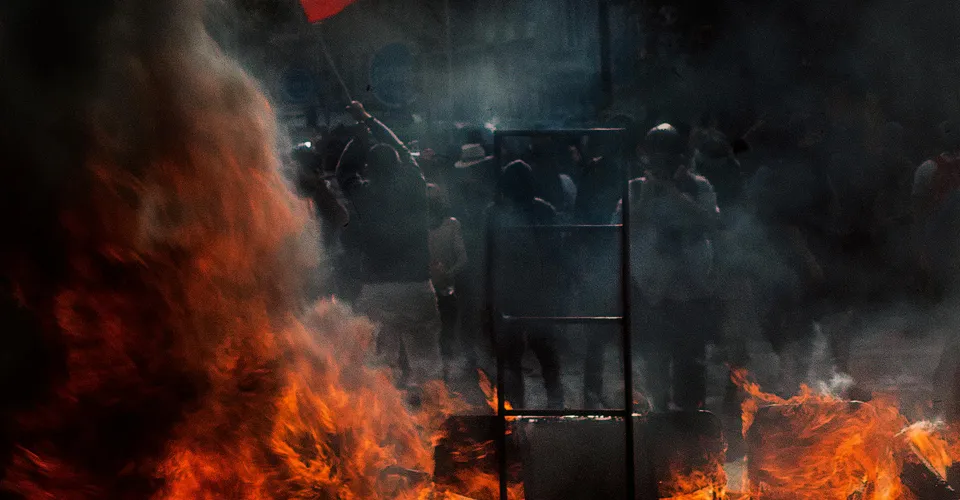
A 31-year-old California man was charged with attempted assassination of a senior U.S. official at a Washington dinner. His stated goal: kill as many high-level government figures as possible.
That sentence used to feel apocalyptic. Now it barely cracks the news cycle.
Here’s what’s actually alarming: we’re not talking about a coordinated terror cell or a foreign operation. We’re talking about a lone actor in the world’s oldest democracy trying to execute government officials at a formal dinner. And the broader pattern matters more than this one incident. Political violence in America has become, according to reporting on the current moment, “an ever-present storm that can strike anywhere and at any moment.”
That’s not a domestic problem anymore. That’s a credibility catastrophe.
 Photo by hugo fuentes / Pexels
The Optics Are Devastating
I spent three weeks in Baghdad in 2011 watching Iraqis parse American statements about democracy and institutional strength. They were generous, mostly. America had problems, sure, but the system had mechanisms. Courts worked. Elections happened. Power transferred.
Now? A comedian is publicly mocking the potential death of the First Lady on national television, the White House feels compelled to respond, and the response itself becomes the story. Jimmy Kimmel’s “expectant widow” joke—aired days before the White House Correspondents’ Dinner—crossed lines that used to matter. The fact that we’re debating whether satire about assassinating sitting presidents is “fair” tells you everything about how corroded the norms have become.
Here’s my read: authoritarian leaders are watching this and calculating that America’s democratic model has become a liability rather than an export.
Vladimir Putin doesn’t need to hack the 2024 election. He just needs to watch Americans threaten each other until the system loses legitimacy on its own. Xi Jinping can point to this and tell his population that Western democracy is chaos masquerading as freedom. The UAE, which just announced it’s leaving OPEC after 60 years, probably factors this into whether it wants to keep banking on U.S. alliance commitments. Why stay loyal to an unstable partner?
 Photo by Mathias Reding / Pexels
The Actual Geopolitical Signals
Let’s connect some dots that don’t seem connected.
The UAE is exiting OPEC because it believes the cartel’s production quotas have unfairly limited its exports. That’s economics, fine. But the timing—announced while global energy markets are already fractured over Russia, Iran tensions, and Houthi attacks in the Red Sea—suggests the UAE is hedging. It’s signaling that it won’t be constrained by consensus when consensus means accepting limits.
Meanwhile, Russian oligarch yachts are sailing through the Strait of Hormuz despite active blockade attempts. A 464-foot vessel tied to Aleksei Mordashov, a sanctioned Russian steel mogul, cleared the waterway. How? Because enforcement requires international coordination, and international coordination requires allies who trust each other and have credible institutions backing them up.
That’s getting harder to find.
Russia’s internet crackdowns are now so severe that even beauty influencers—not traditionally political operators—are openly questioning Putin’s moves. That suggests Putin knows his information control is slipping. He’s desperate. But desperate authoritarians with nuclear weapons and a track record of moving on Ukraine don’t get less aggressive; they get more creative.
The Cuba Problem Nobody’s Talking About
Here’s one that’ll matter more in five years than anyone realizes right now.
Cubans whose properties were seized by the Castro government decades ago are now pushing for compensation as the island faces economic collapse. The logical moment for resolution, right? Except any serious reckoning with Cuba’s past also means confronting decades of frozen U.S.-Cuba relations, frozen assets, and the reality that the embargo might actually need to change if there’s ever going to be regional stability.
But America can’t negotiate from strength when America looks like it’s eating itself.
I think the UAE’s OPEC exit, the Russian yacht maneuvers, the Cuban compensation demands—they’re all symptoms of the same disease. Allies and adversaries alike are moving on the assumption that American focus and credibility are degraded. It’s not that any single country is organizing against us. It’s that everyone’s independently calculating that the U.S. is too internally fractured to enforce the rules it wrote.
What Happens to Institutions When Violence Becomes Normal?
The U.K. runs a 24-hour maritime distress service out of Portsmouth that monitors the Persian Gulf, the Red Sea, and the Indian Ocean. It’s a small agency doing unglamorous, essential work—keeping shipping lanes safe, responding to emergencies, preventing escalation.
That service exists because the international system requires neutral actors and trusted institutions.
What happens when countries stop trusting American institutions to referee disputes fairly? What happens when a country like the UAE looks at American politics and sees assassination attempts, escalating rhetoric, and institutional paralysis—and decides it’s safer to go its own way?
My honest assessment: we’re closer to fragmentation than most analysts want to admit. Not collapse. Fragmentation. Different regions organizing their own security arrangements, trade partnerships, and enforcement mechanisms because they can’t rely on the American-led system.
The assassination attempt itself might be stopped by law enforcement doing its job. The joke gets criticized, the news cycle moves on. But the underlying message—that American political violence is systemic, not anomalous—is being absorbed by every foreign minister, oligarch, and strategist paying attention.
Putin’s already acting like he doesn’t need American permission for anything. The UAE’s already hedging its bets. Cuba’s already looking for other partners to help it navigate economic crisis. And they’re all watching to see if the American system can discipline itself before it disciplines the world order.
I don’t think it can, not fast enough.
Photo by Mathias Reding / Pexels
What I’m Watching
-
UAE energy markets in Q2 2024: If the UAE’s OPEC exit accelerates oil production increases, and OPEC can’t respond with coordinated cuts, we’ll see confirmation that the cartel is functionally dead. That’s a structural break in global energy markets that cascades into currency, geopolitics, everything.
-
Russian oligarch sanctions enforcement: How many more yachts clear the Strait of Hormuz? If the Nord passage becomes a regular occurrence, it signals that secondary sanctions on Russian assets are unraveling. That’s a direct read on whether the Western financial system can actually enforce isolation.
-
Cuban compensation negotiations by fall 2024: Watch whether any U.S. administration—regardless of who wins in November—attempts serious talks on seized properties. If it doesn’t happen soon, I’d expect other countries to step in as mediators. That’s the moment we’ll know the U.S. has lost negotiating position in its own hemisphere.
-
Protest escalation in Russia by summer: Internet restrictions are obviously failing if beauty influencers are openly questioning policy. If that fractures into organized political pressure, Putin accelerates something externally (Ukraine, NATO border, cyber). Desperation moves on a timeline—watch for it.
The American system isn’t broken yet. But it’s showing cracks in every direction, and every actor in the world is deciding right now whether to keep betting on repair or start building alternatives.
That’s the real story the assassination attempt is telling.