America's Allies Are Reading the Ransom Note
The US is reportedly threatening to suspend NATO members and revisit the Falklands unless they back an Iran war. Europe's realizing it can't count on Washington anymore.

The internal Pentagon email landed like a grenade in a roomful of diplomats who thought they’d already braced for impact.
According to reports, someone in the Pentagon’s planning apparatus sketched out options to punish Spain—and the UK—for not joining what appears to be a coming conflict with Iran. The punishment menu allegedly included suspending Spain from NATO and, more audaciously, reopening the question of Falkland Islands sovereignty with Argentina. This isn’t a negotiation. This is a shakedown dressed in bureaucratic language.
Katya Adler, the BBC’s Europe editor, called it right: the Medusa-like head of US-European friction has reared itself again. But this time it’s not just friction. It’s a threat that Washington will weaponize its own alliance architecture—and territorial settlements—to coerce compliance.
Let’s be clear about what’s happening here. The United States isn’t having a policy disagreement with its allies. It’s allegedly threatening to dismantle the security arrangements that have underpinned European stability since 1949.
 Photo by Arturo Añez. / Pexels
The Actual Leverage Game
NATO says there’s “no provision” to suspend members. That’s technically true. Article 13 of the North Atlantic Treaty does allow members to withdraw, but only voluntarily. You can’t kick someone out for being insufficiently hawkish on your pet war.
But that’s almost beside the point.
What matters is the signal. If the Pentagon is seriously considering using alliance suspension as coercion—even if it’s legally impossible—then the alliance just became a conditional arrangement. Spain, the UK, and anyone else watching has to recalculate. Is NATO a mutual defense pact, or is it leverage that Washington holds over your head when you won’t play ball on Iran?
The Falklands gambit is somehow worse. That 1982 war killed 649 people and remains a live issue for Argentina. Reopening it as a bargaining chip for an Iran conflict isn’t statecraft. It’s hostage-taking with historical grievances. The UK had to publicly confirm that the Falklands’ sovereignty rests with Britain—which shouldn’t need confirmation from the Prime Minister in the year 2025 unless something has fundamentally broken.
My read: Washington isn’t bluffing about the seriousness of wanting these countries in an Iran operation. But the methods being used to persuade them are so crude they’re likely to produce the opposite result.
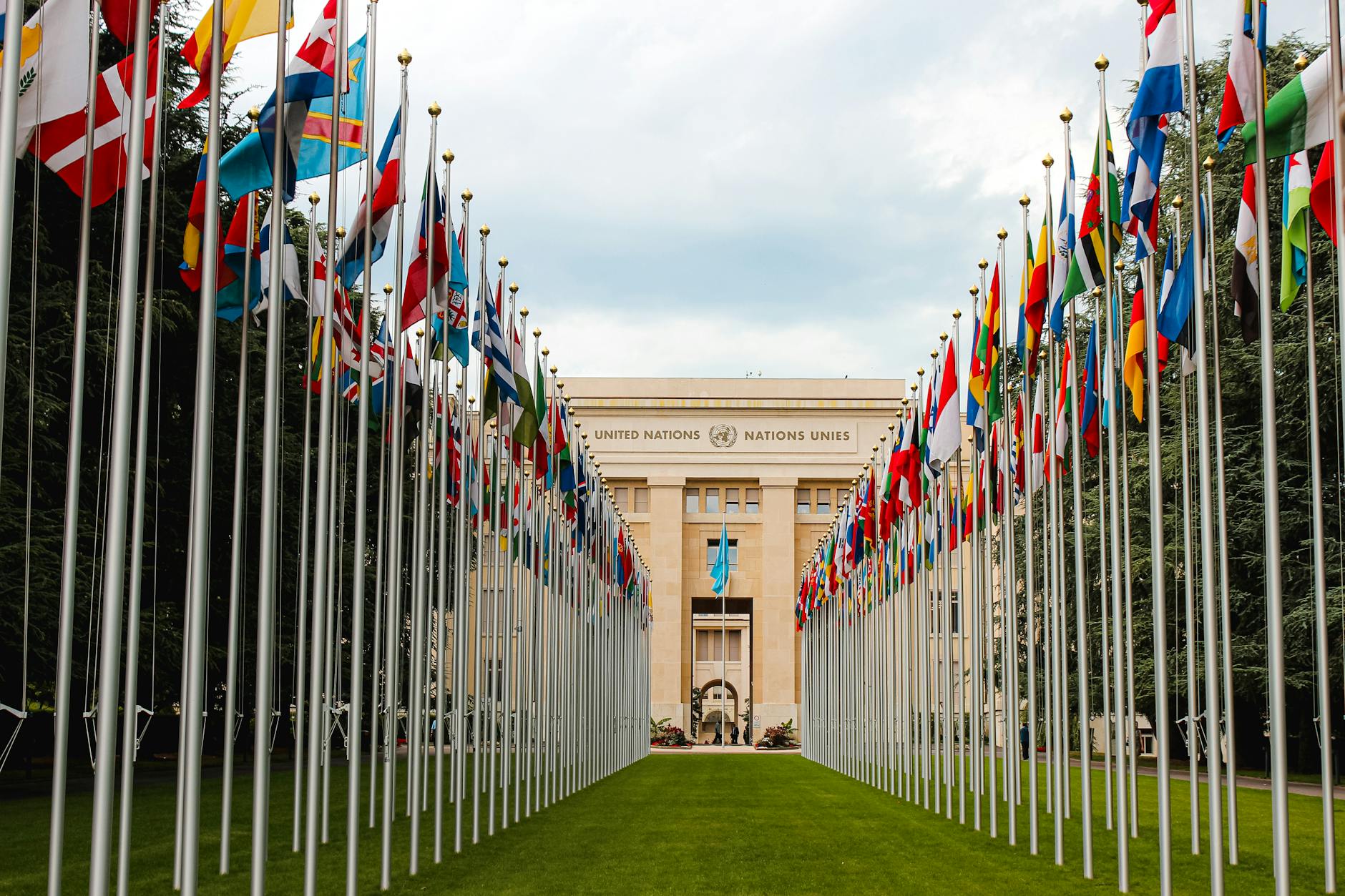 Photo by Mathias Reding / Pexels
Why This Backfires
Here’s the thing about alliances: they work because members believe they’re better off staying in than leaving. NATO members have accepted American leadership since the Cold War ended in 1991—nearly 35 years of deference, even when that meant following into Iraq (2003) or Afghanistan (2001). That’s a long credit line.
You burn that credit line the moment your allies realize you’ll threaten the architecture itself when they disagree.
Spain and the UK aren’t marginal actors. Spain hosts critical NATO facilities in the Mediterranean. The UK is a nuclear power and a permanent Security Council member. If either one decides the US is unreliable, the conversation about “European strategic autonomy” stops being academic.
In fact, it already has. The EU has a little-known mutual defense obligation buried in its treaty framework—Article 42.7 of the Lisbon Treaty—that requires member states to come to each other’s aid if attacked. It’s not NATO. It’s weaker. But it exists. European think tanks are now openly asking what it would mean to defend themselves without Washington. A year ago, that was fringe thinking. Now it’s mainstream.
That’s not because Europe suddenly became independent-minded. It’s because Washington just signaled that the security guarantee is conditional on compliance with US military preferences.
The Iran Question Nobody’s Asking
Here’s what puzzles me about the reported pressure campaign: nobody’s actually explained why Spain and the UK refusing to join an Iran war constitutes inadequate alliance support.
The reports mention “perceived lack of support for Iran war.” Perceived by whom? On what basis?
Iran hasn’t attacked NATO. The Houthis have attacked shipping in the Red Sea, yes. But that’s not a justification for a full-scale conflict that would destabilize the Middle East in ways that would dwarf 2003. Neither Spain nor the UK is irrational for declining to join.
What I think is happening: the US has already decided it’s going to move against Iran, with or without formal allied participation. The pressure campaign is really about ensuring that when it happens, allied governments don’t publicly distance themselves or (worse) invoke mutual defense obligations in the opposite direction—like defending themselves against regional escalation that American action triggered.
In other words, the threats aren’t about getting military support. They’re about buying silence.
Witkoff and Kushner are heading to Pakistan for talks on Iran, according to recent reports. Iran’s foreign minister was already in Islamabad on Friday. Pakistan is a nuclear power with its own Iran problems. This diplomatic shuffle suggests something larger is being choreographed. I don’t think it’s academic planning.
Photo by Mathias Reding / Pexels
What Europe Actually Learned
The real damage here isn’t to Spain or the UK’s relationship with NATO. It’s to the assumption that the US security umbrella is unconditional.
For decades, American foreign policy operated on a simple premise: we’re the guarantor, you’re the protected. In exchange, you defer to our judgment on major security questions. It was paternalistic, sure. But it was predictable.
That model broke the moment a Pentagon staffer drafted a memo treating NATO suspension and territorial revisionism as negotiating leverage.
Now European leaders have to assume that Washington might—might—use security arrangements as coercion if they don’t align on some future conflict. That changes everything about how they make decisions. It’s not rational self-interest anymore. It’s risk management in a system where the ostensible guarantor has become a potential threat vector.
I think Europe accelerates military spending and deeper integration over the next 18 months. Not because they want to leave NATO—most of them don’t—but because they can no longer rely exclusively on American protection. That’s expensive. It’s also reasonable.
The US has enormous leverage. But leverage only works if the other side believes you’ll actually use it and that using it serves your interests. If you use it on every disagreement, it becomes worthless. You’ve just made yourself unreliable.
That’s where we are now.
What I’m Watching
-
Pakistan diplomatic track, next 4 weeks. Witkoff and Kushner’s visit to Islamabad and conversations with Iran’s Araghchi will signal whether this Iran escalation is still negotiable or already locked in. Watch for any joint statements about de-escalation versus military readiness.
-
European defense spending announcements through March. France, Germany, and Poland have all hinted at increases. If they announce serious commitments (€50B+ combined) in response to the NATO/Falklands story, that’s confirmation that the alliance is fragmenting and Europe sees it.
-
Spain’s formal response on any future Iran operations. Will they quietly participate in logistics support, or will they publicly refuse? Their answer becomes the template for how other reluctant allies respond.
-
Whether Article 42.7 gets invoked in any planning. If European defense ministries start formally discussing mutual defense frameworks outside NATO, the US has accidentally triggered the realignment it should have been most afraid of.